
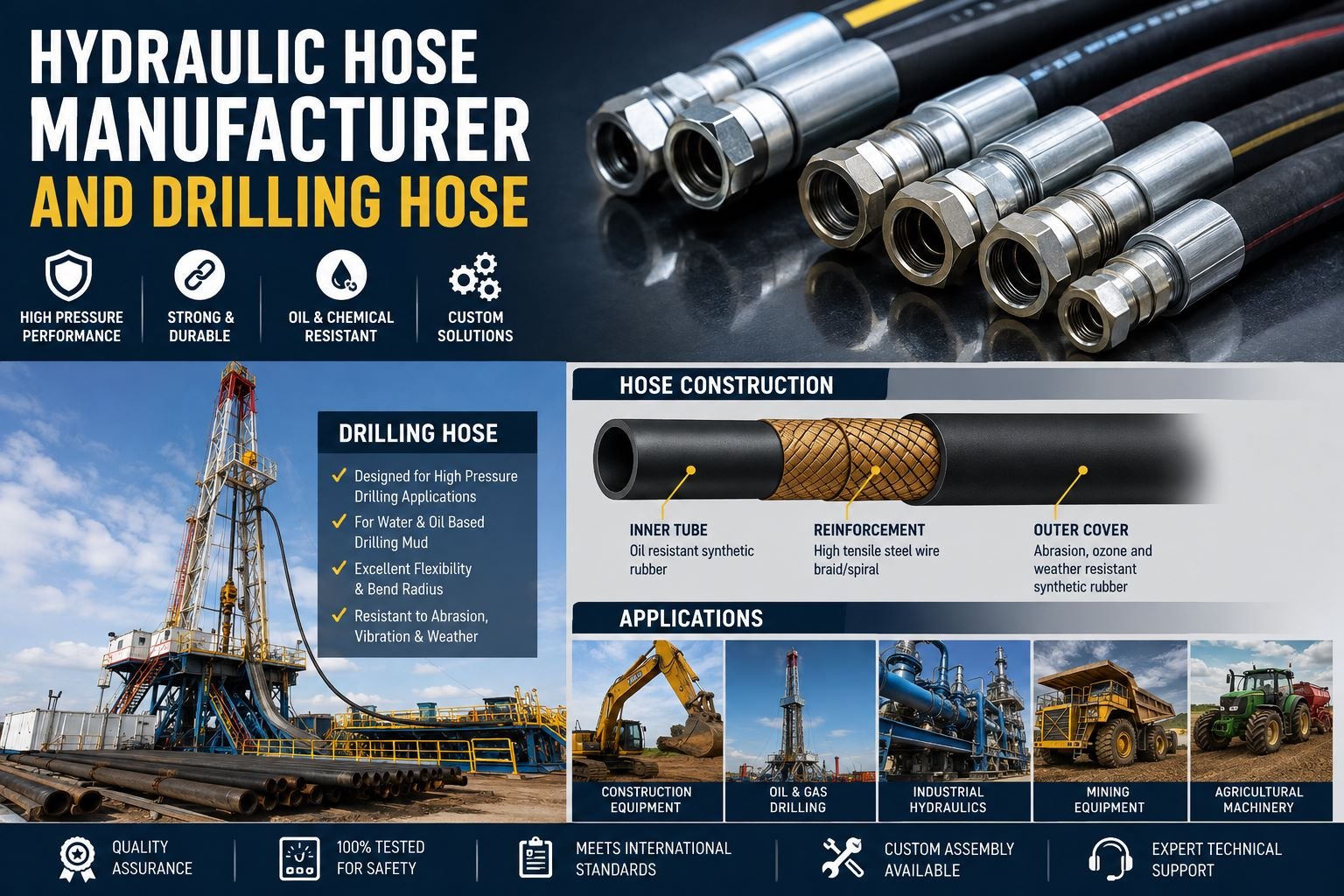
Modern industrial operations depend heavily on reliable fluid transfer systems. From construction machinery and manufacturing plants to oilfields and drilling rigs, hydraulic hoses must withstand extreme pressure, temperature fluctuations, vibration, chemicals, and demanding working environments. Choosing an experienced Hydraulic Hose Manufacturer can therefore have a direct impact on equipment safety, productivity, and maintenance costs.
A high-quality drilling hose is equally important in oil, gas, geothermal, and exploration operations where fluids must travel safely between pumps, drilling equipment, and well-control systems. Understanding construction, pressure ratings, materials, and application requirements helps companies select dependable hose solutions for long-term performance.
Understanding Hydraulic Hoses in Industrial Applications
Hydraulic hoses are flexible reinforced tubes designed to transport hydraulic oil and other pressurized fluids between different components of machinery. They provide flexibility where rigid piping cannot accommodate equipment movement, vibration, or complex installation layouts.
A professional Hydraulic Hose Manufacturer designs hoses for specific operating pressures, temperature ranges, fluids, and working conditions.
Typical hydraulic hose applications include:
- Construction equipment
- Mining machinery
- Agricultural machines
- Industrial manufacturing systems
- Material handling equipment
- Marine machinery
- Oil and gas equipment
- Heavy-duty mobile hydraulics
Selecting the correct hose prevents leakage, premature failure, pressure loss, and unexpected equipment downtime.
Why Hose Construction Matters
A hydraulic hose normally contains multiple layers. Each layer performs a specific function.
The inner tube carries hydraulic fluid and must remain chemically compatible with the medium. Reinforcement layers provide pressure resistance, while the outer cover protects against abrasion, weather, oil, ozone, and environmental damage.
Steel-wire braided or spiral reinforcement is commonly used when high-pressure performance is required.
Importance of Reinforcement
The reinforcement structure determines how effectively a hose can manage internal pressure. High-pressure industrial systems may require multiple spiral-wire layers to maintain structural stability under continuous pressure cycles.
What Is a Drilling Hose?
A drilling hose is a heavy-duty flexible hose engineered specifically for drilling operations. It is often used for transporting drilling mud, oil-based fluids, water, cement slurry, and other media between different sections of drilling equipment.
Unlike standard industrial hoses, drilling hoses operate in challenging environments where pressure fluctuations, mechanical movement, abrasive fluids, chemicals, and harsh weather may occur simultaneously.
Common applications include:
- Oil and gas drilling rigs
- Offshore platforms
- Exploration equipment
- Mud circulation systems
- Rotary drilling systems
- Well-service operations
- Geothermal drilling projects
A properly specified drilling hose helps maintain stable fluid circulation while allowing controlled movement between connected equipment.
Key Features of a Reliable Hydraulic Hose
Choosing a dependable Hydraulic Hose Manufacturer requires more than comparing product prices. Hose construction and technical specifications should match the actual application.
Important characteristics include:
- Suitable working pressure
- Adequate burst-pressure safety margin
- Oil-resistant inner tube
- Strong reinforcement layers
- Abrasion-resistant outer cover
- Temperature resistance
- Chemical compatibility
- Flexibility under operating conditions
- Reliable end fittings
- Consistent manufacturing quality
Manufacturers should also provide technical information that helps customers identify the correct hose for specific machinery.
Hydraulic Hose vs Drilling Hose
Although both products transport pressurized fluids, their applications and construction requirements can differ significantly.
| Feature | Hydraulic Hose | Drilling Hose |
| Primary Application | Hydraulic machinery | Drilling and oilfield operations |
| Fluid Types | Hydraulic oil and industrial fluids | Mud, water, oil and drilling fluids |
| Pressure Requirement | Medium to very high | Generally high to extremely high |
| Environment | Industrial and mobile machinery | Oilfields and drilling rigs |
| Reinforcement | Braided or spiral wire | Heavy-duty reinforced construction |
| Flexibility | High | Designed for movement under demanding conditions |
Working with a capable Hydraulic Hose Manufacturer helps businesses determine which hose construction best fits their operating environment.
How to Select the Right Hose
Choosing a hose based only on diameter or price can create serious operational problems. Several technical factors should be evaluated before purchasing.
Check Working Pressure
The hose working-pressure rating must meet or exceed the maximum pressure generated by the equipment. Pressure spikes should also be considered.
Confirm Fluid Compatibility
Hydraulic oils, drilling muds, chemicals, water-based fluids, and petroleum products may react differently with hose materials. The inner tube must be compatible with the transported medium.
Evaluate Temperature Conditions
Both fluid temperature and surrounding environmental temperature affect hose life. Excessive heat can accelerate material deterioration.
Consider Bend Radius
Installing a hose below its recommended bend radius can damage reinforcement layers and reduce service life.
Why Quality Manufacturing Matters
A reliable Hydraulic Hose Manufacturer uses appropriate raw materials, controlled production methods, reinforcement technology, and product testing to achieve consistent performance.
Quality control becomes particularly important for a drilling hose, where unexpected hose failure can interrupt expensive drilling operations.
Businesses should consider manufacturers that focus on:
- Material traceability
- Pressure testing
- Dimensional consistency
- Reinforcement accuracy
- End-connection reliability
- Product inspection
- Application-specific engineering support
Well-manufactured hoses can improve equipment reliability while reducing frequent replacement requirements.
Maintenance Tips for Longer Hose Life
Even premium hoses require regular inspection.
Operators should check hoses for visible cracks, abrasion, exposed reinforcement, leaking fittings, unusual deformation, and damaged outer covers. Hoses that show significant deterioration should be replaced before failure occurs.
Avoid twisting hoses during installation and protect them from sharp edges or excessive heat sources. Correct routing can significantly improve service life.
Frequently Asked Questions
1. What does a Hydraulic Hose Manufacturer produce?
A Hydraulic Hose Manufacturer produces flexible reinforced hoses designed to transport pressurized hydraulic fluids in industrial and mobile equipment.
2. What is a drilling hose used for?
A drilling hose transfers drilling fluids, mud, water, oil, or related media in drilling and exploration operations.
3. Are hydraulic hoses suitable for high pressure?
Yes. Different hose constructions are available for medium, high, and very-high-pressure systems.
4. How is hydraulic hose pressure determined?
Pressure capacity depends largely on hose materials, reinforcement design, diameter, and construction.
5. Why is hose reinforcement important?
Reinforcement allows the hose to resist internal pressure without excessive expansion or structural failure.
6. Can one hose handle every hydraulic fluid?
No. Inner-tube compatibility must be checked against the specific fluid being transported.
7. What damages hydraulic hoses?
Common causes include abrasion, excessive temperature, incorrect routing, twisting, pressure spikes, chemicals, and aging.
8. How often should hoses be inspected?
Inspection frequency depends on operating intensity, environment, equipment type, and manufacturer recommendations.
9. What should be checked when purchasing a drilling hose?
Check working pressure, dimensions, fluid compatibility, reinforcement, temperature range, fittings, and application requirements.
10. Why choose a specialized manufacturer?
A specialized Hydraulic Hose Manufacturer can provide technical guidance, suitable materials, consistent production, testing, and application-specific hose solutions.