
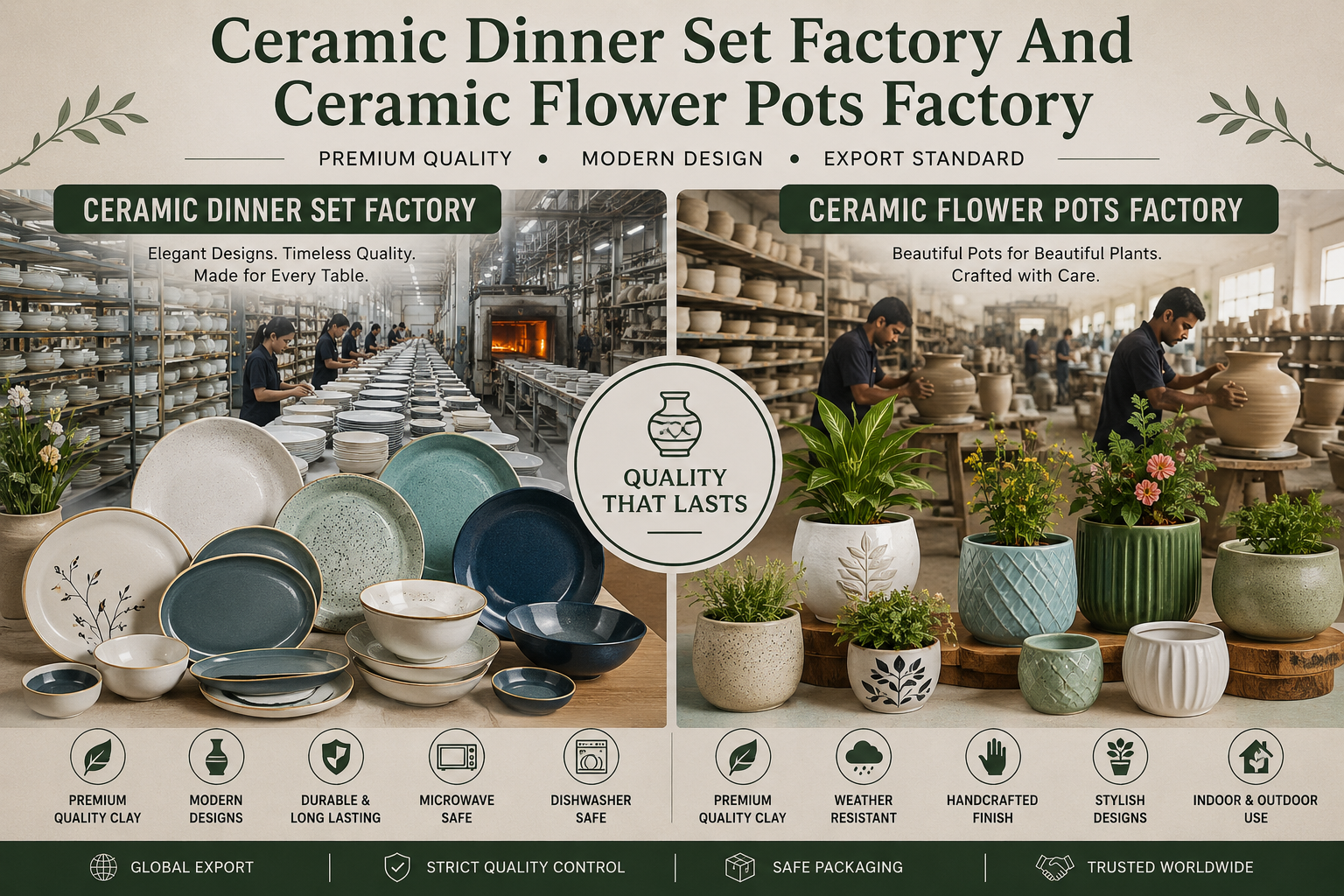
The ceramic industry has undergone a remarkable transformation over the last few decades. From handmade pottery workshops to highly automated production facilities, both the Ceramic Dinner Set Factory and Ceramic Flower Pots Factory sectors have evolved significantly. Today, these industries combine traditional craftsmanship with advanced manufacturing technologies to meet the growing global demand for aesthetically appealing, durable, and environmentally friendly ceramic products.
As consumer preferences continue to shift toward sustainable home décor and premium dining experiences, ceramic manufacturers are entering a new era of innovation and growth.
The Past: How Ceramic Manufacturing Began
Ceramics have been an essential part of human civilization for thousands of years. Early societies used clay to create functional items such as bowls, pots, and storage containers. Over time, pottery became both a practical necessity and an artistic expression.
The development of dedicated factories marked the beginning of large-scale ceramic production.
Characteristics of Early Ceramic Manufacturing
- Handmade shaping techniques
- Traditional clay preparation methods
- Wood-fired kilns
- Limited production capacity
- Locally sourced raw materials
- Strong emphasis on craftsmanship
In the early stages, both dinnerware and flower pots were produced in small quantities by skilled artisans who passed their techniques from one generation to another.
The Growth of the Ceramic Dinner Set Factory Industry
The emergence of the modern Ceramic Dinner Set Factory changed the way tableware was manufactured. Growing urbanization and rising living standards increased the demand for elegant and durable dining products.
Manufacturers gradually adopted mechanized production techniques that improved consistency and efficiency.
Major Milestones in Development
- Introduction of industrial kilns
- Mass production capabilities
- Improved glazing technologies
- Expansion into export markets
- Development of designer dinnerware collections
- Adoption of quality control standards
The History of Ceramic Flower Pots Factory Manufacturing
The Ceramic Flower Pots Factory industry also evolved significantly as gardening and landscaping gained popularity around the world.
Initially, flower pots were simple containers designed primarily for functionality. Over time, changing consumer tastes encouraged manufacturers to create decorative and artistic ceramic planters.
Historical Developments
- Handmade garden pots
- Decorative glazing techniques
- Introduction of large-scale production
- Export-oriented manufacturing
- Customized designs for residential and commercial landscaping
- Development of weather-resistant ceramic materials
Traditional Manufacturing vs Modern Manufacturing
| Feature | Traditional Ceramic Production | Modern Ceramic Factories |
| Production Method | Handmade | Automated and semi-automated |
| Output Capacity | Limited | High-volume production |
| Quality Consistency | Variable | Highly consistent |
| Technology | Basic tools | Advanced machinery |
| Design Options | Limited | Extensive customization |
| Production Speed | Slow | Fast and efficient |
How a Modern Ceramic Dinner Set Factory Operates
Today’s Ceramic Dinner Set Factory combines technology and craftsmanship to create premium dining products for global markets.
Typical Manufacturing Process
- Raw material selection
- Clay preparation
- Molding and shaping
- Drying process
- First firing
- Glazing and decoration
- Final firing
- Inspection and packaging
Products Commonly Manufactured
- Dinner plates
- Serving bowls
- Tea and coffee sets
- Soup bowls
- Dessert plates
- Complete dining collections
How a Modern Ceramic Flower Pots Factory Operates
A Ceramic Flower Pots Factory focuses on producing durable and decorative planters for homes, offices, hotels, and landscaping projects.
Manufacturing Stages
- Clay preparation
- Mold creation
- Pot shaping
- Surface finishing
- Kiln firing
- Decorative glazing
- Quality inspection
- Packaging and shipment
Popular Product Categories
- Indoor planters
- Outdoor garden pots
- Decorative ceramic containers
- Hanging pots
- Commercial landscaping planters
- Customized designer pots
Present Market Trends in the Ceramic Industry
The ceramic sector is experiencing strong growth due to changing consumer preferences and increased global trade.
Current Industry Drivers
- Rising demand for premium tableware
- Growth in home decoration trends
- Expansion of the hospitality industry
- Increased interest in indoor gardening
- Preference for sustainable products
- Growing e-commerce sales
The Future of Ceramic Dinner Set Factory Manufacturing
The future of the Ceramic Dinner Set Factory industry will be shaped by innovation, sustainability, and consumer personalization.
Future Trends
- Smart manufacturing technologies
- AI-assisted quality control
- Sustainable production methods
- Eco-friendly packaging solutions
- Customized dinnerware collections
- Advanced digital printing techniques
- Energy-efficient kiln systems
Manufacturers are expected to increasingly adopt environmentally responsible practices while maintaining premium product quality.
The Future of Ceramic Flower Pots Factory Manufacturing
The future of the Ceramic Flower Pots Factory sector looks promising as global interest in gardening and sustainable living continues to expand.
Expected Developments
- Self-watering ceramic planters
- Lightweight ceramic materials
- Smart gardening products
- Sustainable raw materials
- Customized designer collections
- Increased automation
- Eco-conscious manufacturing processes
The growing popularity of indoor plants and urban gardening is expected to create new opportunities for ceramic pot manufacturers worldwide.
Comparison Between Ceramic Dinner Sets and Ceramic Flower Pots
| Feature | Ceramic Dinner Set Factory | Ceramic Flower Pots Factory |
| Primary Market | Dining and hospitality | Gardening and home décor |
| Product Function | Food serving | Plant cultivation |
| Design Focus | Elegance and usability | Decoration and durability |
| Market Growth Drivers | Premium lifestyle trends | Urban gardening trends |
| Customization Demand | High | Very high |
Why Sustainability Will Shape the Future of Ceramics
Sustainability has become a major priority across manufacturing industries.
Key Environmental Initiatives
- Recycling production waste
- Using energy-efficient kilns
- Reducing water consumption
- Eco-friendly packaging
- Responsible sourcing of raw materials
- Lower carbon emissions
Companies adopting sustainable practices are likely to gain a significant competitive advantage in the coming years.
Business Opportunities in the Ceramic Industry
The ceramic sector continues to offer attractive opportunities for entrepreneurs and investors.
Promising Areas
- Export markets
- Customized products
- Luxury dining collections
- Home décor products
- Hospitality sector partnerships
- E-commerce platforms
- Sustainable ceramic solutions
Frequently Asked Questions (FAQs)
1. What is a Ceramic Dinner Set Factory?
A Ceramic Dinner Set Factory manufactures ceramic tableware such as plates, bowls, cups, and serving dishes.
2. What products are made in a Ceramic Flower Pots Factory?
These factories produce decorative and functional ceramic planters for homes, gardens, and commercial spaces.
3. Why are ceramic dinner sets popular?
They are durable, aesthetically appealing, and suitable for both everyday use and special occasions.
4. Why is demand for ceramic flower pots increasing?
The rise of indoor gardening and home decoration trends has significantly increased demand.
5. Are ceramic products environmentally friendly?
Many ceramic products are long-lasting and increasingly manufactured using sustainable processes.
6. What technologies are used in modern ceramic factories?
Automation, digital printing, AI-based quality control, and energy-efficient kilns are commonly used.
7. What are the future trends in ceramic manufacturing?
Customization, sustainability, smart products, and advanced automation are shaping the future.
8. Can ceramic factories produce customized designs?
Yes. Many manufacturers offer personalized designs for both dinnerware and flower pots.
9. Which industries use ceramic products?
Hospitality, retail, home décor, landscaping, and interior design industries are major users.
10. Is the ceramic industry expected to grow?
Yes. Increasing demand for sustainable and decorative products is expected to drive long-term growth.