
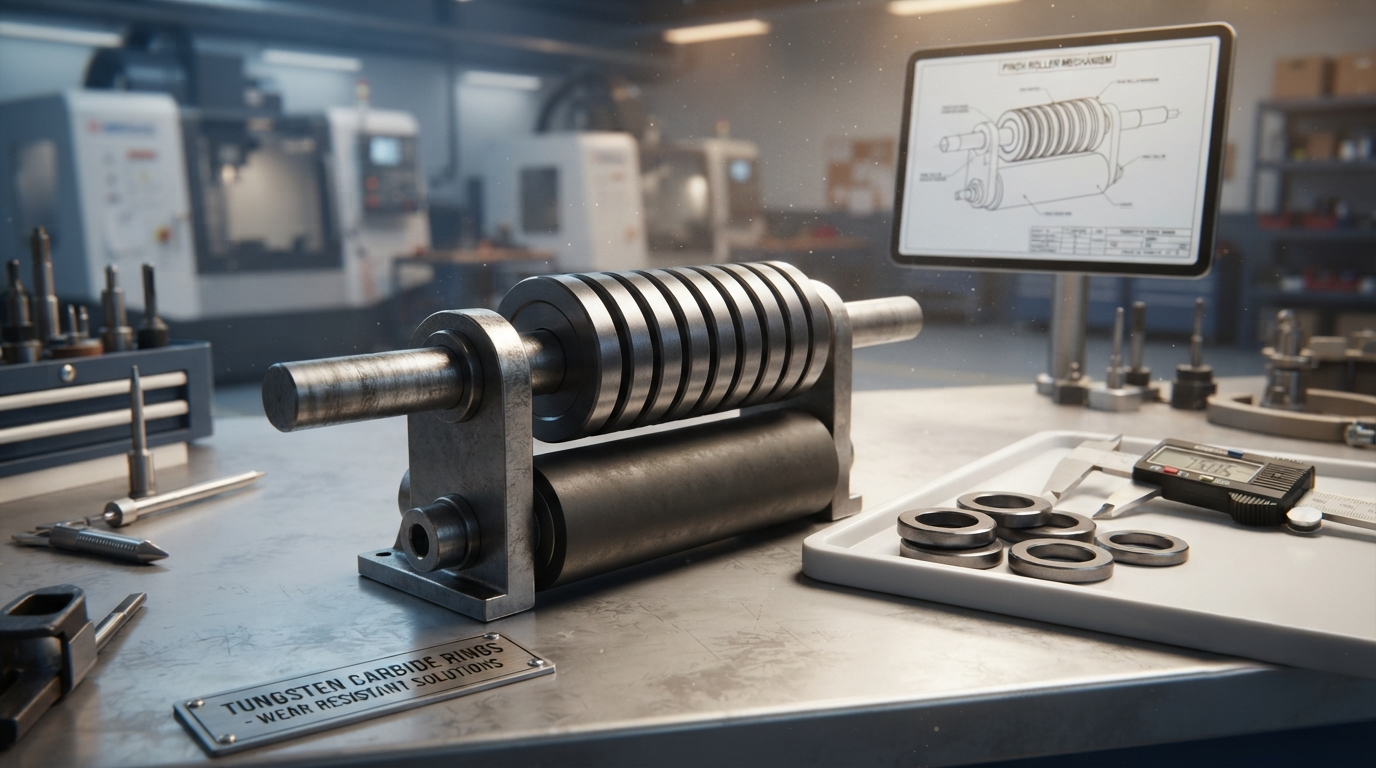
Industrial manufacturing environments demand components that can operate under extreme pressure, continuous friction, and high-speed production conditions. In such applications, ordinary materials often fail due to rapid wear and frequent maintenance requirements. This is where tungsten carbide rings and pinch rollers provide a reliable solution by offering exceptional hardness, durability, and operational stability.
From steel processing plants to tube mills and wire manufacturing facilities, these components help maintain smooth material movement and improve production efficiency. The combination of tungsten carbide’s superior mechanical properties with advanced pinch roller technology allows industries to achieve longer equipment life, reduced downtime, and consistent product quality.
As manufacturers continue to focus on automation and cost-effective production, the demand for high-performance wear-resistant components is increasing worldwide.
Understanding Tungsten Carbide Rings and Their Industrial Role
Tungsten carbide rings are precision-engineered wear components produced from tungsten carbide, a composite material created by combining tungsten and carbon atoms. Known for its exceptional hardness and resistance to abrasion, tungsten carbide is widely considered one of the most effective materials for heavy-duty industrial applications.
These rings are designed to maintain their shape and performance even when exposed to:
- High mechanical pressure
- Continuous friction
- Elevated temperatures
- Abrasive materials
- Heavy production cycles
Unlike conventional metal rings, tungsten carbide rings provide improved dimensional stability, allowing machinery to operate with greater accuracy over extended periods.
The excellent wear resistance of tungsten carbide makes these rings a preferred choice for industries where equipment reliability directly affects productivity.
What Is a Pinch Roller and How Does It Work?
A pinch roller is an important mechanical component used to grip, guide, and move materials through industrial processing equipment. It consists of rotating rollers that apply controlled pressure to ensure stable movement of materials.
Pinch rollers are widely used in manufacturing operations such as:
- Steel strip processing
- Pipe and tube production
- Wire drawing systems
- Metal forming lines
- Continuous production machinery
The primary purpose of a pinch roller is to provide accurate material control while preventing slipping, misalignment, and surface damage.
When equipped with tungsten carbide rings, pinch rollers achieve improved performance by offering stronger gripping ability and increased resistance against surface degradation.
Advantages of Using Tungsten Carbide Rings in Pinch Rollers
The integration of tungsten carbide rings into pinch rollers has transformed industrial material handling systems. These advanced components provide several benefits compared with traditional roller designs.
Exceptional Wear Resistance
Tungsten carbide has outstanding resistance against abrasion. This allows pinch rollers to maintain their surface quality even during long production cycles.
Longer Operational Life
Because tungsten carbide is extremely hard, rollers equipped with carbide rings require fewer replacements, reducing maintenance expenses.
Improved Production Accuracy
Stable roller dimensions help maintain consistent material feeding, resulting in better product quality and fewer production errors.
Better Performance Under Extreme Conditions
Tungsten carbide pinch rollers can handle demanding environments involving high pressure, temperature fluctuations, and continuous operation.
Major Applications of Tungsten Carbide Pinch Rollers
Steel Manufacturing and Metal Processing
Steel plants depend on pinch rollers for transporting and controlling metal sheets, strips, and bars. Tungsten carbide rings help these systems operate smoothly while reducing surface damage caused by constant contact.
Tube and Pipe Production
In tube mills, accurate material positioning is essential. Tungsten carbide pinch rollers ensure stable feeding and alignment throughout the manufacturing process.
Wire and Cable Industries
Wire production requires precise control to prevent defects. Carbide-based rollers provide excellent grip while maintaining the required surface quality.
Industrial Automation Systems
Automated production lines benefit from tungsten carbide components because they deliver consistent performance with minimal interruptions.
Tungsten Carbide Rings vs Traditional Roller Materials
| Performance Factor | Tungsten Carbide Rings | Standard Steel Components |
| Hardness Level | Very High | Medium |
| Wear Resistance | Excellent | Limited |
| Maintenance Frequency | Low | Higher |
| Service Life | Extended | Shorter |
| Performance Stability | Consistent | Decreases over time |
This comparison shows why many industries are replacing conventional roller surfaces with tungsten carbide solutions.
Key Considerations Before Choosing Tungsten Carbide Pinch Rollers
Selecting the right tungsten carbide pinch roller requires careful evaluation of operating conditions and production requirements.
Application Requirements
Different industries require different roller specifications. The correct carbide grade, size, and surface design should match the intended use.
Material Type Being Processed
The processed material affects roller performance. Manufacturers must select suitable roller characteristics based on hardness, thickness, and surface sensitivity.
Production Speed
High-speed production lines require rollers capable of maintaining stability without excessive wear.
Environmental Conditions
Factors such as temperature, dust, and chemical exposure should be considered before selecting industrial roller components.
Manufacturing Process of Tungsten Carbide Rings
Producing high-quality tungsten carbide rings requires advanced technology and strict quality control.
The manufacturing process generally includes:
- Selecting high-purity tungsten carbide powder
- Mixing carbide particles with binding materials
- Pressing the mixture into required shapes
- Sintering at controlled temperatures
- Precision grinding for accurate dimensions
- Surface finishing and quality inspection
This process ensures that tungsten carbide rings achieve the hardness, strength, and accuracy required for industrial applications.
Maintenance Practices to Extend Pinch Roller Life
Even though tungsten carbide pinch rollers are highly durable, proper maintenance helps maximize their performance.
Recommended maintenance steps include:
- Inspecting roller surfaces regularly
- Maintaining correct alignment
- Avoiding excessive operating pressure
- Removing dirt and metal particles
- Checking for unusual vibration or noise
- Following manufacturer guidelines
Proper maintenance reduces unexpected failures and improves overall equipment efficiency.
Future Developments in Tungsten Carbide Roller Technology
Industrial demands are continuously changing, and manufacturers are developing improved tungsten carbide solutions with enhanced performance characteristics.
Future advancements may include:
- More advanced carbide compositions
- Customized roller designs
- Improved surface treatments
- Smart monitoring technologies
- Greater focus on energy-efficient production
As industries adopt higher automation levels, reliable wear-resistant components will become increasingly important.
Frequently Asked Questions About Tungsten Carbide Rings and Pinch Rollers
1. What makes tungsten carbide rings suitable for industrial use?
Tungsten carbide rings offer exceptional hardness, wear resistance, and strength, making them suitable for demanding industrial environments.
2. What is the main function of a pinch roller?
A pinch roller controls and guides materials by applying controlled pressure during manufacturing processes.
3. Why are tungsten carbide rings added to pinch rollers?
They improve durability, reduce wear, and help maintain consistent roller performance.
4. Which industries commonly use tungsten carbide pinch rollers?
Steel, tube manufacturing, wire processing, automotive, and metal fabrication industries commonly use them.
5. How does tungsten carbide compare with steel?
Tungsten carbide provides significantly higher hardness and better resistance against abrasion than steel.
6. Can tungsten carbide rollers operate continuously?
Yes, they are designed for continuous industrial operation under demanding conditions.
7. Are tungsten carbide rings available in custom sizes?
Yes, manufacturers can produce customized designs according to specific machinery requirements.
8. What factors affect tungsten carbide roller lifespan?
Operating pressure, production speed, processed material, temperature, and maintenance practices influence lifespan.
9. Do tungsten carbide pinch rollers reduce maintenance costs?
Yes, their longer service life helps decrease replacement frequency and maintenance expenses.
10. How do manufacturers ensure tungsten carbide quality?
Quality is maintained through controlled manufacturing processes, precision machining, and performance testing.
Read more – https://newsgrow.blogspot.com/2026/08/hydraulic-cylinder-and-tungsten-carbide.html
https://newsgrow.blogspot.com/2026/08/tungsten-carbide-rings-and-pinch-roller.html