
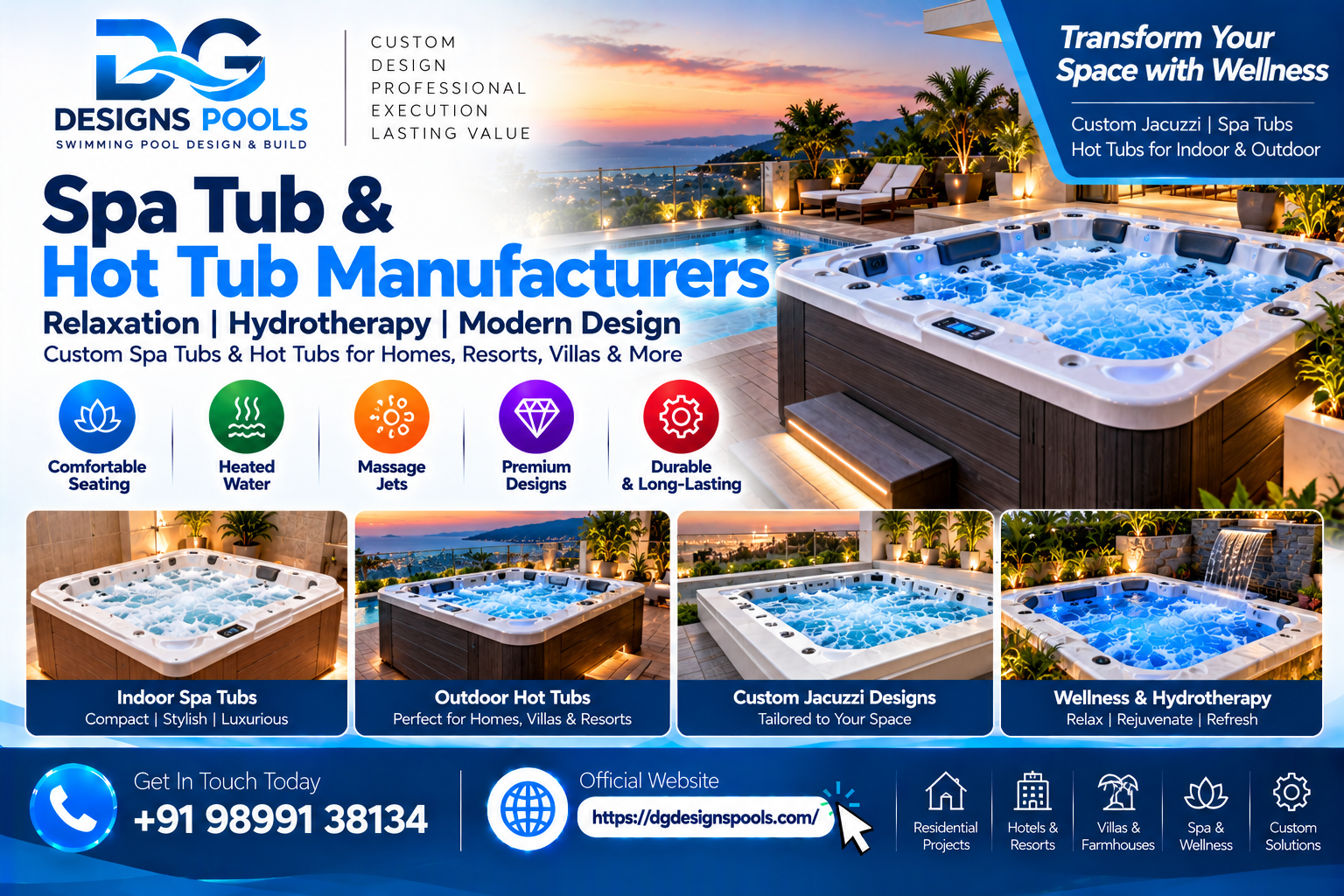
Growing interest in home relaxation, spa-inspired bathrooms, rooftop leisure spaces, resorts, farmhouses, hotels, and wellness retreats is increasing demand for professional spa tub manufacturers and experienced hot tub manufacturers. Buyers today are looking beyond basic bathing products and asking for better ergonomics, hydrotherapy-style jets, efficient heating, premium finishes, compact footprints, and easier maintenance.
Modern spa tubs and hot tubs are increasingly being designed as lifestyle products rather than simple water containers. Their success depends on how well seating, water circulation, filtration, heating, insulation, controls, and safety work together.
Why Spa Tub Manufacturers Are in Demand
Professional spa tub manufacturers design and produce compact wellness-oriented tubs for residential and commercial use.
Common applications include:
- Luxury homes
- Villas
- Farmhouses
- Resorts
- Boutique hotels
- Rooftop terraces
- Wellness centers
- Spa facilities
- Premium bathrooms
Depending on the design, a spa tub may include built-in seating, massage jets, lighting, temperature controls, water circulation, and filtration.
The main advantage is customization around available space and intended use.
What Defines a Modern Spa Tub?
A contemporary spa tub is typically designed for seated relaxation rather than active swimming.
Important features may include:
Ergonomic Seating
The seating layout should support natural posture and comfortable immersion.
Massage Jets
Jets can create targeted water movement around the back, shoulders, legs, or feet.
Heating
Controlled water temperature can make the spa more comfortable during cooler weather.
Lighting
Underwater or perimeter LED lighting can create a relaxing evening atmosphere.
Controls
Digital systems may help users manage temperature, jets, lights, and filtration.
Experienced spa tub manufacturers should design these elements as one integrated system.
Why Hot Tub Manufacturers Focus on Comfort and Efficiency
Professional hot tub manufacturers work with several performance requirements at once.
A good hot tub should balance:
- Comfort
- Water circulation
- Heat retention
- Ease of maintenance
- Energy efficiency
- User safety
- Material durability
The appearance of the tub matters, but long-term performance often depends on components that are less visible, such as pumps, insulation, pipework, and filtration.
Hydrotherapy-Style Features Are a Major Attraction
One reason buyers search for spa tub manufacturers is the ability to create a personalized jet layout.
Different users may prefer:
- Gentle massage
- Stronger targeted jets
- Foot jets
- Neck and shoulder jets
- Bubble effects
- Water circulation for general relaxation
The number of jets alone should not determine quality.
Too many jets connected to an undersized pump can create weak performance, while excessive pressure may reduce comfort.
Jet design should match the tub size and pump capacity.
Heating Systems Matter
A hot tub is intended to maintain warmer water than a conventional swimming pool.
Heating requirements depend on:
- Tub capacity
- Outdoor climate
- Desired temperature
- Frequency of use
- Insulation
- Cover quality
Efficient hot tub manufacturers may use insulation and covers to reduce heat loss.
An insulated cover can be particularly important for outdoor systems because water can lose significant heat when exposed to cooler air.
Filtration Supports Cleaner Water
Even relatively small spa tubs need appropriate water circulation and filtration.
A typical system may include:
- Circulation pump
- Filter
- Suction outlets
- Return jets
- Sanitization equipment
- Control system
Warm water generally requires careful hygiene management.
Users should follow recommended water-testing and maintenance routines to keep the system operating properly.
Material Selection Affects Durability
Spa tubs and hot tubs may be manufactured using different materials depending on design and production method.
Possible options can include:
- Acrylic
- Fiberglass-reinforced structures
- Composite materials
- Specialized molded shells
The selected material should be able to handle:
- Warm water
- Cleaning chemicals
- Regular use
- Outdoor exposure where applicable
- Structural loading
A quality shell should also have a smooth, comfortable surface that is easy to clean.
Indoor vs Outdoor Spa Tubs
Spa tubs can be installed in several environments.
Indoor Spa Tub
Indoor installations may offer greater privacy and year-round comfort.
Planning should consider:
- Ventilation
- Humidity
- Drainage
- Floor loading
- Electrical protection
Outdoor Hot Tub
Outdoor systems may be suitable for gardens, terraces, villas, and resorts.
Important factors include:
- Weather exposure
- Drainage
- Shade
- Privacy
- Insulation
- Access
Buyers should discuss the final installation location with hot tub manufacturers before selecting the system.
Rooftop and Terrace Installations Need Structural Review
Hot tubs can contain a substantial amount of water.
Before installing one on a terrace or rooftop, the building should be professionally assessed.
The total load includes:
- Tub structure
- Water
- Equipment
- Users
A qualified structural professional should confirm whether the proposed location is suitable.
This is especially important for larger multi-seat systems.
Spa Tub Size Should Match the Space
Bigger is not automatically better.
A well-designed two- or four-person spa may be more practical than a large tub if space is limited.
Common formats may include:
- Two-person spa tubs
- Four-person family tubs
- Six-person social tubs
- Larger hospitality-oriented systems
Good spa tub manufacturers should consider circulation around the tub as well as the tub dimensions themselves.
Maintenance access must also be preserved.
Customization Options
Buyers increasingly expect customization.
Options may include:
- Shell colors
- Cabinet finishes
- Jet layouts
- Seating configuration
- Lighting
- Waterfalls
- Headrests
- Digital controls
- Steps
- Covers
Hospitality projects may also request designs that match the surrounding architecture and landscape.
Safety Should Be Built Into the Design
Warm-water environments require careful planning.
Important considerations include:
- Anti-slip surfaces
- Stable entry steps
- Handrails where needed
- Safe water temperature
- Electrical protection
- Secure covers
- Controlled access
Children should always be supervised around spa and hot tub systems.
Electrical installation should be completed according to appropriate safety standards.
Energy Efficiency Is Becoming More Important
Operating cost is increasingly important for homeowners and hospitality properties.
Energy-saving considerations may include:
- High-quality insulation
- Efficient pumps
- Timed filtration cycles
- Insulated covers
- Smart temperature controls
- Appropriate tub sizing
A smaller, well-insulated system may sometimes provide a better ownership experience than an oversized tub that is expensive to keep warm.
Maintenance and Service Access
Good hot tub design should make maintenance straightforward.
Regular tasks may include:
- Water testing
- Filter cleaning
- Surface cleaning
- Jet inspection
- Heater checks
- Pump inspection
- Water replacement
Service panels should be positioned so technicians can reach the pump, heater, valves, and electrical components.
This should be discussed with hot tub manufacturers before permanent surrounding finishes are installed.
Spa Tub vs Hot Tub: Is There a Difference?
The terms are often used interchangeably, but the emphasis can differ.
A spa tub may refer broadly to a compact bath or wellness pool equipped with jets.
A hot tub generally emphasizes heated water, seated relaxation, and repeated use.
Both can include:
- Jets
- Heating
- Filtration
- Lighting
- Controls
The exact specification matters more than the product name.
Choosing Spa Tub Manufacturers
When evaluating spa tub manufacturers, buyers should ask:
- What shell material is used?
- How many seats are included?
- What pump and heater specifications are provided?
- Is filtration included?
- What insulation is used?
- What warranty applies?
- Is installation included?
- Is after-sales support available?
- Are spare parts available?
- Can the layout be customized?
A clear specification makes different quotations easier to compare.
Frequently Asked Questions
What do spa tub manufacturers provide?
Professional spa tub manufacturers may provide spa shells, seating, jets, pumps, heating, filtration, lighting, controls, installation support, and customization.
What do hot tub manufacturers focus on?
hot tub manufacturers generally focus on heated water systems, seating comfort, jets, insulation, filtration, and durable outdoor or indoor construction.
Can spa tubs be installed outdoors?
Yes. Outdoor installation is common, provided drainage, electrical safety, weather exposure, and structural conditions are suitable.
Can a hot tub be installed on a rooftop?
Potentially, but a qualified professional should first confirm the roof can safely support the full load.
How many people can use a spa tub?
Capacity varies from compact two-person systems to larger multi-seat hot tubs.
Are hot tubs heated continuously?
They may be maintained at a set temperature or operated according to usage patterns and control settings.
Do spa tubs require filters?
Yes. Filtration and water-quality management are important for regular use.
Can jet positions be customized?
Yes, depending on the manufacturer’s design capability.
Are hot tubs expensive to maintain?
Operating costs vary with size, insulation, heating, climate, usage, and equipment efficiency.
What should buyers check before ordering?
Review size, materials, seating, jet configuration, heater capacity, insulation, filtration, warranty, installation requirements, and service support.
Media Contact
Swimming Pool, Spa & Wellness Project Enquiries
Contact: +91 98991 38134
Official Website: https://dgdesignspools.com/
