
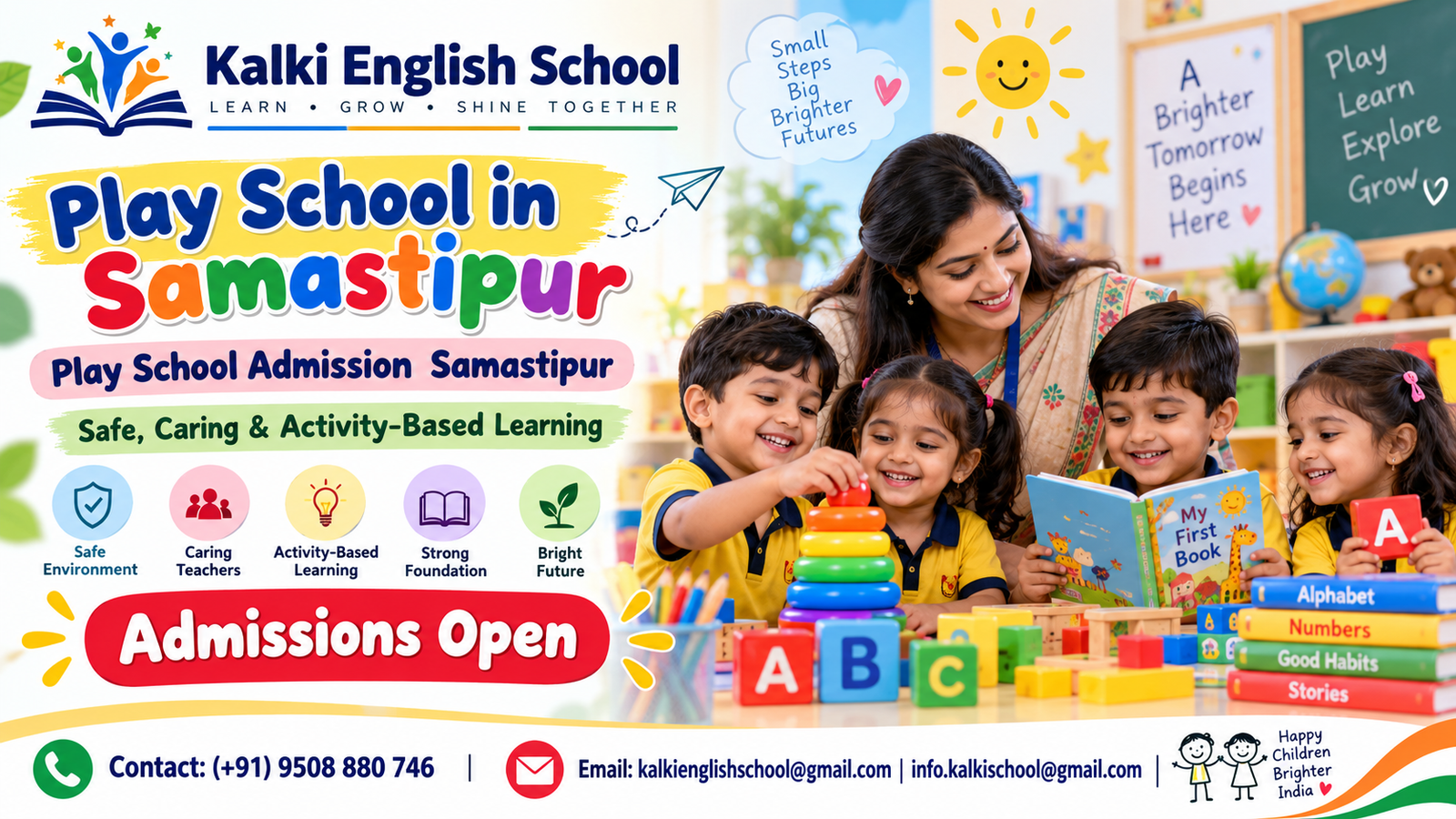
Early childhood education is becoming an important consideration for families seeking a positive introduction to structured learning. In Samastipur, Bihar, parents evaluating preschool options are increasingly interested in understanding how a nurturing environment can support children’s confidence, communication, and social development.
Choosing a play school in samastipur involves more than comparing classrooms, infrastructure, and academic activities. Families should also consider teaching methods, child safety, emotional support, and opportunities for play-based learning.
Similarly, the school admission samastipur process offers parents an opportunity to evaluate whether a school’s environment matches their child’s developmental needs.
For families exploring early education, understanding the relationship between playful learning, emotional readiness, and parental involvement can help make school selection more meaningful.
Why Early Childhood Education Deserves Attention
A child’s introduction to school can influence their attitude towards learning and interaction with others.
Preschool environments provide opportunities to explore new activities, develop communication skills, and become familiar with group experiences.
However, young children have different learning styles, interests, and developmental needs.
An effective early learning environment should recognise these differences instead of expecting identical progress from every child.
Parents should therefore evaluate how schools balance structured activities with opportunities for exploration.
What Is a Play School in Samastipur?
A play school in samastipur is an early learning institution that introduces young children to age-appropriate educational experiences through play, communication, movement, and guided activities.
Depending on the institution, programmes may include storytelling, music, creative play, drawing, and simple group activities.
The objective is to encourage foundational development in a supportive environment.
Play schools may also introduce children to everyday routines, classroom interaction, and basic independence.
However, programme structure and admission eligibility vary between institutions.
Parents should review the school’s actual curriculum and policies before enrolling their child.
How Play-Based Learning Supports Development
Play is an important part of early childhood learning.
Through suitable activities, children can explore language, movement, problem-solving, and interaction with others.
For example, building blocks can introduce basic spatial concepts, while storytelling can encourage listening and communication.
Role-playing activities may help children practise social interaction.
Creative exercises can provide opportunities for self-expression.
These activities should remain appropriate to the child’s developmental abilities.
The goal is not to accelerate every academic milestone but to create positive learning experiences that encourage participation.
Understanding School Admission Samastipur
The school admission samastipur process generally involves reviewing available institutions, understanding admission requirements, and completing the school’s enrolment procedures.
Parents may need to provide relevant identification, age-related documentation, and other records requested by the institution.
However, exact documentation and eligibility criteria depend on the school and applicable requirements.
Before applying, families should confirm the programme offered, admission policies, fee structure, and facilities.
A school visit can also help parents evaluate the classroom environment.
Making an informed decision requires understanding the complete educational experience rather than relying exclusively on promotional materials.
Why Emotional Readiness Matters
Children may respond differently when entering an unfamiliar school environment.
Some become comfortable with new surroundings quickly, while others need additional reassurance and support.
These responses can be part of individual developmental differences.
Schools should provide a welcoming atmosphere that allows children to become familiar with teachers, classmates, and classroom activities.
Parents can support this transition through positive conversations and predictable home routines.
Emotional comfort should be considered alongside educational activities.
Important Factors When Comparing Play Schools
| Evaluation Factor | What Parents Should Consider |
| Learning Approach | Age-appropriate, play-based activities |
| Teacher Interaction | Patient communication and individual attention |
| Classroom Environment | Clean, welcoming and organised spaces |
| Safety Measures | Supervision, access control and emergency procedures |
| Parent Communication | Clear information about activities and concerns |
| Child Development | Opportunities for language, creativity and social interaction |
These factors help parents evaluate whether a school is appropriate for their child.
The Role of Teachers in Early Learning
Preschool teachers influence how children experience their first educational environment.
Young learners benefit from adults who communicate patiently, recognise individual needs, and encourage participation.
Teachers can support vocabulary development through storytelling, songs, and everyday conversations.
They may also introduce children to cooperative activities and simple classroom responsibilities.
However, teaching quality should not be judged only by classroom decoration or activity photographs.
Parents should consider staff qualifications, supervision arrangements, and how teachers respond to children needing additional support.
Why Parent-School Communication Is Essential
A supportive relationship between parents and educators can contribute to a more consistent learning experience.
Parents understand their child’s habits, interests, and communication preferences.
Teachers observe how children participate in classroom activities.
Sharing relevant information can help both parties respond appropriately to individual needs.
Schools may communicate through meetings, written updates, or other suitable methods.
Parents should feel comfortable asking questions about classroom routines, learning approaches, and wellbeing.
Clear communication encourages cooperation without placing unnecessary pressure on children.
Preparing Children for Their First School Experience
Families can introduce simple activities that help children become familiar with group learning.
Reading picture books, practising basic communication, and encouraging independent play can provide useful experiences.
Parents can also help children recognise their belongings and communicate everyday needs.
However, children should not be expected to master formal reading or writing before entering a play-based programme.
Preparation should remain encouraging and age-appropriate.
The purpose is to make school feel welcoming rather than stressful.
Why Safety and Hygiene Should Influence Admission Decisions
A positive learning environment must also address children’s physical wellbeing.
Parents should evaluate classroom supervision, hygiene arrangements, safe furniture, and appropriate play materials.
The institution should have clear procedures for child pickup, emergencies, and communication with families.
Age-appropriate facilities are particularly important for younger children.
Parents should also understand how the school manages illness-related concerns and routine cleanliness.
Safety procedures should be explained clearly rather than assumed from the appearance of the premises.
Understanding Fees and School Facilities
School selection should include a practical review of the full fee structure.
Families should ask about tuition charges, admission-related payments, learning materials, transport arrangements, and other applicable expenses.
Not every institution includes the same services within its advertised fees.
Parents should request accurate information directly from the school.
Infrastructure also deserves attention, but expensive facilities do not automatically establish better learning quality.
A supportive teaching environment and age-appropriate educational approach are equally important.
Frequently Asked Questions (FAQs)
1. What is a play school in Samastipur?
A play school in Samastipur is an early childhood learning institution offering age-appropriate activities that introduce children to communication, creativity, social interaction, and classroom routines.
2. What is the process for school admission Samastipur?
Parents generally compare schools, review eligibility and documentation requirements, understand fees, and complete the chosen institution’s admission procedure.
3. What should parents look for when choosing a play school?
Parents should consider teacher interaction, child safety, hygiene, play-based learning, classroom environment, and parent communication.
4. Is formal academic learning necessary before joining preschool?
Not necessarily. Early learning should focus on age-appropriate development, positive experiences, and individual readiness rather than premature academic pressure.
5. How can parents help children adjust to preschool?
Parents can encourage communication, maintain reassuring routines, introduce simple independent activities, and work closely with teachers.
Media Contact
Department: School Admissions and Parent Enquiries
Location: Samastipur, Bihar, India
Email : info.kalkischool@gmail.com
Contact : (+91) 9508 880 746
Official Website : https://kalkienglishschool.com/