
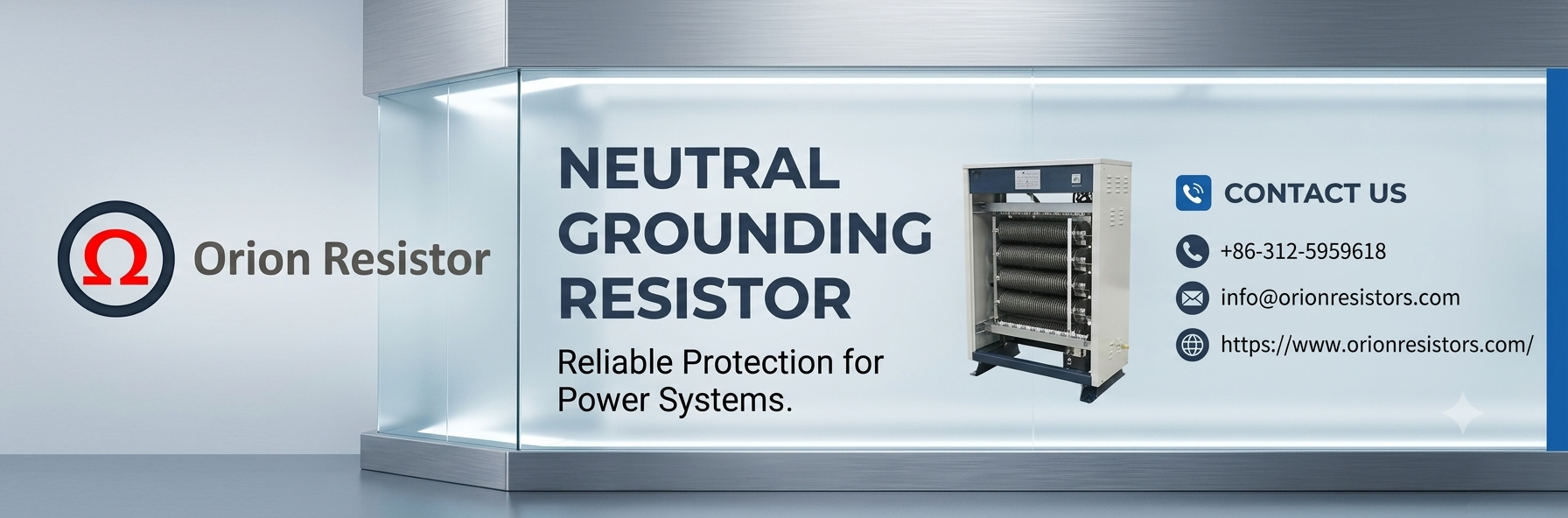
Electrical power systems are designed to operate safely even under abnormal conditions. One of the most effective ways to minimize damage during a ground fault is by installing a Neutral Grounding Resistor (NGR). Whether used in industrial plants, power generation facilities, or utility substations, an NGR plays a critical role in improving equipment safety, reducing downtime, and protecting personnel.
At Orion Resistors, we manufacture high-performance Neutral Grounding Resistors engineered to meet demanding industrial applications while ensuring compliance with international standards.
In this comprehensive guide, you’ll learn what a Neutral Grounding Resistor is, how it works, its advantages, applications, selection criteria, and best practices for installation.
What Is a Neutral Grounding Resistor?
A Neutral Grounding Resistor (NGR) is a specially designed resistor connected between the neutral point of a transformer or generator and earth. Its primary purpose is to limit ground fault current to a safe and predetermined value.
Instead of allowing a damaging high current to flow during a single line-to-ground fault, the resistor restricts the current, minimizing equipment damage while maintaining system stability.
This controlled fault current allows protection relays to detect the fault accurately without exposing equipment to excessive thermal or mechanical stress.
Why Is Neutral Grounding Important?
Ground faults are among the most common electrical faults in industrial power systems. Without proper grounding, these faults can lead to:
- Equipment damage
- Arc flash hazards
- Production downtime
- Fire risks
- Expensive maintenance
- Reduced system reliability
Neutral grounding ensures that fault currents remain within safe limits while enabling protective devices to isolate the fault quickly.
How Does a Neutral Grounding Resistor Work?
Under normal operating conditions, no current flows through the Neutral Grounding Resistor because the system remains balanced.
When a ground fault occurs:
- Fault current attempts to flow to earth.
- The Neutral Grounding Resistor limits the current.
- Protective relays detect the controlled current.
- Circuit breakers isolate the faulty section.
- The rest of the electrical system continues operating safely.
This simple yet effective principle significantly reduces damage caused by high fault currents.
Benefits of Using a Neutral Grounding Resistor
1. Limits Ground Fault Current
The primary function of an NGR is to reduce fault current to a safe level, preventing severe equipment damage.
2. Improves Personnel Safety
Lower fault current reduces the likelihood of dangerous arc flash incidents and enhances workplace safety.
3. Protects Expensive Equipment
Transformers, generators, switchgear, motors, and cables experience significantly lower thermal and mechanical stress.
4. Minimizes Downtime
Fast fault detection allows maintenance teams to isolate only the affected section instead of shutting down the complete system.
5. Extends Equipment Life
Repeated high-current faults accelerate insulation aging. Limiting fault current helps increase equipment lifespan.
6. Supports Reliable Protection Coordination
Protection relays operate more accurately when fault currents remain within their designed operating range.
Neutral Grounding Methods Comparison
| Grounding Method | Fault Current | Equipment Protection | Cost | Typical Applications |
| Solid Grounding | Very High | Moderate | Low | Low-voltage systems |
| Resistance Grounding | Controlled | Excellent | Moderate | Industrial facilities |
| Reactance Grounding | Medium | Good | Medium | Utility networks |
| Ungrounded System | Very Low initially | Poor | Low | Limited industrial use |
For most industrial installations, resistance grounding using an NGR provides the best balance between safety and reliability.
Applications of Neutral Grounding Resistors
Neutral Grounding Resistors are widely used across industries, including:
- Power generation plants
- Utility substations
- Oil and gas facilities
- Chemical processing plants
- Mining operations
- Cement manufacturing
- Steel plants
- Renewable energy systems
- Data centers
- Marine electrical systems
These environments require dependable protection against damaging ground faults.
Key Components of a Neutral Grounding Resistor
A standard NGR typically includes:
- Stainless steel resistor elements
- Weatherproof enclosure
- Insulators
- Current transformer (optional)
- Monitoring system
- Temperature sensors
- Neutral terminals
- Ground terminals
Modern designs often include fault monitoring and thermal protection for improved reliability.
How to Select the Right Neutral Grounding Resistor
Choosing the correct NGR depends on several engineering parameters.
System Voltage
Higher voltage systems require different resistor ratings and insulation levels.
Fault Current Rating
The resistor should limit current according to the protection philosophy of the electrical system.
Fault Duration
Typical ratings include:
- 10 seconds
- 30 seconds
- 60 seconds
- Continuous duty
Environmental Conditions
Outdoor installations may require:
- IP-rated enclosures
- Corrosion-resistant materials
- High-temperature protection
- Seismic design
Applicable Standards
Ensure compliance with recognized standards such as:
- IEEE 32
- IEEE 142
- IEC 60076
- IEC 60071
Practical Example
Consider a manufacturing facility operating a 6.6 kV transformer.
Without an NGR:
- Ground fault current exceeds 3,000 A.
- Transformer insulation suffers severe stress.
- Switchgear experiences significant damage.
- Production stops unexpectedly.
With a properly designed Neutral Grounding Resistor from Orion Resistors:
- Ground fault current is limited to 200 A.
- Protective relays detect the fault instantly.
- Equipment damage is minimized.
- Production resumes quickly after repairs.
This example demonstrates why NGRs are considered essential protection devices in industrial power systems.
Installation Best Practices
For optimal performance:
- Install the NGR close to the transformer or generator neutral.
- Ensure proper earthing connections.
- Follow manufacturer torque specifications.
- Inspect resistor elements periodically.
- Test insulation resistance during maintenance.
- Verify relay coordination after commissioning.
- Monitor operating temperature regularly.
Routine inspection significantly improves long-term reliability.
Why Choose Orion Resistors?
Selecting the right manufacturer is just as important as selecting the right product.
Orion Resistors offers:
- Custom-engineered Neutral Grounding Resistors
- High-quality stainless steel resistor elements
- Reliable thermal performance
- Compliance with international standards
- Rugged indoor and outdoor designs
- Technical engineering support
- Fast manufacturing and delivery
- Proven performance across multiple industries
Our solutions are designed to deliver dependable protection under the most demanding operating conditions.
Frequently Asked Questions
What is the purpose of a Neutral Grounding Resistor?
A Neutral Grounding Resistor limits ground fault current, protects electrical equipment, and enables protective relays to detect and isolate faults safely.
Where are Neutral Grounding Resistors used?
They are commonly installed with transformers, generators, switchgear, substations, industrial plants, utilities, and renewable energy systems.
Can an NGR prevent equipment damage?
Yes. By limiting fault current, an NGR significantly reduces thermal and mechanical stress on transformers, motors, generators, cables, and switchgear.
How long can an NGR carry fault current?
Depending on the design, Neutral Grounding Resistors are available with ratings such as 10 seconds, 30 seconds, 60 seconds, or continuous duty.
How often should an NGR be inspected?
Annual inspections are recommended. Facilities operating in harsh environments may require more frequent maintenance and testing.
Final Thoughts
A Neutral Grounding Resistor is one of the most effective investments for improving electrical system safety, protecting valuable assets, and ensuring uninterrupted industrial operations. By limiting ground fault current, it reduces equipment damage, enhances personnel safety, and supports reliable fault detection.
When selecting an NGR, focus on engineering expertise, product quality, and compliance with recognized standards. Orion Resistors delivers robust, customized Neutral Grounding Resistor solutions tailored to your application, helping industries achieve safer, more reliable, and more efficient power systems.
Contact Number – +86-312-5959618
Email ID – info@orionresistors.com
Official Website – https://www.orionresistors.com