
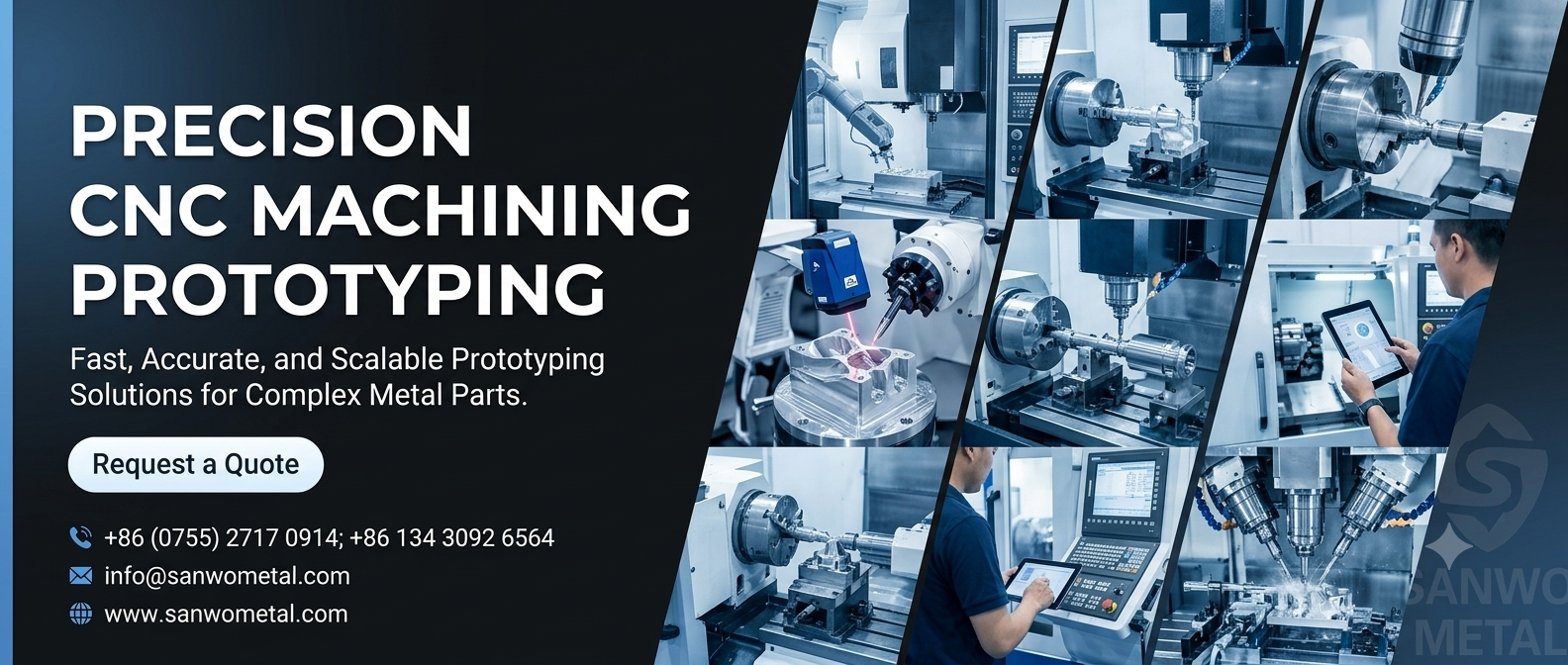
Every successful product begins with a prototype. Whether it is an automotive component, a medical device, or an industrial machine part, manufacturers need a reliable way to validate designs before investing in mass production. This is where cnc machining prototyping has become one of the most valuable manufacturing solutions available today.
Unlike traditional fabrication methods, CNC prototype machining delivers exceptional accuracy, faster turnaround, and repeatable quality. As industries continue to shorten product development cycles, companies increasingly rely on experienced manufacturing partners like Sanwo Metal to produce functional prototypes that are ready for testing, validation, and design improvements.
Why CNC Machining Prototyping Matters in Modern Manufacturing
Product development has changed dramatically over the past decade. Businesses no longer have the luxury of spending months refining prototypes through manual machining or trial-and-error processes.
CNC machining prototyping allows engineers to convert CAD designs into physical components with micron-level precision. Because the process is computer-controlled, every prototype accurately reflects the original design, making testing far more reliable.
Manufacturers across aerospace, automotive, robotics, consumer electronics, and medical industries use CNC prototypes to identify design flaws early, reduce production risks, and accelerate product launches.
What Is CNC Machining Prototyping?
CNC machining prototyping is the process of manufacturing prototype parts using Computer Numerical Control (CNC) equipment. Digital design files control cutting tools that remove material from a solid workpiece until the final component is produced.
Unlike 3D printing, CNC machining creates parts from production-grade materials, allowing engineers to evaluate real-world performance under actual operating conditions.
The result is a prototype that closely matches the final production component in terms of strength, finish, and dimensional accuracy.
How the CNC Prototype Process Works
A typical prototype project follows several important steps:
- Product design using CAD software.
- Engineering review for manufacturability.
- Material selection.
- CNC programming.
- Precision machining.
- Quality inspection.
- Functional testing.
- Design optimization if required.
Each stage helps minimize production errors while improving overall product quality.
Why Businesses Choose CNC Machining Prototyping
There are several reasons manufacturers prefer CNC machining over traditional prototype methods.
High Precision
Modern CNC machines consistently achieve tight tolerances that manual machining cannot maintain.
Production-Grade Materials
Engineers can prototype using aluminum, stainless steel, brass, titanium, copper, or engineering plastics that closely match final production materials.
Faster Product Development
Instead of waiting weeks for manual fabrication, prototypes can often be completed within days.
Better Product Testing
Functional testing becomes more accurate because the prototype behaves like the finished product.
Lower Development Costs
Finding design issues before mass production prevents expensive manufacturing changes later.
CNC Machining vs 3D Printing for Prototyping
| Feature | CNC Machining Prototyping | 3D Printing |
| Precision | Excellent | Moderate |
| Surface Finish | Superior | Often requires finishing |
| Material Strength | Production-grade | Limited depending on material |
| Dimensional Accuracy | Very High | Good |
| Mechanical Testing | Ideal | Limited |
| Production Readiness | Excellent | Mainly for concept models |
For engineering validation, CNC machining remains the preferred solution because it produces parts that closely replicate final production components.
Industries That Benefit Most
Many industries rely heavily on cnc machining prototyping, including:
- Aerospace
- Automotive
- Medical devices
- Industrial automation
- Robotics
- Consumer electronics
- Renewable energy
- Telecommunications
Each industry demands precision, consistency, and fast development cycles.
Practical Example
Consider an electric vehicle manufacturer developing a lightweight battery housing.
Before investing in production tooling, engineers need to verify:
- Structural strength
- Heat dissipation
- Mounting accuracy
- Assembly compatibility
- Weight optimization
Using cnc machining prototyping, the company produces several aluminum prototypes for laboratory and road testing. Engineers identify minor design improvements, modify the CAD model, and validate the revised prototype within days.
This approach prevents costly tooling changes that could otherwise delay production.
Choosing the Right Material
Material selection directly affects prototype performance.
| Material | Common Applications |
| Aluminum | Automotive, electronics, aerospace |
| Stainless Steel | Medical equipment, industrial machinery |
| Brass | Electrical fittings, decorative components |
| Titanium | Aerospace, medical implants |
| Copper | Electrical applications |
| Engineering Plastics | Consumer products, testing models |
Selecting the appropriate material ensures accurate testing and reliable results.
Common Challenges During Prototype Development
Even advanced CNC machining projects can face obstacles.
Some of the most common challenges include:
- Complex geometries
- Extremely tight tolerances
- Material deformation
- Surface finish requirements
- Short production deadlines
Working with an experienced machining partner significantly reduces these risks.
Why Manufacturers Choose Sanwo Metal
Selecting the right manufacturing partner is just as important as selecting the right machining process.
Sanwo Metal has built its reputation by delivering precision CNC machining solutions for customers worldwide. With advanced machining centers, experienced engineers, and strict quality control procedures, the company supports projects ranging from single prototypes to low-volume production.
Key advantages include:
- Advanced CNC milling and turning capabilities
- High-precision machining
- Fast prototype turnaround
- Competitive manufacturing costs
- Support for multiple engineering materials
- Consistent quality inspection
- Experienced technical team
By combining engineering expertise with modern manufacturing technology, Sanwo Metal helps businesses reduce development time while maintaining exceptional product quality.
Actionable Tips Before Ordering CNC Prototypes
To achieve the best results, consider these recommendations:
- Finalize your CAD design before machining begins.
- Select materials that closely match production requirements.
- Specify realistic tolerance requirements.
- Avoid unnecessary design complexity.
- Discuss surface finish expectations early.
- Request design-for-manufacturing feedback.
- Test prototypes under real operating conditions.
- Document every design revision for future production.
Following these practices helps reduce costs while improving prototype performance.
Future Trends in CNC Machining Prototyping
Several innovations are shaping the future of prototype manufacturing:
- AI-assisted machining optimization
- Smart factory automation
- Digital quality inspection
- Hybrid manufacturing systems
- Multi-axis CNC machining
- Faster CAD-to-production workflows
- Sustainable manufacturing practices
These technologies continue to improve precision, efficiency, and production speed across global manufacturing industries.
Frequently Asked Questions
What is CNC machining prototyping?
CNC machining prototyping is the process of manufacturing prototype parts from production-grade materials using computer-controlled machining equipment for accurate testing and product validation.
Why is CNC machining better than manual machining for prototypes?
CNC machining delivers higher accuracy, repeatability, faster production, and better surface finishes than manual machining.
Which industries use CNC machining prototyping?
Industries such as aerospace, automotive, robotics, medical devices, industrial equipment, electronics, and renewable energy regularly use CNC prototypes.
Which materials are commonly used?
Common materials include aluminum, stainless steel, brass, titanium, copper, ABS, PEEK, Delrin, and other engineering plastics.
Can CNC prototypes become production parts?
Yes. Since CNC machining uses production-grade materials and precise manufacturing methods, many prototypes can also serve as low-volume production parts.
How does Sanwo Metal support prototype development?
Sanwo Metal provides precision CNC machining, engineering support, rapid prototype production, material selection assistance, and strict quality control to help manufacturers move efficiently from product concept to production.
Conclusion
In today’s competitive manufacturing landscape, speed and precision are essential. CNC machining prototyping enables companies to validate designs, reduce development risks, and accelerate time-to-market while maintaining exceptional quality. By partnering with an experienced manufacturer such as Sanwo Metal, businesses gain access to advanced machining capabilities, engineering expertise, and dependable prototype solutions that support successful product development from concept through production.
Contact – +86 (0755) 2717 0914; +86 134 3092 6564
Email ID – info@sanwometal.com
Official Website – https://www.sanwometal.com/