
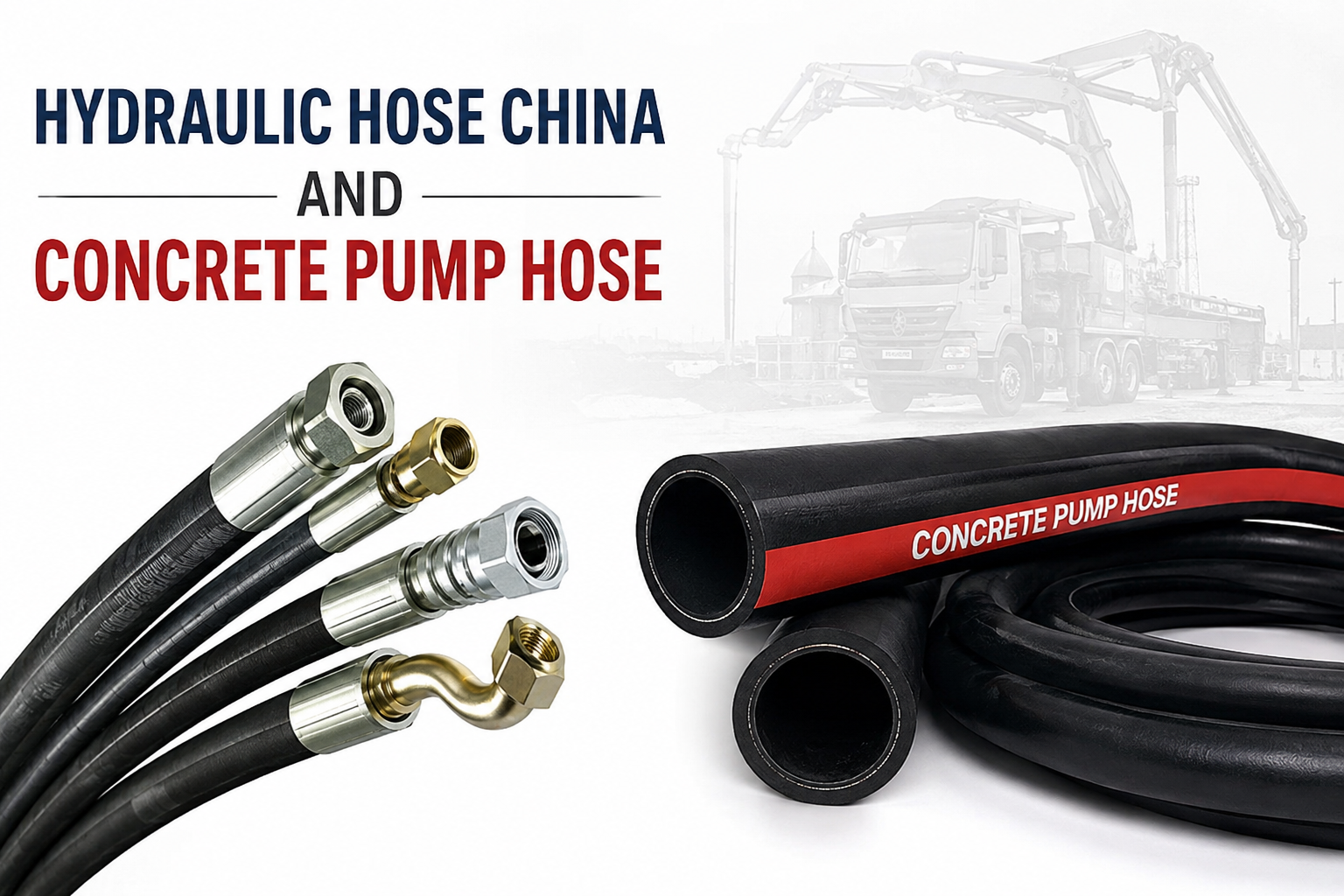
The industrial sector depends heavily on durable and high-performance hoses to keep operations running smoothly. Among the most demanded products are Hydraulic Hose China and Concrete Pump Hose, both of which play a critical role in construction, manufacturing, mining, and heavy engineering projects.
China has become one of the world’s leading manufacturers of hydraulic and industrial hoses due to advanced production capabilities, competitive pricing, and strict quality standards. At the same time, concrete pump hoses are essential components in modern construction projects, ensuring the safe and efficient transfer of concrete to different locations.
This comprehensive guide explains everything you need to know about these industrial hose solutions.
Understanding Hydraulic Hose China
Hydraulic Hose China refers to hydraulic hoses manufactured by Chinese companies that are designed to transfer hydraulic fluids under high pressure. These hoses are widely used in:
- Construction equipment
- Agricultural machinery
- Mining equipment
- Industrial manufacturing systems
- Material handling machines
- Heavy-duty vehicles
Chinese manufacturers have gained international recognition by producing hydraulic hoses that meet global standards such as SAE, DIN, and ISO certifications.
Key Features of Hydraulic Hoses
- High-pressure resistance
- Excellent flexibility
- Oil and abrasion resistance
- Long service life
- Temperature resistance
- Corrosion protection
What Is a Concrete Pump Hose?
A Concrete Pump Hose is a specialized industrial hose used to transport concrete mixtures from pumping equipment to construction sites. These hoses are built to withstand extreme pressure and abrasive materials.
They are commonly used in:
- Building construction
- Bridge construction
- Tunnel projects
- High-rise developments
- Infrastructure projects
- Road construction
Concrete pump hoses ensure smooth and continuous concrete flow, reducing labor costs and improving construction efficiency.
Why China Leads the Hydraulic Hose Industry
China has become a global hub for industrial hose manufacturing due to several advantages.
Advanced Manufacturing Technology
Chinese factories utilize:
- Automated production lines
- Precision engineering equipment
- Advanced rubber compounding technology
- Modern quality control systems
Cost-Effective Production
Manufacturers in China offer competitive pricing without compromising quality, making Hydraulic Hose China products highly attractive worldwide.
Wide Product Range
Chinese suppliers manufacture:
| Hose Type | Application |
| Hydraulic Hose | Fluid transfer systems |
| Concrete Pump Hose | Concrete transportation |
| Industrial Hose | Chemical and air transfer |
| Oil Hose | Petroleum industry |
| Water Hose | Irrigation and construction |
Types of Hydraulic Hoses
Different applications require different hydraulic hose designs.
Braided Hydraulic Hose
Suitable for medium-pressure applications.
Applications
- Agricultural equipment
- Hydraulic tools
- Industrial machinery
Spiral Hydraulic Hose
Designed for extremely high-pressure environments.
Applications
- Mining machinery
- Construction equipment
- Heavy industrial systems
Thermoplastic Hydraulic Hose
Offers excellent flexibility and lightweight performance.
Applications
- Material handling systems
- Mobile hydraulic equipment
Key Components of Hydraulic Hoses
A hydraulic hose generally consists of:
- Inner Tube
- Reinforcement Layer
- Outer Cover
Each layer contributes to the hose’s durability and pressure-handling capabilities.
Benefits of Hydraulic Hose China Products
Choosing Hydraulic Hose China products offers numerous advantages.
Superior Quality
Many manufacturers comply with international certifications.
Affordable Pricing
Chinese suppliers offer competitive costs compared to many global manufacturers.
Large Production Capacity
They can fulfill bulk orders quickly.
Customization Options
Available in:
- Different sizes
- Pressure ratings
- Fittings
- Lengths
Features of Concrete Pump Hose
A high-quality Concrete Pump Hose offers several important features.
Abrasion Resistance
Concrete contains abrasive materials that can damage ordinary hoses.
High Pressure Performance
The hose must withstand significant pumping pressure.
Flexibility
Allows easier installation in complex construction sites.
Longer Service Life
Premium materials increase durability and reduce replacement costs.
Common Applications of Concrete Pump Hose
The construction industry uses concrete pump hoses extensively.
Residential Buildings
Used for foundations and flooring.
Commercial Projects
Ideal for high-rise and large-scale developments.
Infrastructure Construction
Suitable for bridges, tunnels, and dams.
Industrial Projects
Used in factories and heavy engineering projects.
Comparison Between Hydraulic Hose and Concrete Pump Hose
| Feature | Hydraulic Hose | Concrete Pump Hose |
| Medium Transferred | Hydraulic Fluid | Concrete Mixture |
| Pressure Rating | Very High | Extremely High |
| Flexibility | High | Moderate |
| Abrasion Resistance | High | Very High |
| Main Industries | Manufacturing, Mining | Construction |
How to Choose the Right Hydraulic Hose
Selecting the right hose is essential for safety and efficiency.
Consider Operating Pressure
Always choose a hose that exceeds your system’s pressure requirements.
Check Temperature Range
Different applications require different temperature tolerances.
Evaluate Compatibility
Ensure compatibility with the hydraulic fluid.
Consider Flexibility Requirements
The hose should fit the equipment layout properly.
How to Select the Best Concrete Pump Hose
When purchasing a Concrete Pump Hose, consider:
- Hose diameter
- Working pressure
- Abrasion resistance
- Reinforcement design
- Manufacturer reputation
- Certification standards
Maintenance Tips for Industrial Hoses
Proper maintenance extends hose life significantly.
- Inspect regularly for cracks.
- Replace damaged fittings immediately.
- Avoid excessive bending.
- Store in a dry environment.
- Keep hoses away from chemicals.
- Follow manufacturer recommendations.
Signs That a Hose Needs Replacement
Watch for these warning signs:
- Surface cracks
- Leakage
- Swelling
- Reduced performance
- Visible reinforcement wires
- Excessive wear
Replacing hoses at the right time helps prevent costly downtime and safety risks.
Future Trends in Hydraulic Hose Manufacturing
The industrial hose industry continues to evolve with innovations such as:
- Smart monitoring systems
- Eco-friendly materials
- Lightweight hose designs
- Enhanced pressure capabilities
- Improved abrasion resistance
China remains a major contributor to these advancements, further strengthening the global demand for Hydraulic Hose China products.
Frequently Asked Questions (FAQs)
1. What is a hydraulic hose?
A hydraulic hose transfers hydraulic fluids under high pressure in machinery and equipment.
2. Why are Chinese hydraulic hoses popular?
They offer excellent quality, competitive pricing, and international certifications.
3. What is a concrete pump hose used for?
It is used to transport concrete from pumps to construction sites.
4. Are concrete pump hoses pressure resistant?
Yes, they are specifically designed for high-pressure concrete transfer.
5. How long does a hydraulic hose last?
Its lifespan depends on usage, maintenance, and operating conditions.
6. Can hydraulic hoses be customized?
Yes, manufacturers offer customized sizes, lengths, and fittings.
7. Why is abrasion resistance important?
It increases hose durability and reduces replacement costs.
8. Which industries use hydraulic hoses?
Construction, mining, agriculture, manufacturing, and transportation.
9. How often should hoses be inspected?
Regular inspections should be performed according to operating conditions.
10. What causes hydraulic hose failure?
Improper installation, excessive pressure, and poor maintenance are common causes.