
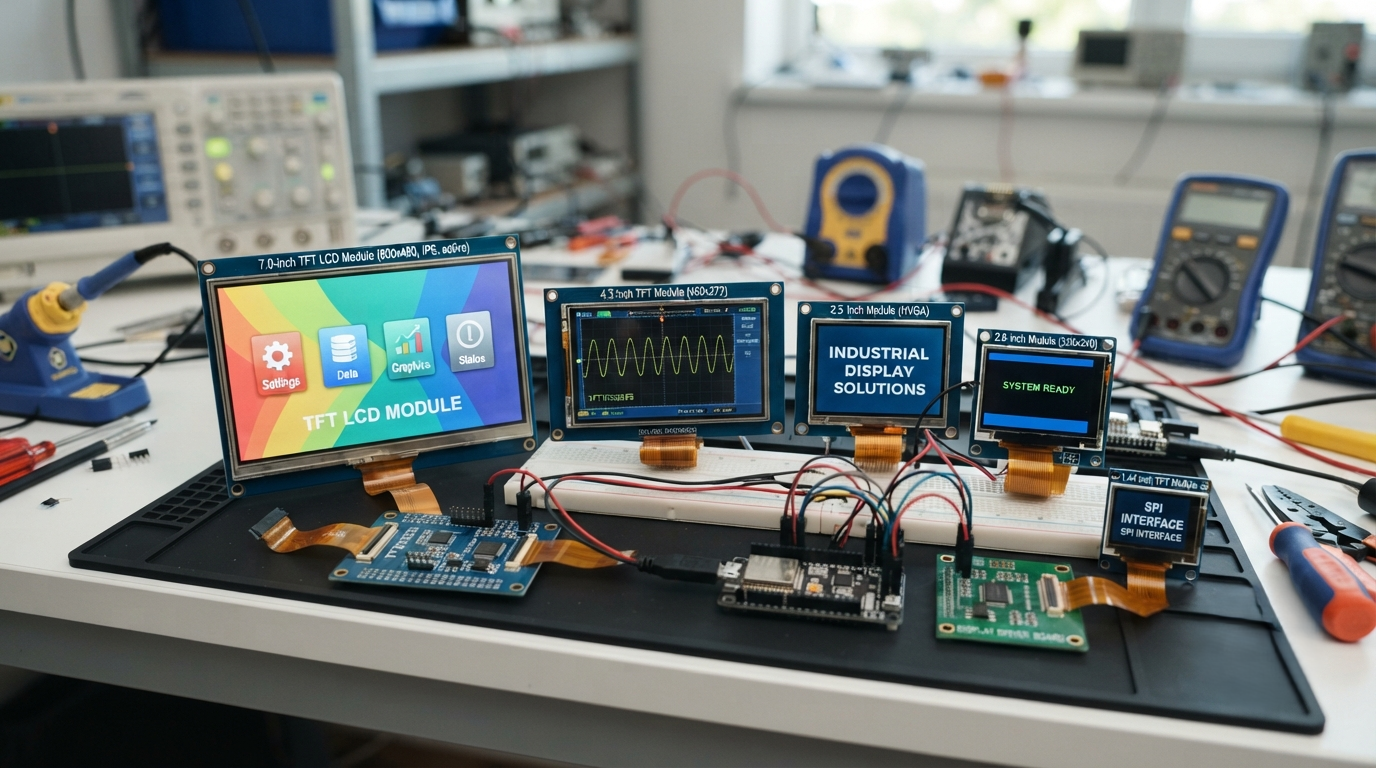
In a world where digital products are expected to be faster, smarter, and easier to use, display quality has become a major part of product success. From industrial equipment and medical devices to smart home panels and retail terminals, the TFT LCD Module has become one of the most trusted display choices in modern electronics.
The reason is simple: users want clear visuals, quick response, and reliable performance. At the same time, manufacturers need a display technology that is flexible, cost-effective, and easy to integrate. That is where TFT Modules stand out. They combine strong image quality with long-term dependability, making them suitable for a wide range of applications.
What Is a TFT LCD Module?
A TFT LCD Module is a thin-film transistor liquid crystal display built to deliver sharper images, better brightness, and improved color control. Each pixel is managed individually, which helps create smoother visuals and faster screen response.
Key benefits include:
- Better contrast and color accuracy
- Faster response times
- Good brightness for indoor and outdoor use
- Lower power consumption
- Compact and lightweight structure
- Strong compatibility with embedded systems
In simple terms, a TFT display helps devices communicate information clearly and efficiently.
Why TFT Modules Are Used So Widely
The popularity of TFT Modules comes from their ability to fit many different product types. They are not limited to one industry. Instead, they support everything from consumer gadgets to heavy-duty industrial machines.
Common uses include:
- Industrial control panels
- Medical monitors
- Automotive dashboards
- Point-of-sale systems
- Smart home controllers
- Handheld test instruments
- Security devices
- Agricultural equipment
- IoT products
- Retail kiosks
Because they can be customized, a TFT LCD Module can be adapted to different sizes, brightness levels, touch options, and interface requirements.
What Makes TFT LCD Module Technology Valuable?
When people compare display technologies, the TFT LCD Module usually earns attention for its balance of performance and practicality. It is not just about looking good on screen. It is also about consistency, durability, and system compatibility.
Important advantages:
- Reliable operation in continuous-use devices
- Strong readability in many lighting conditions
- Easy integration with embedded boards
- Long service life
- Available in many sizes and resolutions
- Touchscreen support in many models
That combination is why manufacturers continue choosing TFT Modules for both new product development and product upgrades.
A Look at Display Technology Comparison
Below is a simple comparison of common display options.
| Feature | TFT LCD Module | Standard LCD | OLED |
| Brightness | High | Medium | High |
| Response Speed | Fast | Moderate | Very Fast |
| Color Quality | Excellent | Good | Excellent |
| Burn-in Risk | No | No | Possible |
| Industrial Reliability | Excellent | Good | Moderate |
| Cost Efficiency | Strong | Strong | Moderate |
This comparison shows why a TFT LCD Module remains a practical choice for many applications that need dependable performance without unnecessary cost.
How TFT Modules Support Modern Product Design
Today’s devices are expected to do more than display data. They must deliver an easy, intuitive user experience. That is why TFT Modules are often built with added features that support smarter design.
Modern features may include:
- Capacitive touch screens
- IPS viewing technology
- Anti-glare treatment
- High-brightness backlights
- Wide temperature support
- Optical bonding
- Low EMI design
- Custom cover glass options
These improvements help the TFT LCD Module perform well in environments where visibility, touch accuracy, and durability matter most.
Why Customization Matters
No two products are exactly the same. A factory machine, a medical device, and a handheld consumer product all need different display specifications. That is why customization is one of the biggest strengths of TFT Modules.
Common customization options:
- Screen size
- Resolution
- Interface type
- Brightness level
- Touch technology
- Mechanical structure
- Connector arrangement
- Protective glass design
A customized TFT LCD Module helps product teams reduce integration problems and deliver a more polished final product.
Where TFT LCD Module Solutions Fit Best
The versatility of TFT Modules makes them valuable across many sectors. They are especially useful where a device must stay readable, responsive, and dependable.
Strong fit for:
- Factory automation
- Diagnostic equipment
- Self-service machines
- Smart appliances
- Portable electronic tools
- Vehicle control systems
- Monitoring dashboards
As businesses continue to digitize operations, the demand for flexible TFT LCD Module solutions is likely to keep growing.
A Simple Checklist Before Choosing TFT Modules
If you are selecting a display for a new product, it helps to review a few important points.
Ask these questions:
- What screen size is required?
- Will the display be used indoors or outdoors?
- Is touch functionality needed?
- What interface does the system support?
- How much brightness is necessary?
- Will the device face heat, dust, or vibration?
- Is long-term availability important?
Answering these questions early makes it easier to choose the right TFT LCD Module for your project.
Frequently Asked Questions
1. What is a TFT LCD Module?
A TFT LCD Module is a display that uses thin-film transistor technology to improve image quality, speed, and color control.
2. What are TFT Modules used for?
They are used in industrial systems, medical devices, automotive products, consumer electronics, kiosks, and more.
3. Are TFT Modules energy efficient?
Yes, many models are designed to deliver strong performance while keeping power use efficient.
4. Can a TFT LCD Module support touch?
Yes, many displays support capacitive or resistive touch panels.
5. Are TFT Modules suitable for outdoor use?
High-brightness versions can be used outdoors or in strong ambient light.
6. What interfaces do TFT Modules support?
Common interfaces include SPI, RGB, LVDS, HDMI, MIPI, and MCU.
7. Can TFT LCD Module products be customized?
Yes, they can be customized in size, brightness, touch type, and structure.
8. Why do industries prefer TFT Modules?
They offer a strong balance of reliability, performance, and cost control.
9. How long do TFT LCD Modules last?
Their lifespan depends on usage and quality, but many are designed for long-term operation.
10. Are TFT Modules better than standard LCDs?
In many cases, yes, because they provide better speed, brightness, and display control.
Read more – https://newsgrow.blogspot.com/2026/08/tft-lcd-module-and-tft-modules-drive.html