
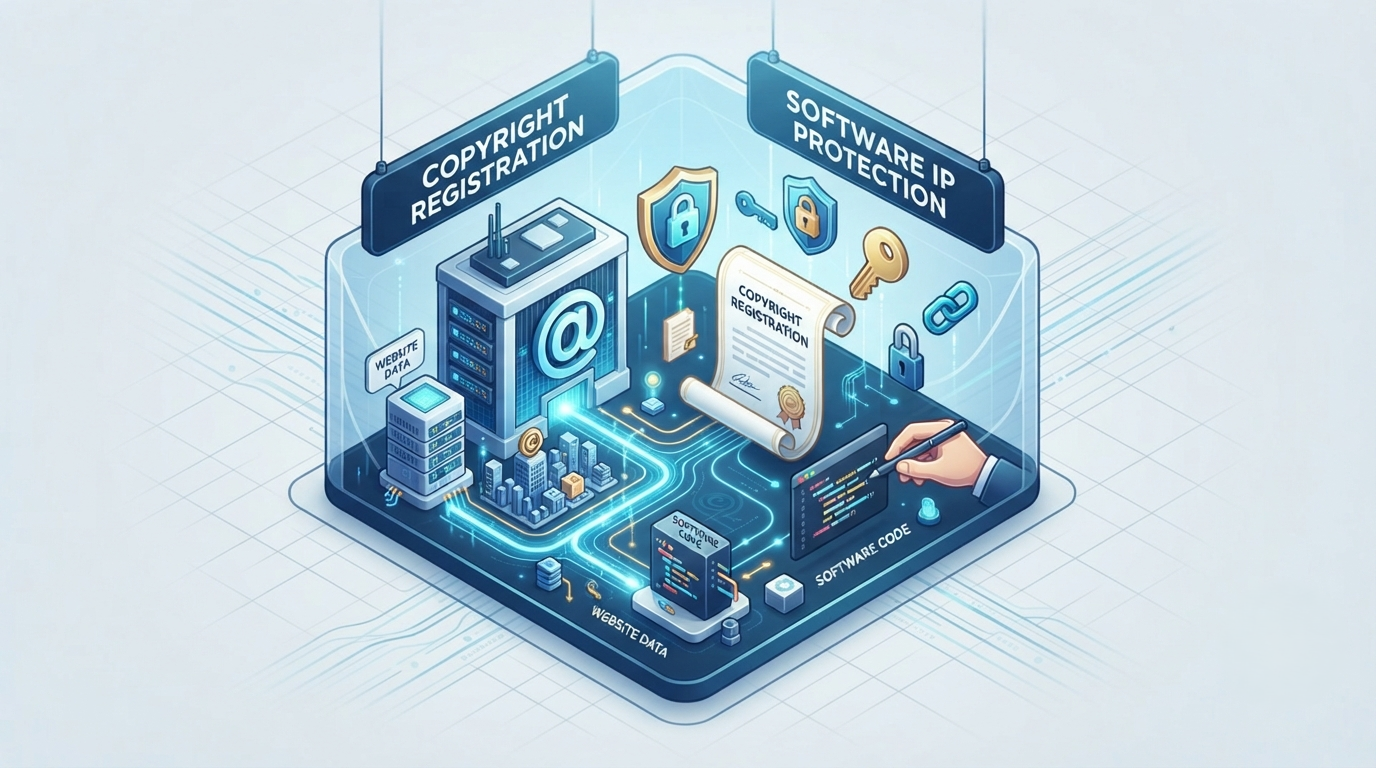
In a world where digital products can be copied, shared, and republished in seconds, ownership matters more than ever. A website, mobile app, cloud platform, or custom software system is often the result of serious investment in design, development, writing, and testing. Yet many businesses still overlook one of the most important steps in protecting that investment: Copyright Registration for Website and Software Intellectual Property Protection.
Copyright is a legal safeguard for original expression. In digital business, that expression may include code, content, graphics, layout, documentation, and interface design. When properly protected, these assets become easier to defend, license, and commercialize. For startups, agencies, developers, and established companies, copyright is not just a legal formality. It is a business asset.
Why Digital Copyright Protection Is So Important
Online assets are easier to copy than ever before. A competitor can duplicate text, imitate a design, reuse code, or republish product materials with very little effort. That creates risk for both revenue and reputation.
Without protection, a business may face:
- Plagiarism of website content
- Unauthorized use of source code
- Copycat software features
- Brand confusion in the marketplace
- Loss of competitive advantage
- Expensive legal disputes
A strong copyright strategy reduces these risks and gives the original creator a clearer legal position. It also shows investors, partners, and clients that the business takes intellectual property seriously.
What Copyright Covers in a Website
A website is more than a collection of pages. It is a creative digital work made up of many parts that may qualify for copyright protection.
Examples of protected website elements include:
- Original blog posts and service pages
- Website source code and scripts
- Visual design and page structure
- Custom illustrations and icons
- Photographs, videos, and animations
- Downloadable resources
- Original navigation and interface elements
What copyright does not cover
Copyright does not protect generic ideas, common layouts, or standard functionality. It protects the unique way something is written, designed, or presented. That difference is important because many website owners assume every part of a site is automatically protected in the same way.
Why Software Needs Intellectual Property Protection
Software is often one of the most valuable assets a company owns. It may power a business model, support customers, automate operations, or create a new market offering. Because software is so valuable, it is also a target for copying, reverse engineering, and unauthorized reuse.
Software Intellectual Property Protection helps secure the original work behind the product, including:
- Source code
- Object code
- Technical documentation
- User manuals
- Interface screens
- Workflow designs
- Proprietary features
- Internal development materials
A layered protection strategy works best
Most software businesses rely on more than one protection method. Copyright covers the creative expression in the code and documentation. Trademark protects the product name and brand identity. Trade secret law helps protect confidential information. In some cases, a patent may protect a unique technical invention.
Copyright Registration vs. Other IP Protection
Many businesses confuse copyright with other forms of intellectual property protection. Each one serves a different role.
| Protection Type | What It Protects | Main Purpose |
| Copyright | Code, content, images, design, documentation | Prevents copying |
| Trademark | Name, logo, slogan | Protects brand identity |
| Patent | New technical invention | Protects innovation |
| Trade Secret | Confidential know-how | Protects secrecy |
| License Agreement | Usage rights | Controls permitted use |
Why this matters
A website or software business usually needs more than one layer of protection. Copyright is often the foundation, but the strongest legal position comes from combining it with contracts, confidentiality controls, and brand protection.
The Business Value of Registration
Copyright registration is not only about stopping theft. It also creates value.
A registered work can help a business:
- Prove authorship and ownership more clearly
- Strengthen infringement claims
- Support licensing and partnership deals
- Improve investor confidence
- Increase company valuation
- Simplify due diligence during acquisitions
That is why many serious digital businesses register their copyrights early, before problems arise.
What to Document Before Filing
Good documentation makes protection easier. Businesses should keep clear records that show who created the work, when it was created, and under what agreement.
Useful records include:
- Drafts and revisions
- Code repositories
- Design files
- Content outlines
- Publication dates
- Contributor agreements
- Contractor contracts
- Screenshots of finished pages or software screens
Why records matter
If a dispute happens later, documentation can help prove originality and ownership. Without records, even a strong claim may become harder to enforce.
How the Registration Process Usually Works
The process varies by country, but the general steps are similar.
Step 1: Identify the work
Decide what needs protection, such as website content, source code, design files, or software documentation.
Step 2: Prepare the application
Collect authorship details, ownership details, and copies or samples of the work.
Step 3: Submit the filing
File the application with the proper copyright authority.
Step 4: Respond to follow-up questions
If the office requests more information, provide accurate supporting documents.
Step 5: Receive the certificate
Once approved, the certificate becomes important legal evidence of ownership.
Common Mistakes That Reduce Protection
Many businesses weaken their own protection without realizing it.
Frequent mistakes include
- Launching a site without keeping development records
- Using third-party images or code without permission
- Failing to assign ownership in freelancer contracts
- Delaying registration until after infringement occurs
- Confusing ideas with protectable expression
- Forgetting to protect updates and new releases
Avoiding these mistakes can save time, money, and legal trouble later.
How Businesses Should Protect Software in Practice
A solid protection plan includes legal and technical measures.
Legal actions
- Register copyright early
- Use NDAs with vendors and employees
- Add IP assignment clauses to contracts
- Protect product names with trademarks
- License software clearly and consistently
Technical actions
- Restrict access to source code
- Use secure version control systems
- Encrypt sensitive files
- Monitor unusual access activity
- Maintain backups of important development materials
The goal
The goal is to make unauthorized copying harder, ownership clearer, and enforcement faster.
Frequently Asked Questions
1. What is Copyright Registration for Website?
It is the formal registration of original website content, code, design, and media to prove ownership.
2. Why is Software Intellectual Property Protection important?
It helps stop copying, misuse, piracy, and unauthorized commercial use of software.
3. Does copyright protect software code?
Yes. Original code is generally protected as a copyrighted work.
4. Can website design be copyrighted?
Yes, if it includes original creative expression rather than a common template.
5. Does copyright protect ideas?
No. Copyright protects the way an idea is expressed, not the idea itself.
6. Should startups register copyright?
Yes. Early registration strengthens legal protection and supports future business growth.
7. Is trademark the same as copyright?
No. Trademark protects brand identity, while copyright protects creative work.
8. Can a freelancer own the code they write?
It depends on the contract and local law. Ownership should always be clearly written.
9. Can software be licensed after registration?
Yes. Copyright owners can license software under terms they choose.
10. Is copyright enough to protect digital products?
Not always. A complete strategy usually includes copyright, trademark, contracts, and security controls.
https://newsgrow.blogspot.com/2026/08/copyright-registration-for-website-and.html