
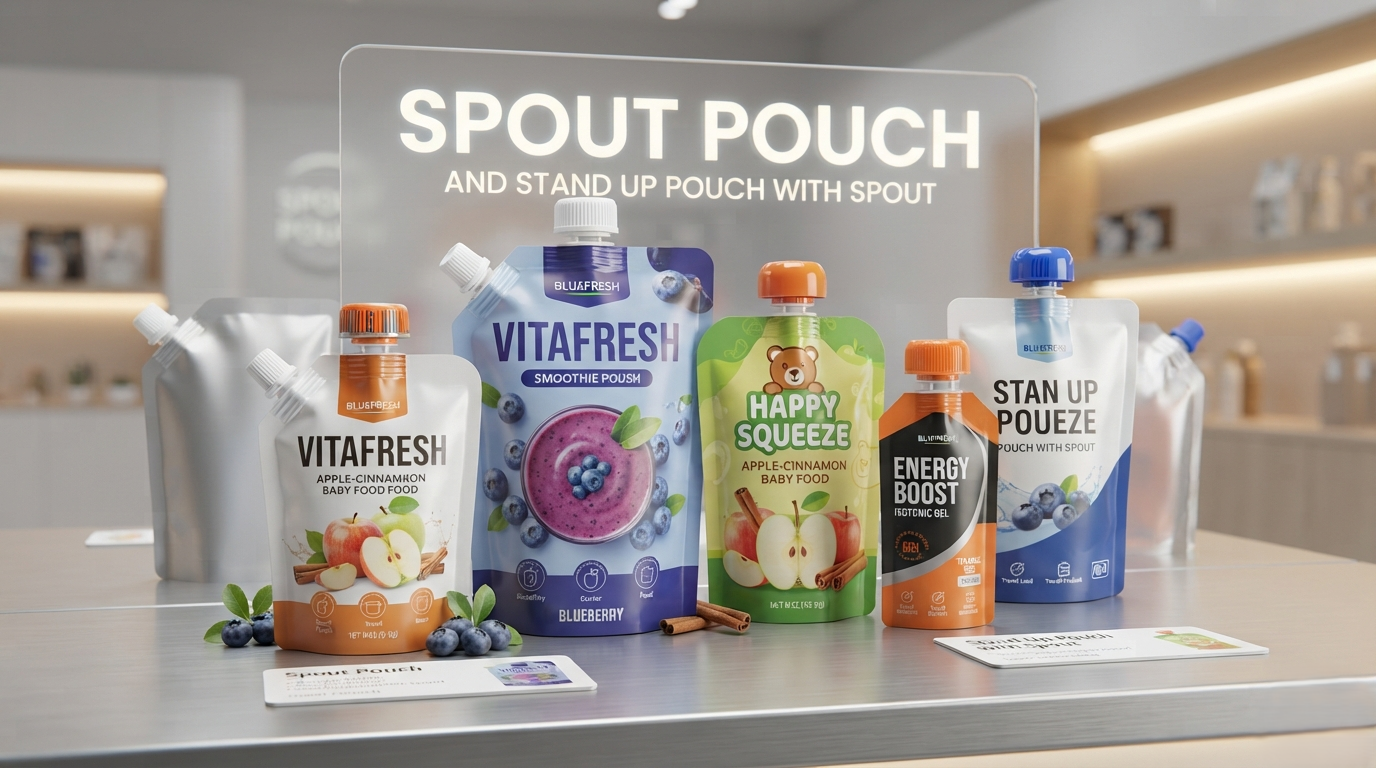
Packaging is no longer simply a container that holds a product. It affects shelf visibility, transportation, dispensing convenience, product protection and the overall customer experience. For brands dealing with liquids, pastes, gels and refill products, the Spout Pouch has emerged as a practical alternative to many conventional rigid packaging formats.
A stand up pouch with spout takes this concept further by combining flexible packaging with a stable bottom gusset and resealable dispensing closure. The result is a package that can stand on a retail shelf, provide a sizeable branding area and allow consumers to dispense the contents conveniently.
However, choosing a spouted pouch requires careful consideration of materials, barrier properties, filling conditions, product viscosity, spout dimensions and end-use requirements.
Understanding How a Spout Pouch Works
A Spout Pouch is essentially a flexible pouch with a dispensing fitment permanently sealed into its structure. The product can be poured, squeezed or dispensed through the opening and the cap can normally be closed again.
The package commonly consists of several functional components:
- Outer printable film
- Barrier layer where required
- Inner sealant layer
- Side or bottom seals
- Spout fitment
- Cap or closure
- Bottom gusset in stand-up designs
Each component has a specific purpose. The laminate protects the product, the seals maintain package integrity, while the spout and cap control dispensing.
This makes spouted packaging particularly valuable where consumers do not use the entire product at once.
Why the Stand Up Pouch with Spout Is Different
The defining feature of a stand up pouch with spout is its expandable bottom.
When the pouch is filled, the gusset opens and creates a base that allows the package to remain upright. This gives brands the flexibility of a pouch while providing the shelf presence associated with many rigid packages.
A stand-up format can be particularly useful where:
- Products are displayed on retail shelves
- Front-facing branding is important
- Consumers need repeated access to the contents
- Controlled pouring is desirable
- Packaging weight and storage efficiency matter
The pouch can also collapse gradually as its contents are consumed, making it convenient for many refill and dispensing applications.
Spout Pouch vs Traditional Packaging
Choosing between flexible and rigid packaging depends on the product and supply chain rather than appearance alone.
| Packaging Factor | Spout Pouch | Rigid Bottle | Traditional Sachet |
| Resealable | Usually | Yes | Usually no |
| Lightweight | Yes | Less so | Yes |
| Controlled dispensing | Excellent | Excellent | Limited |
| Stands upright | Depends on design | Yes | Usually no |
| Large print area | Yes | Label dependent | Yes |
| Suitable for refills | Excellent | Possible | Limited |
| Storage before filling | Compact | Bulky | Compact |
| Multiple-use convenience | High | High | Low |
A stand up pouch with spout can therefore bridge the gap between a bottle and a conventional flexible sachet.
Products That Can Be Packed in Spouted Pouches
One reason spouted packaging has become widely considered across industries is its versatility.
Food and Beverage Applications
Potential applications include:
- Fruit juices
- Smoothies
- Sauces
- Ketchup
- Honey
- Syrups
- Cooking oils
- Purees
- Baby food
- Liquid concentrates
Personal Care and Cosmetic Applications
A Spout Pouch may also be used for shampoo, conditioner, handwash, lotions, creams and other refill products, provided the laminate and fitment are compatible with the formulation.
Household and Industrial Applications
Common examples include liquid detergent, floor cleaner, dishwashing liquid, automotive fluids and selected industrial formulations.
Product Compatibility Comes First
Not every laminate is suitable for every substance.
A pouch intended for fruit juice, for example, may require different barrier properties from packaging designed for detergent or oil. The formulation, filling temperature, storage period and chemical characteristics should therefore be evaluated before finalising the structure.
Materials Used to Manufacture a Spout Pouch
Flexible pouches are often made using multiple laminated layers because a single film may not provide every required property.
PET can provide printability and mechanical strength. Polyethylene is frequently used as a sealant layer. Nylon may improve puncture resistance, while aluminium foil and metallised films can provide enhanced barriers against factors such as light, moisture and oxygen.
The required laminate should be determined by:
- Product composition
- Required shelf life
- Oxygen sensitivity
- Moisture sensitivity
- Light sensitivity
- Filling temperature
- Transportation conditions
- Storage environment
- Applicable regulatory requirements
For food and beverage packaging, appropriate food-contact compliance is particularly important.
Choosing the Correct Spout and Cap
The dispensing system deserves as much attention as the pouch material.
Thin liquids such as water and juice can flow easily through relatively small openings. Thicker products such as sauces, gels or concentrates may require a wider spout.
The location of the fitment can also influence usability.
Centre Spout
A centre spout creates a symmetrical appearance and can work effectively for direct pouring and drinking applications.
Corner Spout
A corner spout provides directional pouring and is frequently chosen for refill packs and products transferred into another container.
Closure Options
Depending on the application, manufacturers may offer:
- Screw caps
- Flip-top closures
- Tamper-evident caps
- Special dispensing closures
- Application-specific safety closures
Closure selection should account for opening force, leakage resistance, consumer convenience and product requirements.
Advantages of a Stand Up Pouch with Spout
The value of spouted flexible packaging comes from combining several practical features in one format.
Key advantages can include:
- Easy pouring and dispensing
- Reclosable functionality
- Reduced unfilled storage volume
- Lightweight construction
- Strong shelf presentation
- Wide printable branding surface
- Multiple size possibilities
- Convenient refill packaging
- Easy consumer handling
- Efficient secondary packing potential
Flexible packaging may also reduce material use compared with certain rigid formats, although environmental performance should always be assessed across the complete packaging lifecycle rather than assumed from package weight alone.
How to Select the Right Pouch Specification
The selection process should begin with technical requirements rather than graphics.
Before requesting production, provide the packaging manufacturer with accurate information about the product, viscosity, filling temperature, desired capacity, expected shelf life and distribution conditions.
A useful selection process is:
- Define the packed product.
- Determine the required capacity.
- Establish barrier requirements.
- Select an appropriate laminate.
- Choose the spout diameter and position.
- Select the closure.
- Confirm filling compatibility.
- Develop printing artwork.
- Test production samples.
- Approve specifications before bulk manufacturing.
This process can prevent problems that may otherwise appear only after filling or transportation.
Printing and Brand Presentation
The broad surface of a stand up pouch with spout gives marketers significant room for visual communication.
Depending on the printing process and pouch construction, brands can incorporate logos, illustrations, product benefits, preparation instructions, ingredients, barcodes, QR codes and mandatory regulatory information.
Digital, flexographic and rotogravure printing are among the methods commonly considered.
The right choice depends on production volume, colour expectations, artwork, repeat orders, budget and print-quality requirements.
Essential Quality Tests for Spouted Packaging
A pouch may look attractive but still perform poorly if its seals or fitments are inadequate.
Important quality checks can include:
- Leakage testing
- Seal-strength evaluation
- Drop testing
- Spout bonding inspection
- Cap torque testing
- Dimensional inspection
- Lamination quality checks
- Print registration checks
- Product compatibility assessment
- Transportation trials
Testing should reflect actual filling, storage and distribution conditions whenever possible.
Frequently Asked Questions
What is a Spout Pouch?
It is flexible packaging equipped with a spout and closure for convenient dispensing and resealing of the packed product.
What is a stand up pouch with spout?
It is a spouted flexible pouch with a bottom gusset designed to create a stable base after filling.
Can spouted pouches hold thick liquids?
Yes. Appropriate spout diameter, film construction and filling equipment can accommodate many sauces, gels, purees and similar products.
Are spouted pouches suitable for beverages?
They can be suitable when food-grade materials and appropriate barrier, sealing and processing requirements are used.
Can the pouch be customised?
Yes. Dimensions, capacity, laminate, spout position, closure and printing can generally be customised according to manufacturing capabilities.
What is the best spout position?
There is no universal best position. Centre and corner spouts suit different dispensing, filling and presentation requirements.
Can a Spout Pouch be resealed?
Most consumer designs incorporate a screw or similar closure that allows repeated opening and closing.
What determines the pouch material?
Product chemistry, shelf-life target, barrier requirements, filling temperature, storage and transportation conditions influence material selection.
Is a stand-up pouch suitable for refill packaging?
Yes. It is commonly considered for refill applications such as detergents, personal care products and household liquids.
Can spouted pouches be printed in multiple colours?
Yes. Several flexible-packaging printing technologies can produce detailed multi-colour branding.
How should a business test a new pouch?
Test it using the actual product and intended filling, storage, handling and transportation conditions before approving commercial production.
Read more – https://newsgrow.blogspot.com/2026/08/foil-lid-and-stand-up-pouch.html
https://newsgrow.blogspot.com/2026/08/spout-pouch-and-stand-up-pouch-with.html