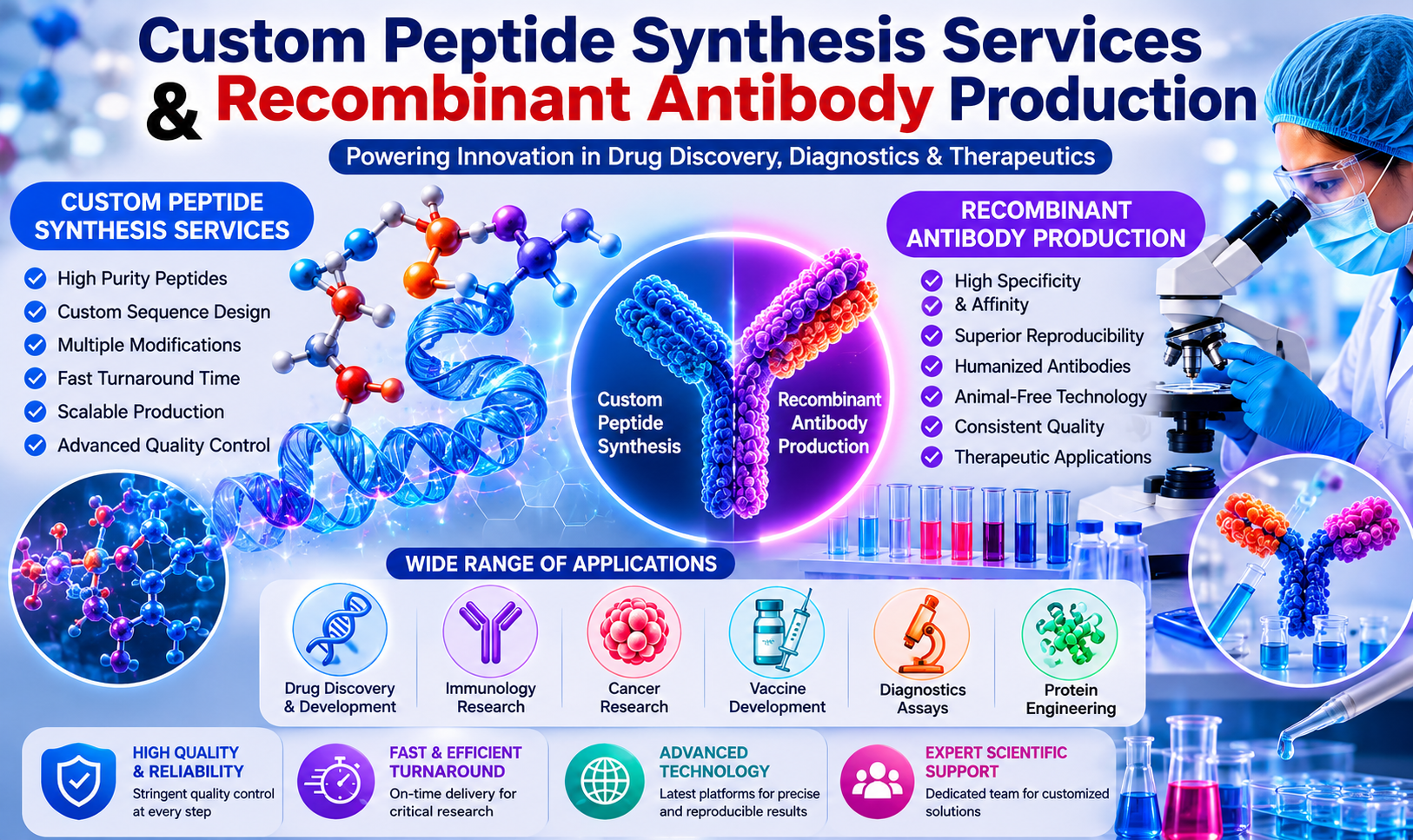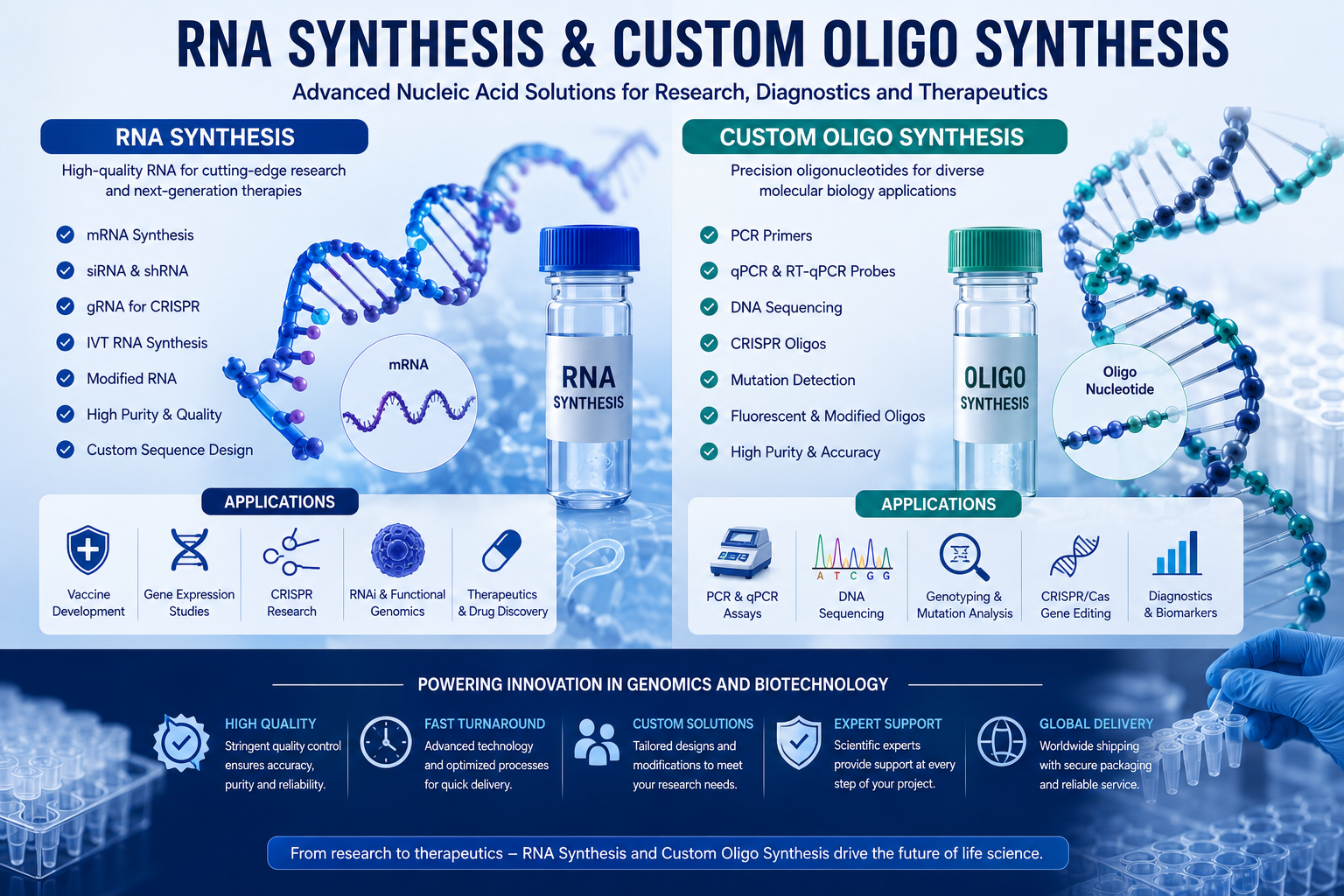
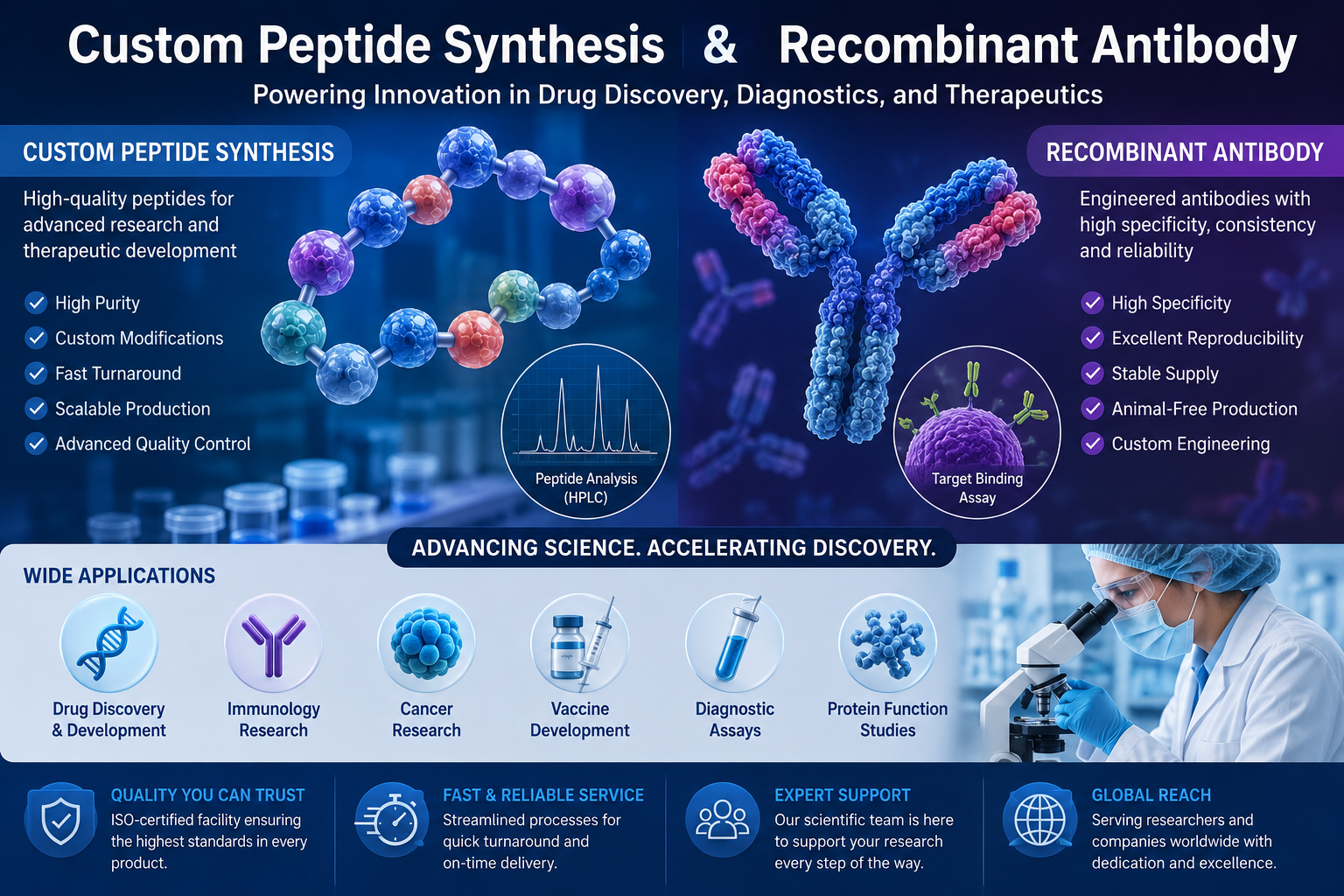
The global life sciences industry continues to witness rapid advancements as researchers seek highly accurate and reproducible tools for drug discovery, diagnostics, vaccine development, and molecular biology studies. Among the technologies driving this progress, custom peptide synthesis and recombinant antibody development have become essential components of modern scientific research.
Leading research laboratories, biotechnology companies, pharmaceutical organizations, and academic institutions are increasingly adopting these advanced solutions to improve experimental precision, reduce development timelines, and achieve consistent research outcomes. As demand for personalized research materials grows, innovative service providers are expanding their capabilities to support complex scientific projects across multiple disciplines.
Meeting the Growing Demand for Precision Research Solutions
Scientific research today requires reliable biomolecules that can deliver accurate and reproducible results. Custom peptide synthesis enables researchers to design peptides tailored to specific experimental objectives, while recombinant antibody technology provides highly specific binding characteristics for research, diagnostic, and therapeutic applications.
Together, these technologies are helping researchers overcome many of the limitations associated with traditional laboratory reagents.
Key Highlights
- High-quality synthetic peptide production
- Recombinant antibodies with excellent batch consistency
- Faster turnaround for research projects
- Flexible customization options
- Support for complex biomedical applications
- Improved reproducibility across experiments
Why Custom Peptide Synthesis Is Transforming Scientific Research
Modern custom peptide synthesis allows scientists to produce peptides with precise amino acid sequences, modifications, and purity levels required for specialized studies.
Researchers can customize peptide length, labeling, conjugation, and purification methods according to project requirements, making this technology valuable across multiple research fields.
Major Applications
- Vaccine research
- Drug discovery
- Cancer biology
- Protein interaction studies
- Biomarker identification
- Immunology research
- Cell signaling analysis
- Diagnostic assay development
The Expanding Role of Recombinant Antibody Technology
A recombinant antibody is produced using advanced molecular biology techniques rather than traditional animal immunization methods. This approach delivers consistent antibody performance while allowing greater flexibility in antibody engineering.
Researchers increasingly rely on recombinant antibodies because they offer improved specificity, reproducibility, and scalability for both research and therapeutic development.
Primary Advantages
- High specificity
- Excellent reproducibility
- Reduced batch-to-batch variation
- Enhanced scalability
- Flexible antibody engineering
- Long-term production consistency
How These Technologies Work Together
Combining custom peptide synthesis with recombinant antibody development creates powerful research solutions for scientists investigating disease mechanisms and developing innovative therapies.
For example, synthetic peptides are commonly used as antigens to generate recombinant antibodies with highly targeted binding capabilities, improving diagnostic sensitivity and experimental reliability.
Comparison Between Custom Peptide Synthesis and Recombinant Antibody
| Feature | Custom Peptide Synthesis | Recombinant Antibody |
| Primary Purpose | Synthetic peptide production | Target-specific antibody generation |
| Research Applications | Protein studies, vaccines, diagnostics | Immunoassays, therapeutics, biomarker detection |
| Customization | Amino acid sequence modifications | Antibody engineering and optimization |
| Production Consistency | High | Very High |
| Scalability | Excellent | Excellent |
Industries Benefiting from These Advanced Technologies
Organizations across multiple sectors continue to integrate custom peptide synthesis and recombinant antibody solutions into their research programs.
Major Industries
- Biotechnology
- Pharmaceutical research
- Clinical diagnostics
- Academic institutions
- Medical device development
- Veterinary sciences
- Agricultural biotechnology
- Contract research organizations (CROs)
Innovations Driving Future Scientific Discoveries
Rapid technological advancements continue to improve both custom peptide synthesis and recombinant antibody platforms.
Emerging Developments
- AI-assisted peptide design
- Automated synthesis platforms
- High-throughput antibody screening
- Improved expression technologies
- Faster production workflows
- Advanced quality control systems
- Precision protein engineering
Why Research Organizations Are Investing in Customized Solutions
Customized biomolecules enable scientists to reduce experimental variability while increasing research efficiency.
Key Benefits
- Greater experimental accuracy
- Reliable long-term reproducibility
- Faster project completion
- Flexible research design
- Improved publication-quality data
- Cost-effective development for complex studies
Best Practices When Selecting a Research Partner
Choosing an experienced scientific service provider can significantly improve research outcomes.
Selection Checklist
- Proven scientific expertise
- Advanced manufacturing facilities
- Strict quality assurance protocols
- Flexible customization options
- Technical consultation support
- Transparent documentation
- Timely project delivery
Frequently Asked Questions (FAQs)
1. What is custom peptide synthesis?
Custom peptide synthesis is the process of producing peptides with specific amino acid sequences designed for individual research requirements.
2. What is a recombinant antibody?
A recombinant antibody is an engineered antibody produced using recombinant DNA technology for consistent performance and high specificity.
3. What are custom peptides used for?
They are widely used in vaccine development, immunology, cancer research, diagnostics, and protein interaction studies.
4. Why are recombinant antibodies preferred over traditional antibodies?
They provide greater consistency, improved specificity, and minimal batch-to-batch variation.
5. Can custom peptide synthesis support drug discovery?
Yes. Synthetic peptides are valuable tools in pharmaceutical research and therapeutic development.
6. Which industries use recombinant antibodies?
Biotechnology, pharmaceutical companies, diagnostic laboratories, academic institutions, and clinical research organizations.
7. Are recombinant antibodies suitable for diagnostic applications?
Yes. They are commonly used in ELISA, Western blotting, immunohistochemistry, and other diagnostic assays.
8. Can peptides be modified during synthesis?
Yes. Researchers can request labeling, phosphorylation, cyclization, conjugation, and other custom modifications.
9. How do these technologies improve research quality?
They increase reproducibility, reduce variability, and deliver highly specific experimental tools.
10. Why should researchers choose customized scientific solutions?
Customized solutions provide greater flexibility, improved accuracy, and optimized performance for specialized research projects.