
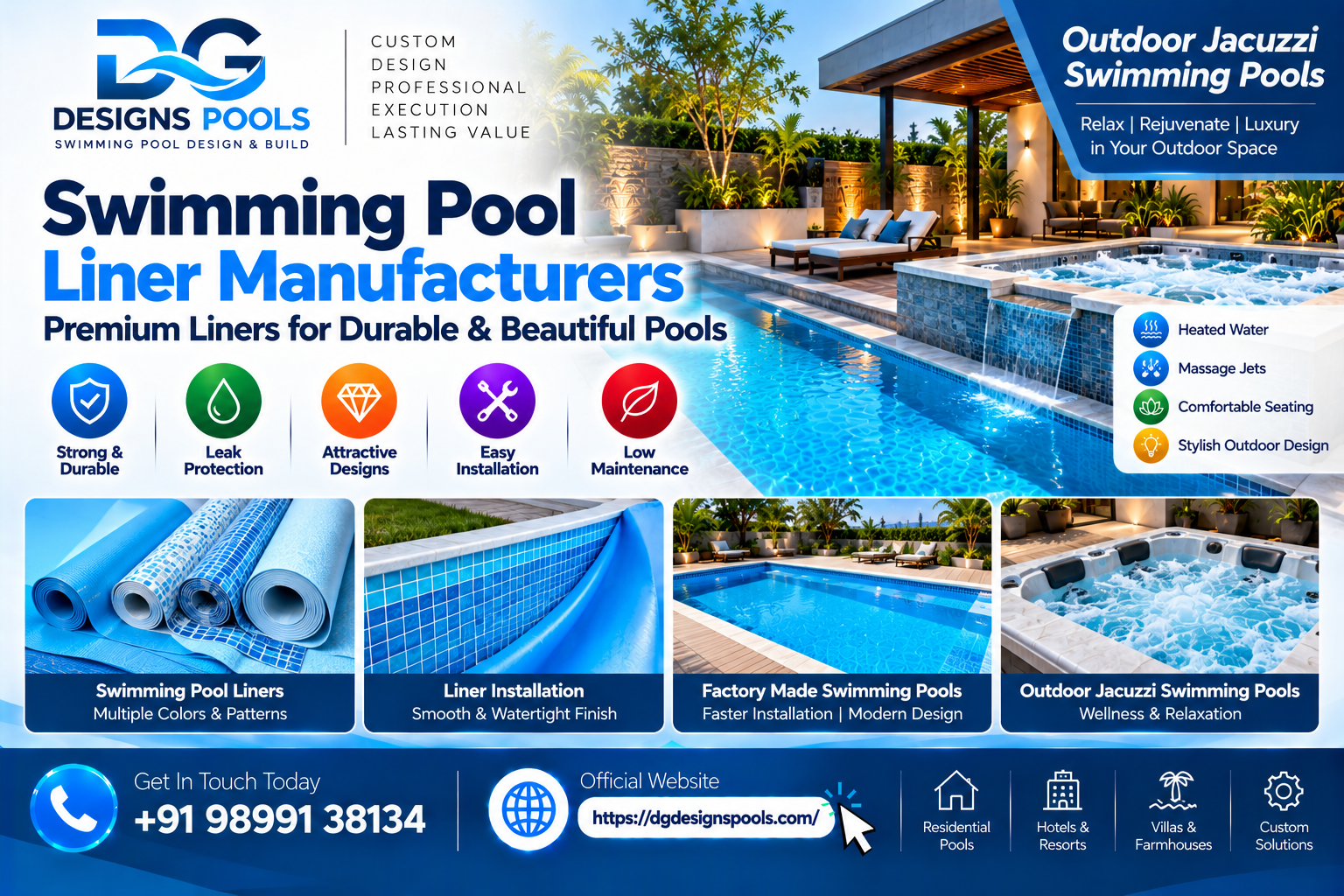
Property owners are exploring ways to improve the performance of existing swimming pools while developing attractive recreational spaces.
Professional swimming pool liner manufacturers play an important role in providing suitable waterproof membranes for compatible swimming pool structures. These liners help retain water while contributing to the appearance and functionality of the pool interior.
Meanwhile, outdoor jacuzzi swimming pools are attracting attention as residential and hospitality properties explore relaxation-focused aquatic installations.
Although pool liners and Jacuzzi-style systems serve different purposes, both require careful material selection, technical planning, and appropriate maintenance.
Understanding their engineering requirements can help homeowners, architects, and hospitality developers make informed decisions about pool renovation and outdoor wellness facilities.
Why Pool Surface Protection Is Important
Swimming pool surfaces are continuously exposed to water, cleaning products, treatment chemicals, and environmental conditions.
Without suitable protection, certain pool structures may experience water leakage, surface deterioration, or maintenance difficulties.
A correctly specified liner provides a water-retaining layer within compatible pool construction systems.
It can also improve the appearance of the swimming pool through different colours, textures, and patterns.
However, liner performance depends on material quality, installation procedures, water chemistry, and operating conditions.
This principle encourages property owners to evaluate both appearance and functional performance.
What Do Swimming Pool Liner Manufacturers Provide?
Swimming pool liner manufacturers produce flexible membranes designed for installation within suitable swimming pool structures.
Common liner materials include specially formulated vinyl or PVC-based products, although specifications vary between manufacturers.
Depending on the application, liners may be manufactured in different thicknesses, surface finishes, and construction formats.
Some products are fabricated to suit particular pool shapes, while others are installed using suitable membrane welding techniques.
Manufacturers may also provide technical guidance concerning material compatibility, installation conditions, and maintenance requirements.
Buyers should verify the specifications of the selected liner rather than assuming that all products offer identical performance.
Understanding Outdoor Jacuzzi Swimming Pools
Outdoor jacuzzi swimming pools generally refer to outdoor aquatic installations that incorporate spa-style relaxation features, such as water jets, seating areas, or heated bathing zones.
The exact design may involve a dedicated spa, an integrated pool-and-spa combination, or a customised hydrotherapy-inspired installation.
These systems differ from conventional swimming pools because water temperature, circulation, and jet performance can introduce additional engineering requirements.
A separate spa may require specialised heating, filtration, and water treatment equipment.
The suitability of construction materials must therefore be evaluated according to the intended operating conditions.
Not every conventional swimming pool liner is appropriate for heated spa applications.
Why Liner Selection Requires Technical Evaluation
Selecting a liner involves more than choosing an attractive pattern.
Different materials may respond differently to ultraviolet exposure, treatment chemicals, water temperature, and mechanical stress.
Important considerations include:
- Material Composition: Confirm compatibility with the intended pool structure.
- Thickness: Evaluate specifications appropriate for the application.
- Surface Finish: Consider appearance and relevant slip-resistance requirements.
- Temperature Resistance: Verify suitability for anticipated water conditions.
- Chemical Compatibility: Review requirements for the planned treatment system.
- Installation Method: Confirm appropriate fixing and joint construction.
For heated spas, manufacturers should specifically verify that the membrane is suitable for the proposed temperatures and operating conditions.
Pool Liners and Outdoor Jacuzzi Systems: Key Differences
Pool liners primarily provide water containment, while Jacuzzi-style systems introduce equipment and features associated with hydrotherapy-oriented bathing.
| Comparison Factor | Swimming Pool Liners | Outdoor Jacuzzi-Style Systems |
| Primary Purpose | Water containment and interior finishing | Relaxation and water-jet bathing |
| Main Components | Flexible membranes and installation accessories | Pool or spa structure, jets, pumps, and controls |
| Material Consideration | Chemical and structural compatibility | Temperature and equipment compatibility |
| Maintenance Focus | Surface condition and liner integrity | Water treatment, equipment, and hygiene |
| Design Priority | Waterproofing and appearance | Comfort, circulation, and safe operation |
Both require suitable engineering, but one should not be treated as a substitute for the other.
Renovating Existing Swimming Pools With Liners
Pool renovation is an important application for suitable liner systems.
Certain existing swimming pools may be compatible with membrane installation, depending on their structure and surface conditions.
Before installing a liner, contractors should inspect the pool for cracks, unstable surfaces, damaged fittings, or other defects.
Structural problems must be addressed rather than concealed beneath a waterproof membrane.
Suitable surface preparation and careful installation are essential for achieving reliable performance.
This approach can help property owners avoid repeated maintenance issues.
Designing Comfortable Outdoor Jacuzzi Areas
Outdoor wellness installations should balance comfort, appearance, and practicality.
Appropriate seating arrangements, access steps, jet positioning, and surrounding circulation space can influence the bathing experience.
Water temperature must be carefully controlled to reduce overheating risks.
Designers should also consider non-slip surrounding surfaces, safe electrical installations, and suitable drainage.
Where children or vulnerable users may access the facility, additional safety measures and supervision are important.
A well-planned spa environment should provide relaxation without compromising essential safety requirements.
Water Treatment and Maintenance Considerations
Both lined swimming pools and heated spa installations require appropriate water treatment.
However, their operating conditions may differ significantly.
Warmer water and concentrated bathing activity can create particular hygiene challenges in spa-style facilities.
Appropriate filtration, disinfection, water testing, and cleaning procedures are therefore essential.
Pool liners should also be maintained according to the manufacturer’s recommendations.
Unsuitable cleaning chemicals or improper treatment conditions may damage certain liner materials.
Property owners should follow relevant operating guidance rather than relying exclusively on visual water clarity.
Improving Energy and Resource Efficiency
Outdoor aquatic facilities can require substantial water and energy resources.
In heated installations, suitable insulation, equipment selection, and properly designed covers may help reduce unnecessary energy consumption.
Leak detection and appropriate maintenance can also contribute to water conservation.
However, energy efficiency depends on environmental conditions, equipment performance, and actual operation.
A liner may provide useful water containment, but it does not automatically make an entire swimming pool environmentally sustainable.
Responsible design requires evaluation of the complete installation.
Choosing Suitable Manufacturing and Installation Partners
Homeowners and property developers should carefully evaluate suppliers before purchasing liner products or spa equipment.
Important considerations include:
- Material specifications and documented product suitability.
- Experience with relevant swimming pool structures.
- Installation methods and waterproofing procedures.
- Compatibility with heating and water-treatment equipment.
- Inspection requirements and warranty conditions.
- Maintenance instructions and technical support.
For complex spa installations, collaboration between qualified pool contractors, engineers, and equipment specialists is especially important.
Frequently Asked Questions (FAQs)
1. What do swimming pool liner manufacturers produce?
They manufacture flexible waterproof membranes designed for use within compatible swimming pool structures, with specifications varying according to the intended application.
2. What are outdoor jacuzzi swimming pools?
They are outdoor aquatic installations incorporating spa-style features such as water jets, relaxation seating, and, where appropriate, heated bathing systems.
3. Can a swimming pool liner be used in a heated Jacuzzi-style pool?
Only when the manufacturer confirms that the selected liner is suitable for the intended temperature, chemical exposure, and installation conditions.
4. Can liners help renovate an existing swimming pool?
Yes. Suitable liners may support renovation projects after structural conditions, surface preparation, and installation compatibility have been properly evaluated.
5. What should buyers consider before developing an outdoor Jacuzzi pool?
Buyers should evaluate structural requirements, heating equipment, water treatment, user safety, material compatibility, installation expertise, and maintenance responsibilities.
Media Contact
Department: Swimming Pool Liners and Outdoor Jacuzzi Pool Enquiries
Contact: +91 98991 38134
Email: abhinav.mishra@hotmail.com
Official Website: https://dgdesignspools.com/
Read More:-