
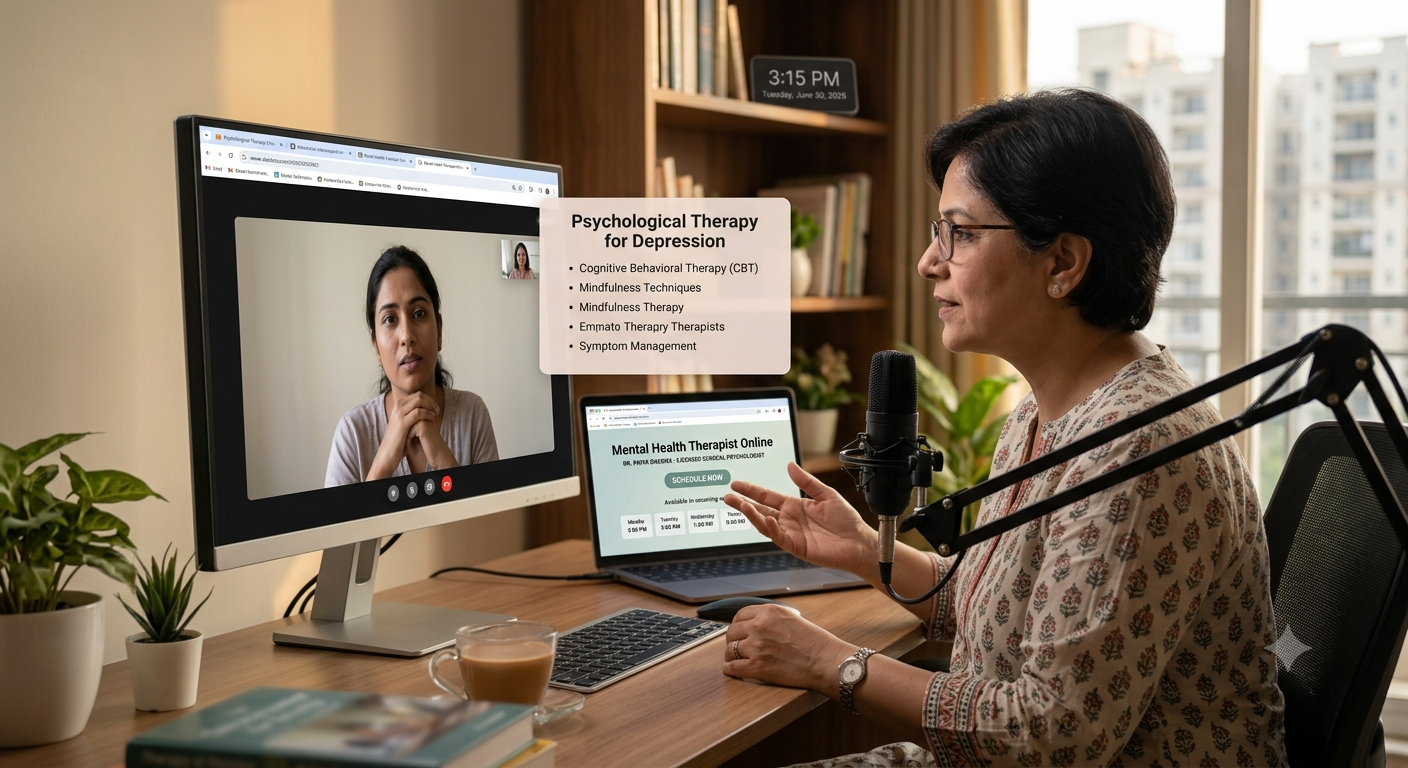
Depression can affect emotions, thoughts, relationships, motivation, sleep, concentration, and everyday functioning. It is more than experiencing temporary sadness after a difficult day. For many people, professional psychological support can provide practical ways to understand symptoms, manage emotional challenges, and gradually rebuild healthy patterns.
Psychological Therapy for Depression focuses on identifying emotional and behavioural patterns associated with depression and developing healthier ways to respond to them. At the same time, access to a Mental Health Therapist Online has made professional support more convenient for people who face distance, mobility, scheduling, or privacy barriers.
Understanding how therapy works, what approaches are available, and how online counselling differs from traditional sessions can help people make informed decisions about mental health care.
Understanding Depression and Its Impact
Depression is a recognized mental health condition involving persistent low mood, reduced interest or pleasure, and other emotional or physical symptoms. According to the World Health Organization, depressive episodes generally involve symptoms occurring most of the day, nearly every day, for at least two weeks.
Common experiences may include:
- Persistent sadness, emptiness, or irritability
- Loss of motivation or enjoyment
- Difficulty concentrating
- Changes in sleep patterns
- Changes in appetite
- Low energy and fatigue
- Feelings of hopelessness
- Reduced confidence or self-worth
- Withdrawal from social activities
Symptoms differ between individuals. Therefore, professional assessment is important rather than relying entirely on online symptom checklists.
What Is Psychological Therapy for Depression?
Psychological Therapy for Depression refers to structured therapeutic approaches designed to help people understand and change thoughts, emotions, behaviours, and relationship patterns that may contribute to depressive symptoms.
Psychotherapy is sometimes called counselling or talk therapy, although specific therapeutic approaches can involve much more than simply discussing problems.
NIMH explains that psychotherapy can help people identify and change troubling emotions, thoughts, and behaviours while improving daily functioning and quality of life.
Common Evidence-Based Approaches
Several approaches may be used depending on individual needs.
Cognitive Behavioral Therapy (CBT): CBT examines connections between thoughts, emotions, and behaviours. A therapist helps clients recognize unhelpful thinking patterns and develop more balanced responses.
Interpersonal Therapy (IPT): IPT focuses on relationships, communication difficulties, life transitions, grief, and interpersonal situations that may influence mood.
Behavioral Activation: This approach encourages gradual engagement in meaningful, rewarding, or necessary activities that depression may have caused a person to avoid.
Problem-Solving Therapy: Clients learn structured methods for identifying difficulties, developing possible solutions, and taking manageable action.
WHO identifies CBT, interpersonal psychotherapy, behavioural activation, and problem-solving therapy among effective psychological treatments for depression.
Therapy Is Usually Personalized
There is no universal therapy programme suitable for every person. Treatment can be adapted according to symptom severity, personal circumstances, preferences, culture, medical history, and therapeutic goals.
How Psychological Therapy May Help
The purpose of therapy is not simply to encourage positive thinking. Effective therapy develops practical psychological skills that people can apply outside sessions.
Potential therapeutic goals include:
- Understanding emotional triggers.
- Recognizing unhelpful thought patterns.
- Improving coping strategies.
- Rebuilding daily routines.
- Strengthening communication skills.
- Managing stress more effectively.
- Increasing meaningful activities.
- Addressing relationship difficulties.
- Developing relapse-prevention strategies.
- Improving overall emotional resilience.
Progress is often gradual. Some people notice changes quickly, while others require longer-term treatment.
What Is a Mental Health Therapist Online?
A Mental Health Therapist Online provides counselling or psychotherapy through secure digital communication technologies.
Sessions may take place using:
- Live video consultations
- Telephone conversations
- Secure messaging
- Therapist-guided digital programmes
- Online CBT platforms
NIMH states that psychotherapy can be effective when provided in person or virtually through telehealth.
Online therapy has therefore become an important way to increase access to psychological support.
Online Therapy vs In-Person Therapy
| Factor | Online Therapy | In-Person Therapy |
| Location | Attend remotely | Visit a clinic |
| Travel | Usually unnecessary | Usually required |
| Scheduling | Often flexible | Depends on clinic |
| Communication | Video, phone or messaging | Face-to-face |
| Privacy needs | Requires private digital space | Private clinical setting |
| Suitability | Helpful for many situations | May suit complex needs |
| Technology | Internet/device required | Minimal technology |
Neither format is automatically better for everyone. The appropriate choice depends on clinical needs, preferences, accessibility, and individual circumstances.
Benefits of Working With a Mental Health Therapist Online
Accessing a qualified Mental Health Therapist Online can make professional care easier for people who previously struggled to attend appointments.
Possible advantages include:
- No regular travel to a clinic
- Greater geographical accessibility
- Flexible appointment options
- Therapy from a familiar environment
- Easier continuity during travel or relocation
- Improved access for people with mobility limitations
Digital therapy can be useful, but professional involvement remains important. Research reviewed by the American Psychological Association found that digital interventions can reduce depressive symptoms, with programmes containing meaningful human support generally showing stronger results than completely automated interventions.
How to Choose an Online Therapist
Selecting a therapist should involve more than comparing prices or attractive website claims.
Consider checking:
- Professional qualifications
- Relevant licensing or registration
- Experience treating depression
- Therapy methods offered
- Privacy and confidentiality policies
- Secure communication technology
- Appointment availability
- Emergency-care procedures
- Fees and cancellation policies
The American Psychological Association recommends confirming whether an online provider is appropriately qualified and whether the service provides evidence-based psychotherapy.
When Additional Treatment May Be Needed
Psychological Therapy for Depression can be highly valuable, but depression treatment is individualized.
Depending on symptom severity and personal medical circumstances, treatment may involve psychotherapy, medication, or a combination of approaches. NIMH notes that selecting treatment should consider individual needs, preferences, and medical circumstances in consultation with a qualified professional.
People experiencing thoughts of suicide or immediate danger should seek urgent professional assistance through local emergency services or an appropriate crisis service rather than depending solely on routine online therapy.
Frequently Asked Questions
1. What is psychological therapy for depression?
It is professional treatment that helps people understand and modify thoughts, behaviours, emotions, and relationship patterns associated with depression.
2. Does therapy cure depression?
Therapy can significantly reduce symptoms for many people, but outcomes vary according to individual circumstances and treatment needs.
3. Is CBT effective for depression?
CBT is one of the established evidence-based psychological treatments used for depression.
4. Can depression therapy happen online?
Yes. Professional psychotherapy can be provided virtually through telehealth platforms.
5. Is an online therapist the same as a psychologist?
Not necessarily. Professional titles, qualifications, and licensing requirements vary by jurisdiction.
6. How long does depression therapy take?
Treatment duration varies according to symptoms, therapeutic approach, personal goals, and progress.
7. Are online sessions confidential?
Reputable services use privacy safeguards, but clients should review the provider’s security and confidentiality policies.
8. Can therapy be combined with medication?
Yes. Some people receive psychotherapy alongside medication under professional medical guidance.
9. How frequently are therapy sessions held?
Weekly sessions are common, although frequency may change according to individual treatment plans.
10. How do I know whether a therapist is suitable?
Review their qualifications, professional registration, depression experience, therapeutic approach, communication style, and treatment policies.