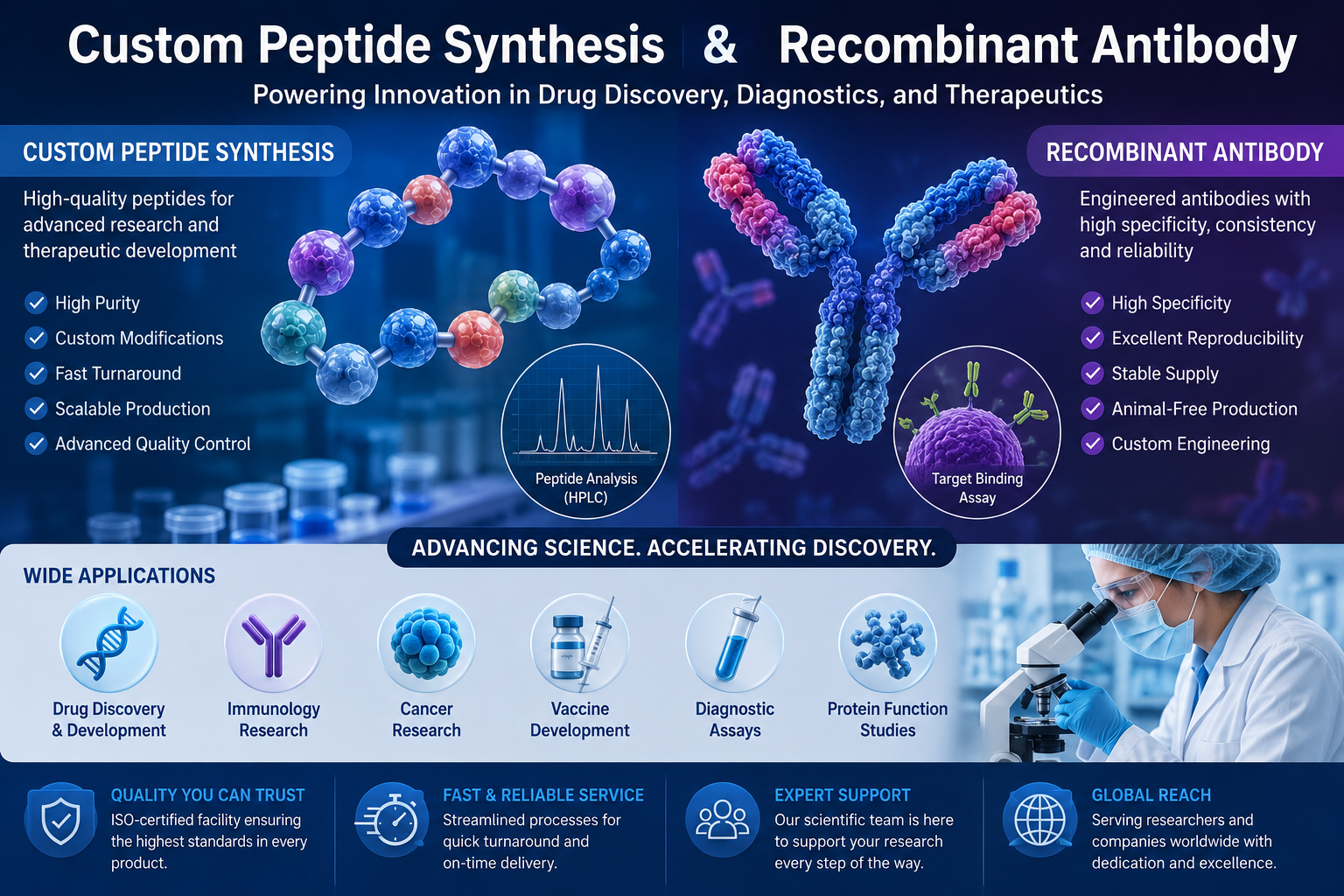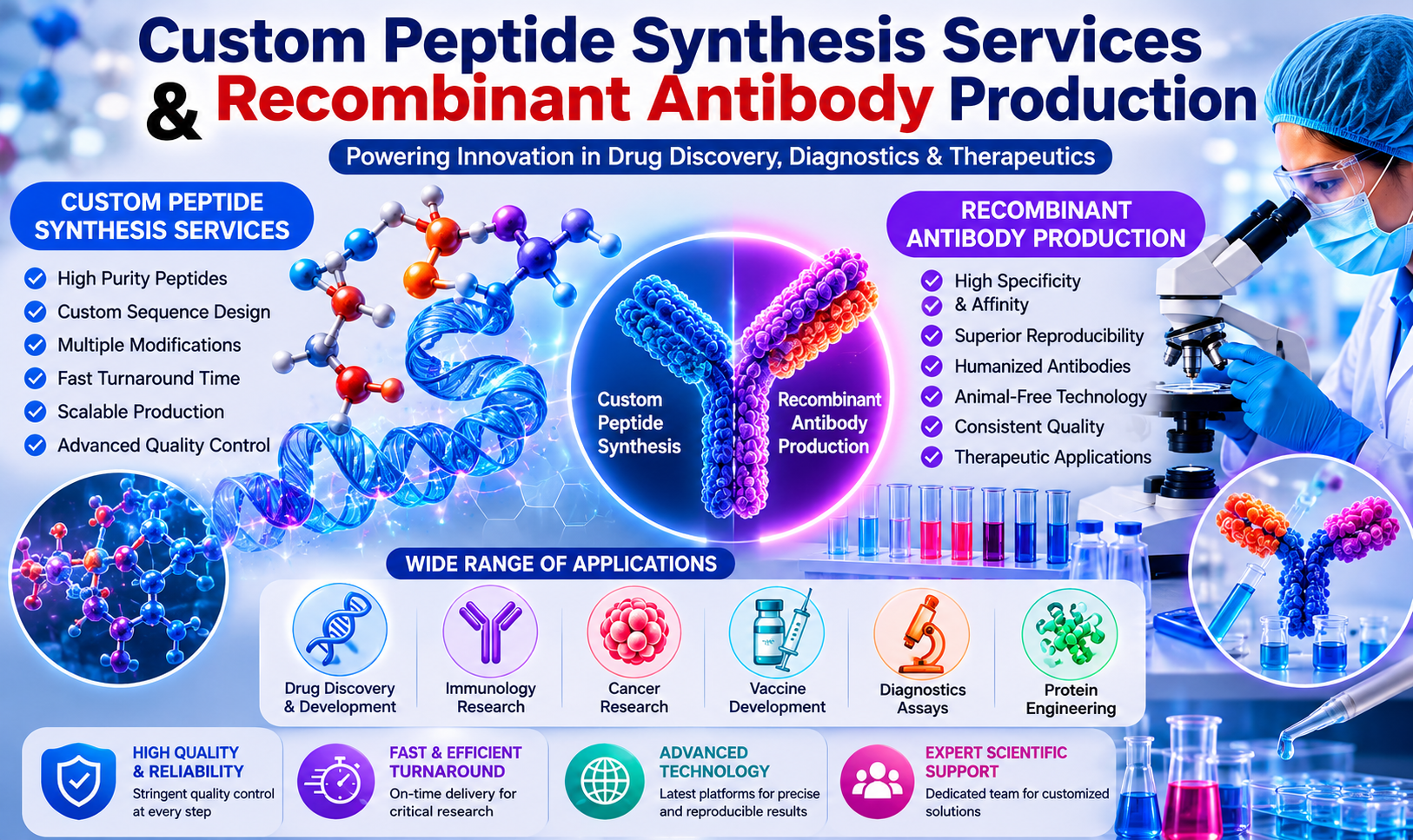
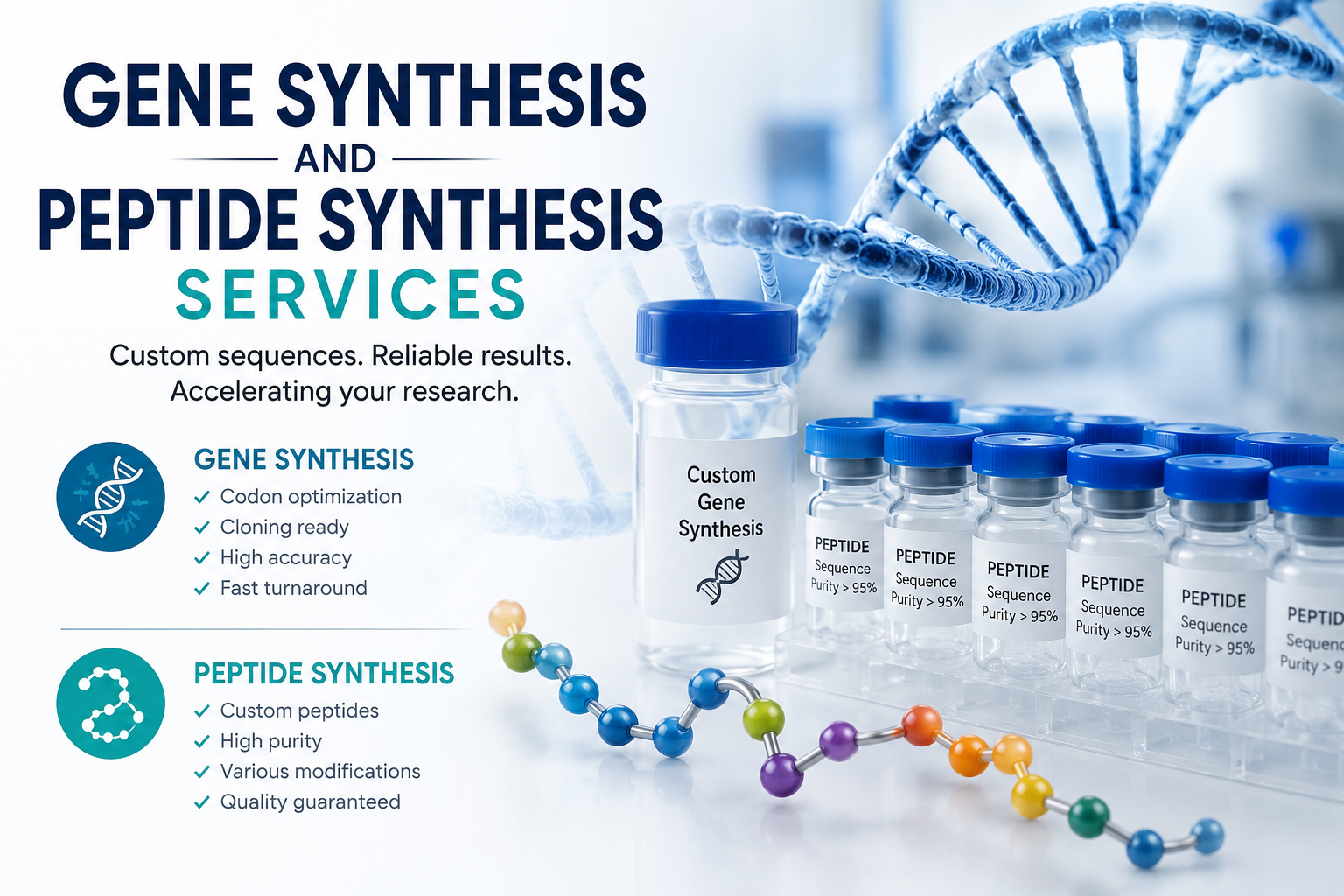
The biotechnology industry is entering a new phase of innovation as peptide synthesis services and gene synthesis continue to reshape research and product development across healthcare, pharmaceuticals, agriculture, and life sciences. As laboratories strive to develop advanced therapies, vaccines, and diagnostic technologies, demand for customized biological solutions has reached unprecedented levels.
Industry experts report that organizations are increasingly investing in synthetic biology and molecular engineering to accelerate research timelines while maintaining high standards of precision and quality. These advancements are enabling scientists to create tailored peptides and synthetic genes that support everything from disease research to industrial biotechnology.
The Expanding Role of Peptide Synthesis Services
Custom peptide synthesis services have become a valuable resource for researchers requiring highly specific amino acid sequences for scientific studies. Modern laboratories now produce peptides with exceptional purity, consistency, and customization, allowing scientists to investigate biological processes more efficiently.
Primary Applications
- Therapeutic drug research
- Vaccine and antibody development
- Cancer biomarker studies
- Immunology research
- Cell signaling analysis
- Protein interaction experiments
- Diagnostic assay development
Key Benefits
- Customized peptide sequences
- High-quality manufacturing standards
- Consistent research results
- Flexible modification options
- Fast project turnaround
How Gene Synthesis Is Transforming Molecular Biology
Gene synthesis enables researchers to create completely customized DNA sequences without relying on naturally occurring genetic material. This technology allows scientists to optimize genes for specific research objectives, improving efficiency in molecular biology and genetic engineering projects.
By eliminating several traditional laboratory steps, gene synthesis reduces development time while providing greater design flexibility.
Common Research Areas
- Synthetic biology
- Recombinant protein production
- Functional genomics
- Cell therapy research
- Gene editing technologies
- Agricultural biotechnology
- Industrial enzyme development
Increasing Adoption Across Scientific Industries
Both peptide synthesis services and gene synthesis are becoming standard tools for organizations seeking faster innovation and improved research accuracy.
Industries Driving Demand
- Pharmaceutical companies
- Biotechnology firms
- Universities and research institutes
- Clinical laboratories
- Agricultural research organizations
- Veterinary science centers
- Environmental biotechnology companies
Why Researchers Prefer Custom Synthesis Solutions
The ability to design molecules according to precise project requirements has significantly improved scientific workflows.
Major Advantages
- Greater experimental accuracy
- Reduced laboratory workload
- Faster research completion
- High reproducibility
- Improved product quality
- Scalable production capabilities
- Reliable technical support
Peptide Synthesis Services vs Gene Synthesis
| Feature | Peptide Synthesis Services | Gene Synthesis |
| Biological Product | Peptides | DNA sequences |
| Scientific Focus | Protein-based research | Genetic engineering |
| Used In | Drug development, diagnostics | Synthetic biology, genomics |
| Customization | Amino acid modifications | DNA optimization |
| End Applications | Therapeutics and immunology | Gene expression and biotechnology |
Emerging Technologies Driving Industry Growth
Innovation continues to improve the efficiency of molecular synthesis technologies.
Recent Developments
- Artificial intelligence-assisted sequence optimization
- Automated laboratory workflows
- High-throughput synthesis systems
- Enhanced purification technologies
- Digital quality assurance platforms
- Advanced molecular validation methods
- Faster production cycles
Selecting the Right Scientific Partner
Successful research depends on choosing a provider with proven scientific capabilities.
Factors to Evaluate
- Technical expertise
- Advanced laboratory infrastructure
- Strict quality control procedures
- Custom project support
- Reliable turnaround times
- Confidential data management
- Regulatory compliance
- Comprehensive technical consultation
Future Prospects for Molecular Innovation
The future of biotechnology will continue to be shaped by advances in peptide synthesis services and gene synthesis. As personalized medicine, gene-based therapies, and synthetic biology become increasingly important, demand for customized molecular solutions is expected to grow across global research communities.
Automation, machine learning, and precision molecular engineering will likely enhance the speed and accuracy of future scientific discoveries while expanding opportunities for innovation in medicine and biotechnology.
Frequently Asked Questions (FAQs)
1. What are peptide synthesis services used for?
They are used to produce custom peptides for research, diagnostics, vaccine development, and pharmaceutical applications.
2. What is gene synthesis?
Gene synthesis is the laboratory creation of customized DNA sequences designed for specific scientific purposes.
3. Why are peptide synthesis services important?
They provide researchers with precise peptide molecules that support biological and pharmaceutical studies.
4. Which industries rely on gene synthesis?
Biotechnology, pharmaceutical, agricultural, healthcare, and academic research sectors widely use gene synthesis.
5. Can custom DNA sequences be designed?
Yes. Gene synthesis allows scientists to design optimized DNA sequences based on research objectives.
6. What advantages do peptide synthesis services offer?
They provide customization, accuracy, high purity, and reliable experimental performance.
7. Are these technologies suitable for vaccine research?
Yes. Both technologies play significant roles in vaccine development and immunological research.
8. How do synthesis technologies improve research efficiency?
They reduce manual laboratory work, shorten development timelines, and improve experimental consistency.
9. What should researchers look for in a synthesis provider?
Experience, quality assurance, technical expertise, modern equipment, and dependable customer support.
10. What is the future of peptide synthesis services and gene synthesis?
These technologies are expected to remain central to precision medicine, synthetic biology, therapeutic innovation, and next-generation biomedical research.