
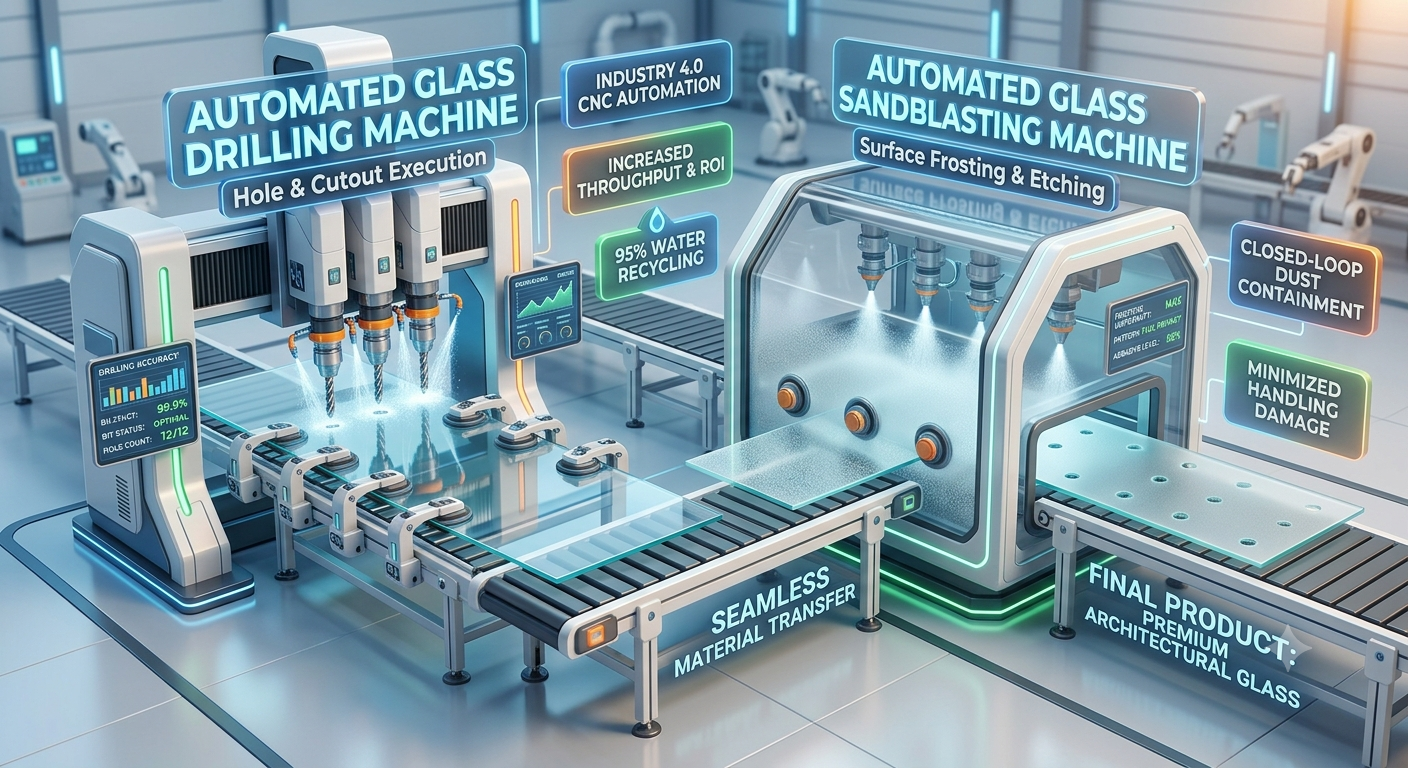
The global glass manufacturing and fabrication industry is evolving rapidly, driven by architectural innovation, interior design trends, and industrial automation. Among the most essential equipment in this sector are the glass sandblasting machine and glass drilling machine, both of which play a critical role in shaping, finishing, and customizing glass products.
From decorative glass panels to functional industrial applications, these machines have become indispensable for manufacturers aiming for precision, efficiency, and high-quality output.
What Is a Glass Sandblasting Machine?
A glass sandblasting machine is a specialized industrial equipment used to etch, clean, or frost the surface of glass using high-pressure abrasive materials such as sand or aluminum oxide. This process creates decorative patterns, privacy finishes, and textured surfaces on glass panels.
Key Applications of Glass Sandblasting Machine
- Decorative glass design for homes and offices
- Frosted glass partitions for privacy
- Branding and logo engraving on glass
- Artistic glass panels and signage
- Surface cleaning and restoration
Benefits of Glass Sandblasting Technology
- High precision design creation
- Consistent surface finishing
- Suitable for mass production
- Enhances aesthetic value of glass
- Customizable patterns and textures
Understanding Glass Drilling Machine
A glass drilling machine is designed to create precise holes in glass sheets without causing cracks or damage. It is widely used in furniture manufacturing, architectural glazing, and industrial glass assembly.
Key Uses of Glass Drilling Machine
- Shower glass door fittings
- Glass shelving installations
- Furniture glass assembly
- Mirror and decorative panel mounting
- Industrial glass hardware fixing
Advantages of Glass Drilling Technology
- Clean and accurate hole creation
- Reduces risk of glass breakage
- Suitable for different glass thicknesses
- Improves production efficiency
- Supports complex glass fabrication designs
Glass Sandblasting Machine vs Glass Drilling Machine
| Feature | Glass Sandblasting Machine | Glass Drilling Machine |
| Function | Surface finishing and etching | Hole drilling in glass |
| Output Type | Frosted or textured surface | Precise drilled holes |
| Application | Decorative and artistic glass | Structural and installation work |
| Process Type | Abrasive blasting | Mechanical drilling |
| Industry Use | Interior design, signage | Furniture, architecture |
How Glass Sandblasting Machine Works
A glass sandblasting machine operates by propelling abrasive particles at high speed onto the glass surface. The impact erodes the surface layer, creating a matte or patterned effect.
Working Process
- Glass panel is cleaned and positioned
- Design stencil or mask is applied
- Abrasive material is blasted under pressure
- Surface is etched according to design
- Final cleaning and inspection are performed
Types of Sandblasting Machines
- Manual sandblasting machines
- Automatic CNC sandblasting systems
- Portable sandblasting units
- Enclosed chamber systems
How Glass Drilling Machine Works
A glass drilling machine uses diamond-tipped drill bits to create smooth and precise holes in glass surfaces.
Working Steps
- Glass sheet is placed on a stable platform
- Water cooling system is activated
- Drill bit applies controlled pressure
- Hole is created gradually to avoid cracks
- Edges are polished for smooth finishing
Types of Glass Drilling Machines
- Single-head drilling machines
- Double-head drilling systems
- CNC automatic drilling machines
- Vertical and horizontal drilling units
Industrial Applications of Glass Sandblasting Machine and Glass Drilling Machine
Both machines are widely used across multiple industries due to their versatility and precision.
Key Industries
- Architectural glass manufacturing
- Interior decoration and design
- Furniture production
- Automotive glass industry
- Construction and real estate projects
- Advertising and signage production
Benefits of Using Advanced Glass Fabrication Machines
Modern glass sandblasting machine and glass drilling machine systems offer several advantages for manufacturers.
Key Benefits
- High production efficiency
- Reduced material wastage
- Precision engineering results
- Improved safety standards
- Automation and CNC integration
- Consistent product quality
Factors to Consider Before Buying Glass Machines
Choosing the right equipment is essential for productivity and quality.
Important Considerations
- Machine capacity and size
- Level of automation (manual vs CNC)
- Energy efficiency
- Maintenance requirements
- Compatibility with glass thickness
- Brand reliability and support
Latest Trends in Glass Processing Industry
The glass manufacturing sector is embracing modern technologies to improve efficiency and design flexibility.
Emerging Trends
- CNC-controlled glass sandblasting systems
- AI-assisted design automation
- Eco-friendly abrasive materials
- Fully automated drilling lines
- Smart manufacturing integration
Maintenance Tips for Long-Term Machine Performance
Proper maintenance ensures durability and consistent output.
Best Practices
- Regular cleaning of machine components
- Timely replacement of drill bits and nozzles
- Monitoring air pressure systems
- Lubrication of mechanical parts
- Routine calibration of CNC systems
Frequently Asked Questions (FAQs)
1. What is a glass sandblasting machine used for?
It is used to create frosted, decorative, or etched designs on glass surfaces.
2. What is a glass drilling machine used for?
It is used to create precise holes in glass for fittings and installations.
3. Can sandblasting damage glass?
No, when properly controlled, it enhances the surface without damaging structural integrity.
4. What industries use these machines?
Architecture, furniture, automotive, signage, and interior design industries.
5. Is CNC technology available in these machines?
Yes, modern machines often include CNC automation for precision work.
6. What materials are used in sandblasting?
Common abrasives include silica sand and aluminum oxide.
7. Can drilling machines handle thick glass?
Yes, advanced machines can handle various glass thickness levels.
8. Is water used in glass drilling?
Yes, water cooling is essential to prevent overheating and cracking.
9. Are these machines suitable for mass production?
Yes, especially CNC and automated models designed for industrial use.
10. What is the lifespan of these machines?
With proper maintenance, they can last many years in industrial environments.