
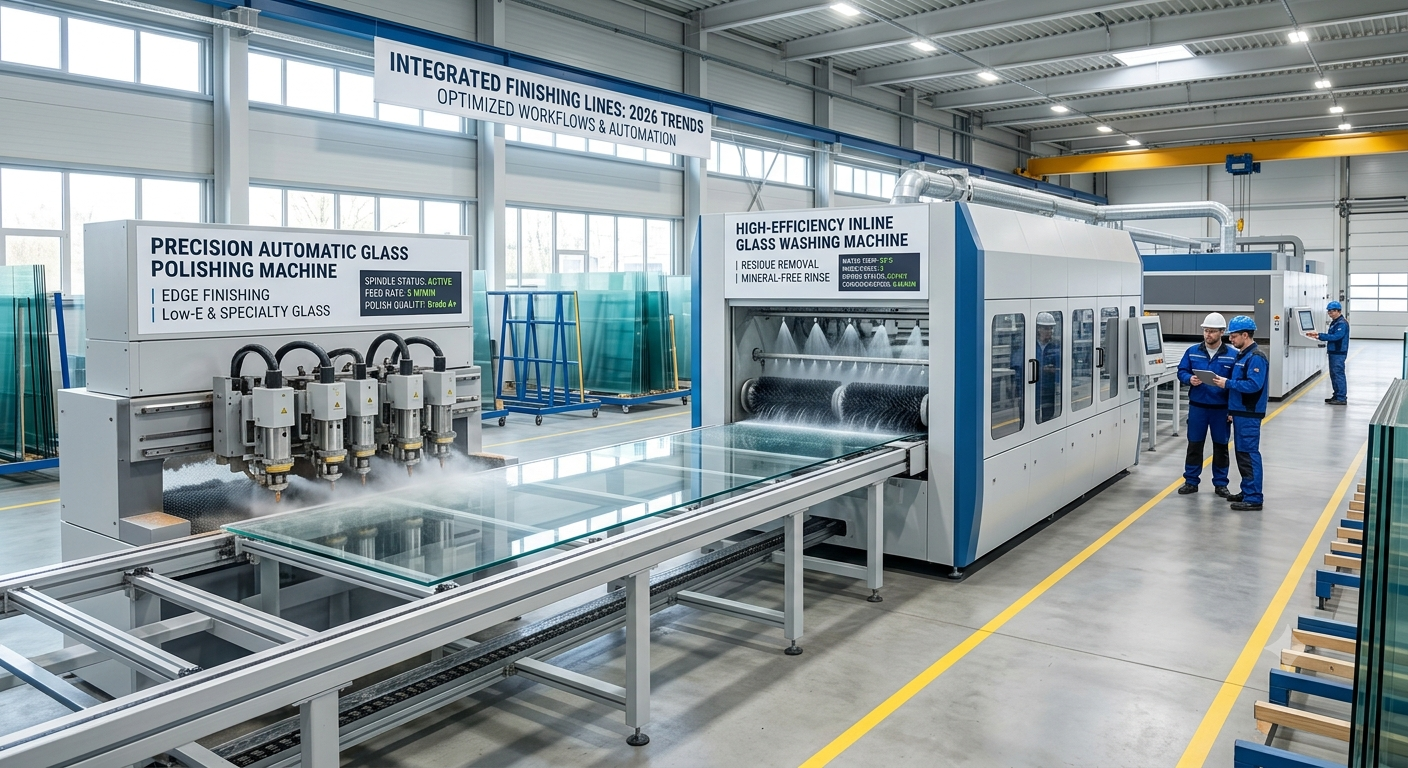
The modern glass industry depends heavily on precision, cleanliness, and flawless finishing. Two essential machines that ensure high-quality output are the glass polishing machine and the glass washing machine. These systems are widely used in architectural glass production, automotive glass manufacturing, furniture glass finishing, and decorative glass industries.
A glass polishing machine improves surface clarity and removes scratches or imperfections, while a glass washing machine ensures dust-free, residue-free cleaning before further processing like coating, lamination, or printing.
Together, these machines play a crucial role in delivering premium-quality glass products that meet global standards.
What Is a Glass Polishing Machine?
A glass polishing machine is industrial equipment designed to smooth, refine, and restore the surface of glass panels. It removes scratches, rough edges, and minor defects, resulting in a clean and polished finish.
Key Functions
- Removes surface scratches and abrasions
- Improves transparency and clarity
- Restores damaged glass surfaces
- Prepares glass for coating or printing
- Enhances aesthetic appeal
Types of Glass Polishing Machines
- Manual polishing machines
- Semi-automatic polishing systems
- Fully automatic CNC polishing machines
- Edge polishing machines
- Flat glass polishing machines
Where It Is Used
- Architectural glass manufacturing
- Automotive windshield production
- Furniture glass finishing
- Decorative glass industries
- Mirror production units
What Is a Glass Washing Machine?
A glass washing machine is designed to clean glass sheets using water, brushes, and drying systems. It removes dust, oil, fingerprints, and chemical residues before further processing.
Key Functions
- Cleans dust and debris from glass surfaces
- Removes oil and chemical residues
- Prepares glass for lamination or coating
- Ensures uniform cleaning for industrial use
- Prevents defects in final products
Types of Glass Washing Machines
- Vertical glass washing machines
- Horizontal glass washing machines
- Industrial continuous washing systems
- High-pressure washing machines
- Low-E glass washing machines
How Glass Polishing Machine and Glass Washing Machine Work Together
In modern production lines, both machines are often used in sequence. First, the glass washing machine cleans the raw glass sheet, and then the glass polishing machine refines its surface.
Process Flow
- Raw glass loading
- Washing and cleaning process
- Drying system activation
- Polishing or finishing stage
- Quality inspection
This combined workflow ensures high precision and flawless output.
Glass Polishing Machine vs Glass Washing Machine
| Feature | Glass Polishing Machine | Glass Washing Machine |
| Purpose | Surface refinement and scratch removal | Cleaning and dust removal |
| Process Stage | Post-cutting finishing | Pre-processing stage |
| Output | Smooth, polished surface | Clean, residue-free glass |
| Technology | Abrasive pads, CNC systems | Brushes, water jets, dryers |
| Industry Use | High-end finishing | Basic preparation stage |
Key Benefits of Using Glass Polishing Machine and Glass Washing Machine
These machines significantly improve efficiency and product quality in glass manufacturing units.
Major Advantages
- High-quality surface finish
- Reduced manual labor dependency
- Faster production cycles
- Improved product consistency
- Lower rejection rates
- Enhanced safety and precision
- Suitable for mass production
Applications in Different Industries
Both machines are widely used across multiple industrial sectors.
Glass Polishing Machine Applications
- Luxury interior glass panels
- Automotive windshields
- Decorative mirrors
- High-precision optical glass
Glass Washing Machine Applications
- Window glass manufacturing
- Solar panel glass cleaning
- Architectural glazing systems
- Laminated glass production
Advanced Features in Modern Glass Processing Machines
Modern equipment is designed with automation and precision engineering.
Technological Features
- PLC control systems
- Touchscreen operation panels
- Automatic thickness detection
- Energy-efficient motors
- Adjustable speed control
- Water recycling systems
- Low-noise operation
How to Choose the Right Glass Polishing Machine and Glass Washing Machine
Selecting the right equipment depends on production requirements and industry type.
Important Factors
- Glass thickness compatibility
- Production capacity
- Automation level
- Machine durability
- Maintenance requirements
- Energy consumption
- After-sales service support
Common Mistakes to Avoid
- Choosing low-quality components
- Ignoring maintenance needs
- Overlooking automation features
- Not considering production scale
Maintenance Tips for Long-Term Performance
Proper maintenance ensures long machine life and consistent output.
Best Practices
- Regular cleaning of rollers and brushes
- Lubrication of mechanical parts
- Routine inspection of electrical systems
- Water filtration system maintenance
- Timely replacement of worn components
Frequently Asked Questions (FAQs)
1. What is a glass polishing machine used for?
It is used to smooth and refine glass surfaces by removing scratches and imperfections.
2. What does a glass washing machine do?
It cleans glass surfaces by removing dust, oil, and chemical residues.
3. Can both machines be used in one production line?
Yes, they are often used together in modern glass manufacturing units.
4. What industries use glass polishing machines?
They are used in automotive, architectural, furniture, and decorative glass industries.
5. Is a glass washing machine necessary before coating?
Yes, cleaning is essential before coating or lamination to ensure quality adhesion.
6. What types of glass washing machines are available?
Vertical, horizontal, and industrial continuous washing systems are common types.
7. Are these machines fully automatic?
Many modern machines come with fully automatic and CNC-controlled systems.
8. How do glass polishing machines improve quality?
They remove surface defects and enhance transparency and smoothness.
9. Do these machines require regular maintenance?
Yes, routine maintenance ensures efficiency and longer service life.
10. What is the main advantage of using both machines together?
They ensure clean, smooth, and high-quality glass output suitable for industrial standards.