
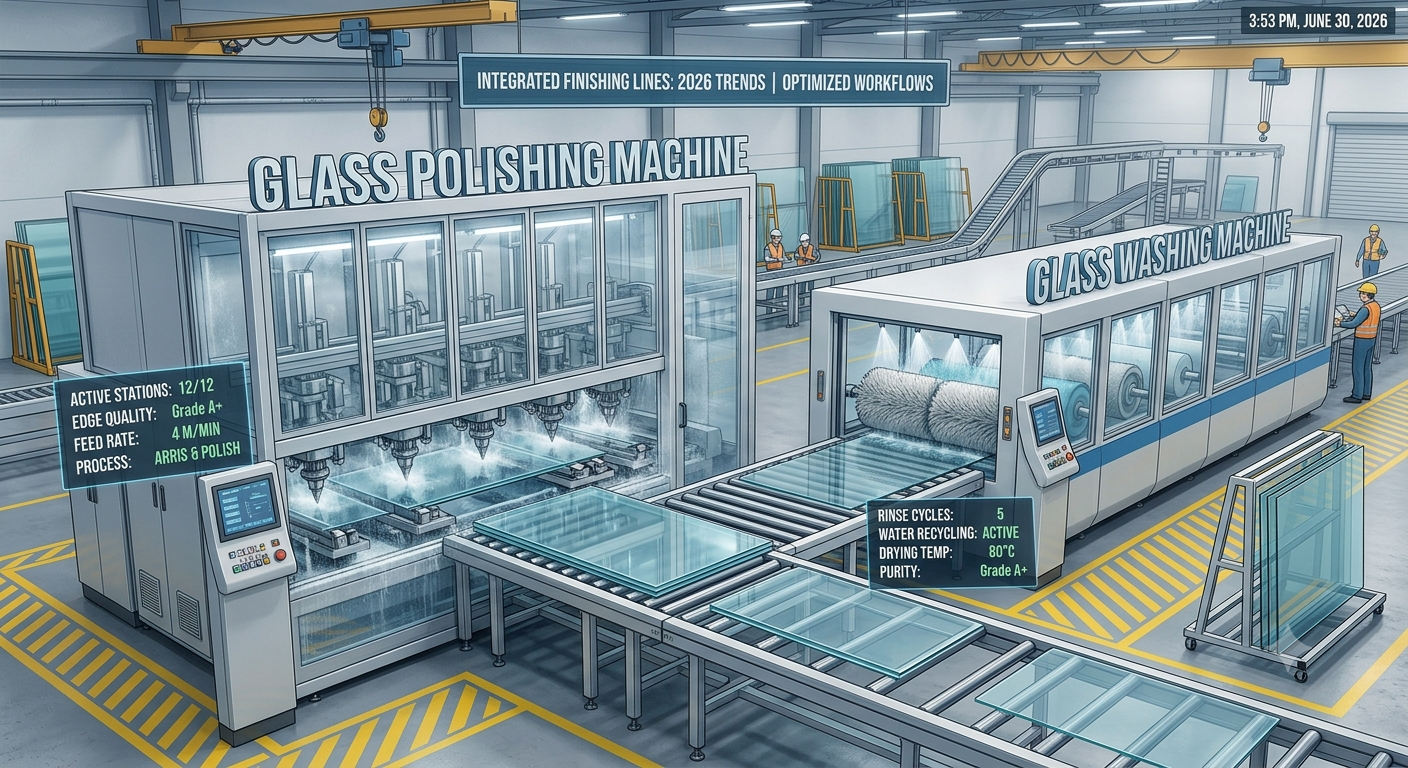
In today’s fast-growing glass manufacturing and processing industry, the demand for high-quality finishing has increased significantly. Two essential machines that play a critical role in achieving flawless results are the glass polishing machine and the glass washing machine. These systems ensure that glass surfaces are clean, smooth, and visually perfect before they are used in architectural, automotive, furniture, and decorative applications.
As industries move toward automation and precision engineering, these machines have become indispensable for maintaining consistent quality standards and reducing manual labor errors.
Understanding Glass Polishing Machine Technology
A glass polishing machine is designed to remove scratches, surface imperfections, and minor defects from glass panels while enhancing transparency and smoothness. It is widely used in glass fabrication units, mirror production, automotive glass industries, and architectural glazing projects.
Core Functions of Glass Polishing Machine
- Surface scratch removal
- Edge finishing and smoothing
- Restoration of damaged glass surfaces
- Enhancing optical clarity
- Preparing glass for further coating or installation
Key Industrial Applications
- Architectural glass panels
- Automotive windshields
- Furniture glass surfaces
- Decorative mirrors
- Industrial display glass
Working Principle Overview
A glass polishing machine operates using abrasive pads, polishing wheels, or cerium oxide-based compounds. Controlled pressure and motion are applied to restore surface clarity without damaging the structural integrity of the glass.
Exploring Glass Washing Machine Systems
A glass washing machine is used to clean glass sheets by removing dust, oil, fingerprints, chemical residues, and other contaminants before or after processing. Clean glass is essential for ensuring proper adhesion in coating, lamination, and printing processes.
Primary Functions of Glass Washing Machine
- Deep cleaning of glass surfaces
- Removal of dust and debris
- Eliminating oil and chemical residues
- Drying with air blow systems
- Preparing glass for coating or assembly
Where Glass Washing Machines Are Used
- Float glass manufacturing plants
- Solar panel production units
- Automotive glass industries
- Mirror manufacturing facilities
- Construction glass processing units
Importance of Glass Polishing Machine in Modern Manufacturing
The glass polishing machine plays a vital role in improving product quality and reducing rejection rates in industrial production lines.
Key Advantages
- Enhances visual clarity and transparency
- Reduces manual polishing labor
- Improves production efficiency
- Ensures uniform finishing quality
- Increases product lifespan
Industrial Impact
Manufacturers rely on polishing machines to meet strict quality standards required for export-grade glass products and premium architectural installations.
Importance of Glass Washing Machine in Production Lines
A glass washing machine ensures that glass surfaces are perfectly clean before further processing, which is critical for high-precision industries.
Key Advantages
- Prevents defects in coating and lamination
- Improves adhesion quality
- Reduces contamination risks
- Supports automated production lines
- Ensures consistent cleaning standards
Quality Control Role
Even microscopic dust particles can affect glass quality. Washing machines eliminate these risks, ensuring flawless output.
Glass Polishing Machine vs Glass Washing Machine
| Feature | Glass Polishing Machine | Glass Washing Machine |
| Primary Function | Surface finishing and scratch removal | Cleaning and contamination removal |
| Stage of Use | After cutting or processing | Before coating or assembly |
| Output Result | Smooth, polished surface | Clean, residue-free glass |
| Tools Used | Abrasive pads, polishing compounds | Water jets, brushes, air drying systems |
| Industry Role | Aesthetic and structural refinement | Preparation and quality assurance |
Types of Glass Polishing Machines
Manual Polishing Machines
- Used for small-scale operations
- Requires operator control
- Suitable for customized glass work
Semi-Automatic Machines
- Balanced automation and manual control
- Common in mid-scale industries
- Improved consistency over manual systems
Fully Automatic Polishing Machines
- High-speed industrial production
- Minimal human intervention
- Ideal for mass manufacturing units
Types of Glass Washing Machines
Horizontal Glass Washing Machines
- Used for flat glass sheets
- Common in large production units
- High-speed cleaning system
Vertical Glass Washing Machines
- Space-efficient design
- Suitable for medium-scale industries
- Better control for delicate glass
Industrial High-Pressure Washers
- Advanced cleaning performance
- Used in solar and automotive industries
- Multi-stage cleaning and drying system
Key Features of Modern Glass Processing Machines
Glass Polishing Machine Features
- Variable speed control
- Precision polishing heads
- Dust-free operation
- High durability components
- Low maintenance design
Glass Washing Machine Features
- Multi-stage cleaning system
- Water recycling mechanism
- Hot air drying unit
- Stainless steel construction
- Automated conveyor systems
Industry Applications of Glass Polishing and Washing Machines
These machines are widely used across multiple industries:
- Architectural construction
- Automotive manufacturing
- Solar energy panels
- Furniture and interior design
- Electronic display production
- Home appliance glass manufacturing
Benefits of Using Automated Glass Machines
Operational Benefits
- Faster production cycles
- Reduced labor dependency
- Improved product consistency
- Lower rejection rates
- Energy-efficient operations
Business Benefits
- Higher customer satisfaction
- Better export quality standards
- Competitive manufacturing advantage
- Reduced operational costs
Maintenance Tips for Long-Term Performance
For Glass Polishing Machines
- Regular cleaning of polishing heads
- Timely replacement of abrasive pads
- Lubrication of moving parts
- Calibration of pressure settings
For Glass Washing Machines
- Cleaning water filters regularly
- Checking spray nozzles for blockage
- Maintaining drying system efficiency
- Using clean and treated water
Frequently Asked Questions (FAQs)
1. What is a glass polishing machine used for?
It is used to remove scratches and improve the surface finish of glass.
2. What is the main purpose of a glass washing machine?
It cleans glass surfaces by removing dust, oil, and contaminants.
3. Can both machines be used together?
Yes, washing is usually done before polishing or coating processes.
4. Which industries use these machines?
Glass manufacturing, automotive, construction, and solar industries.
5. Are glass polishing machines fully automatic?
Yes, modern versions include fully automated systems.
6. What type of water is used in glass washing machines?
Filtered and treated water is typically used to avoid residue marks.
7. Do glass polishing machines damage glass?
No, when used correctly they improve surface quality without damage.
8. What is the difference between polishing and cleaning?
Polishing improves surface smoothness, while washing removes contaminants.
9. Are these machines expensive to maintain?
No, with proper maintenance they are cost-efficient long term.
10. Why are these machines important in manufacturing?
They ensure high-quality output, efficiency, and industrial consistency.