
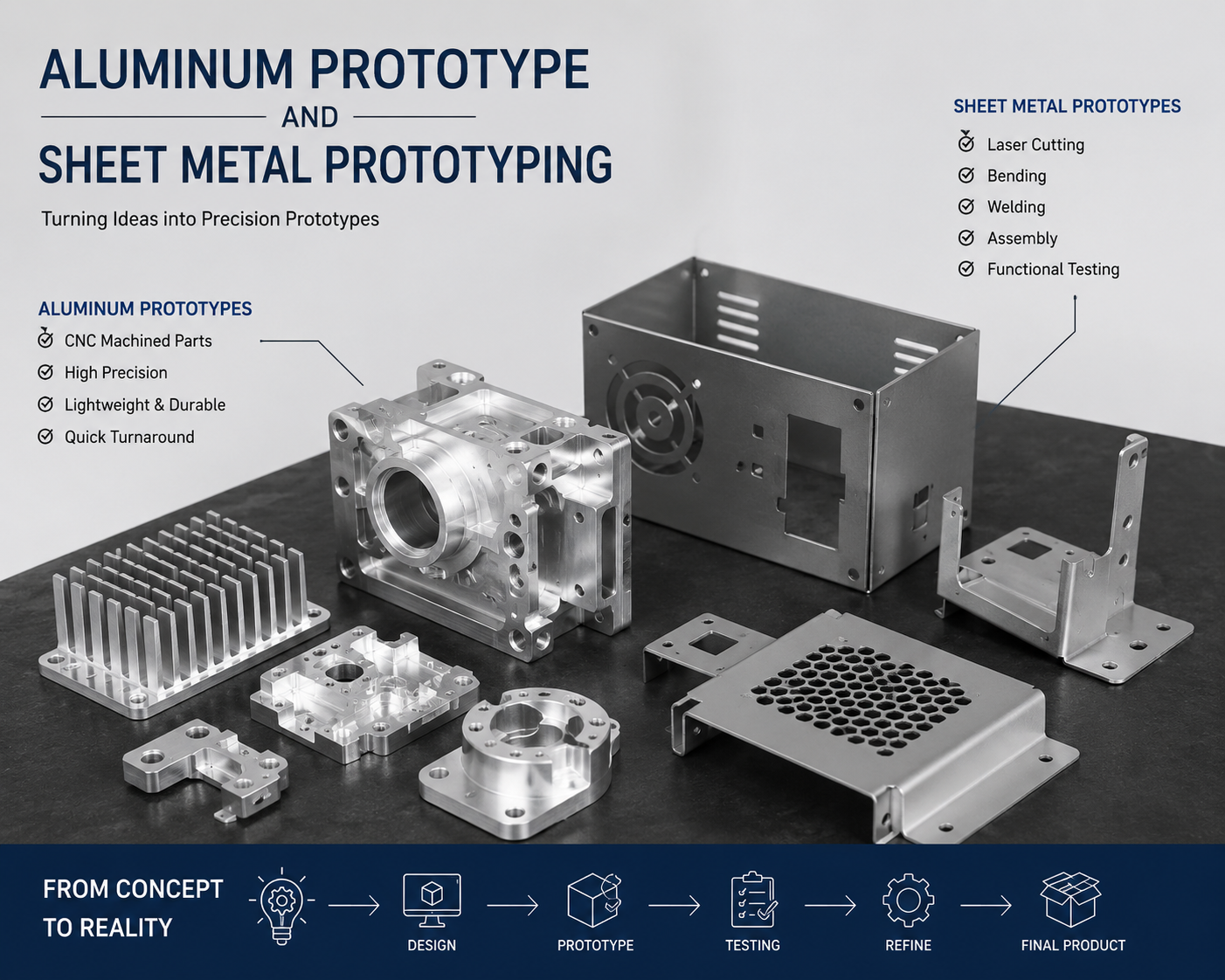
The global manufacturing industry is experiencing a significant transformation as companies increasingly rely on aluminum prototype development and sheet metal prototyping to shorten product development cycles and improve design efficiency. From automotive and aerospace to medical devices and consumer electronics, businesses are turning to advanced prototyping technologies to test concepts, reduce production risks, and bring innovative products to market faster.
Industry experts believe that rapid prototyping has become an essential part of modern manufacturing because it allows engineers and product designers to validate ideas before committing to expensive mass production processes.
Growing Demand for Aluminum Prototype Manufacturing
An aluminum prototype is a functional or visual model manufactured from aluminum materials to test product design, mechanical performance, and manufacturability before full-scale production begins.
Aluminum remains one of the most preferred materials in prototype manufacturing because of its unique combination of strength, lightweight properties, and excellent machinability.
Key Advantages of Aluminum Prototypes
- Lightweight yet durable material
- Excellent corrosion resistance
- Superior thermal conductivity
- High dimensional accuracy
- Easy machining and finishing
- Suitable for functional testing
Manufacturers across industries increasingly use aluminum prototypes for product validation, engineering evaluations, and performance testing.
Sheet Metal Prototyping Continues to Gain Momentum
Sheet metal prototyping involves creating prototype components using various metal fabrication techniques such as laser cutting, bending, punching, and welding. The process enables manufacturers to produce highly accurate parts that closely resemble final production components.
The growing adoption of sheet metal prototyping reflects the industry’s demand for rapid design verification and low-volume production solutions.
Common Materials Used in Sheet Metal Prototyping
- Aluminum
- Stainless steel
- Mild steel
- Copper
- Brass
- Galvanized steel
Industries Benefiting from Advanced Prototyping Solutions
The demand for aluminum prototype and sheet metal prototyping services continues to rise across multiple sectors.
Automotive Industry
- Engine components
- Interior parts
- Battery enclosures
- Structural brackets
Aerospace Industry
- Lightweight structural components
- Aircraft housings
- Precision assemblies
Medical Device Manufacturing
- Equipment enclosures
- Surgical instrument prototypes
- Diagnostic device components
Consumer Electronics
- Device housings
- Heat sinks
- Electronic enclosures
Industrial Equipment
- Control panels
- Machine covers
- Custom fabricated parts
Why Companies Prefer Aluminum Prototype Development
Businesses increasingly choose aluminum prototype manufacturing because it offers an excellent balance of performance, affordability, and speed.
Major Benefits
- Faster product development
- Reduced manufacturing costs
- Improved design verification
- High structural integrity
- Excellent surface finish
- Easier modifications during development
Advantages of Sheet Metal Prototyping
Modern manufacturing projects often require prototype components that closely mimic final production parts.
Key Benefits
- High dimensional precision
- Excellent material strength
- Quick production turnaround
- Cost-effective low-volume manufacturing
- Flexible design modifications
- Suitable for complex geometries
Aluminum Prototype vs Sheet Metal Prototyping
| Feature | Aluminum Prototype | Sheet Metal Prototyping |
| Material | Primarily aluminum alloys | Multiple metal materials |
| Weight | Lightweight | Depends on material |
| Manufacturing Methods | CNC machining, casting | Cutting, bending, welding |
| Best For | Functional testing | Structural components |
| Design Flexibility | High | High |
| Production Speed | Fast | Fast |
How Modern Prototyping Accelerates Product Development
Rapid prototyping allows companies to identify design flaws before mass production begins.
Typical Development Process
- Product design and CAD modeling
- Material selection
- Prototype manufacturing
- Functional testing
- Design modifications
- Final product approval
- Transition to production
By following this process, manufacturers significantly reduce development risks and avoid costly production errors.
Emerging Technologies Reshaping Prototype Manufacturing
The prototyping industry continues to evolve with advanced technologies and digital manufacturing methods.
Current Innovations
- CNC precision machining
- Automated laser cutting
- 3D scanning and reverse engineering
- Digital twin technology
- AI-assisted design optimization
- Smart manufacturing systems
- Hybrid production methods
Factors to Consider When Choosing a Prototyping Partner
Selecting the right manufacturing partner plays a crucial role in project success.
Important Considerations
- Industry experience
- Quality certifications
- Engineering capabilities
- Material expertise
- Production capacity
- Communication efficiency
- Delivery timelines
- Inspection and quality control procedures
Practical Applications of Aluminum Prototype and Sheet Metal Prototyping
Example 1: Automotive Industry
An electric vehicle manufacturer uses an aluminum prototype to test lightweight battery housing designs before moving to mass production.
Example 2: Medical Device Industry
A medical equipment company utilizes sheet metal prototyping to validate equipment enclosures and ensure regulatory compliance.
Example 3: Consumer Electronics
A startup develops prototype housings using aluminum to evaluate ergonomics and thermal management performance.
Industry Trends Driving Future Growth
Manufacturers are increasingly investing in rapid prototyping technologies due to changing market demands.
Key Market Drivers
- Faster product launch requirements
- Increasing product customization
- Growth of electric vehicles
- Expansion of smart devices
- Demand for lightweight materials
- Increased investment in research and development
Actionable Tips for Businesses
Organizations considering prototype manufacturing should follow these best practices.
Expert Recommendations
- Define product requirements clearly.
- Select materials based on end-use applications.
- Conduct functional testing thoroughly.
- Collaborate closely with engineers.
- Evaluate manufacturing scalability.
- Prioritize quality assurance procedures.
- Choose experienced prototype manufacturers.
Frequently Asked Questions (FAQs)
1. What is an aluminum prototype?
An aluminum prototype is a sample component manufactured from aluminum to test product design and functionality before mass production.
2. What is sheet metal prototyping?
It is the process of creating prototype components from sheet metal using fabrication techniques such as cutting, bending, and welding.
3. Why is aluminum widely used for prototypes?
Because it offers strength, lightweight properties, corrosion resistance, and excellent machinability.
4. Which industries use sheet metal prototyping?
Automotive, aerospace, medical, electronics, and industrial equipment industries.
5. Is prototyping suitable for low-volume production?
Yes. Many companies use prototypes for testing and limited production runs.
6. How long does prototype manufacturing take?
Depending on complexity, production can take a few days to several weeks.
7. Can design changes be made after prototype production?
Yes. One of the major advantages of prototyping is the ability to make modifications before final production.
8. Are aluminum prototypes durable?
Yes. Aluminum provides excellent strength and durability for functional testing.
9. What materials are used in sheet metal prototyping?
Aluminum, stainless steel, copper, brass, and galvanized steel are commonly used.
10. Why should companies invest in prototype manufacturing?
Prototyping reduces development risks, improves product quality, and accelerates time-to-market.