
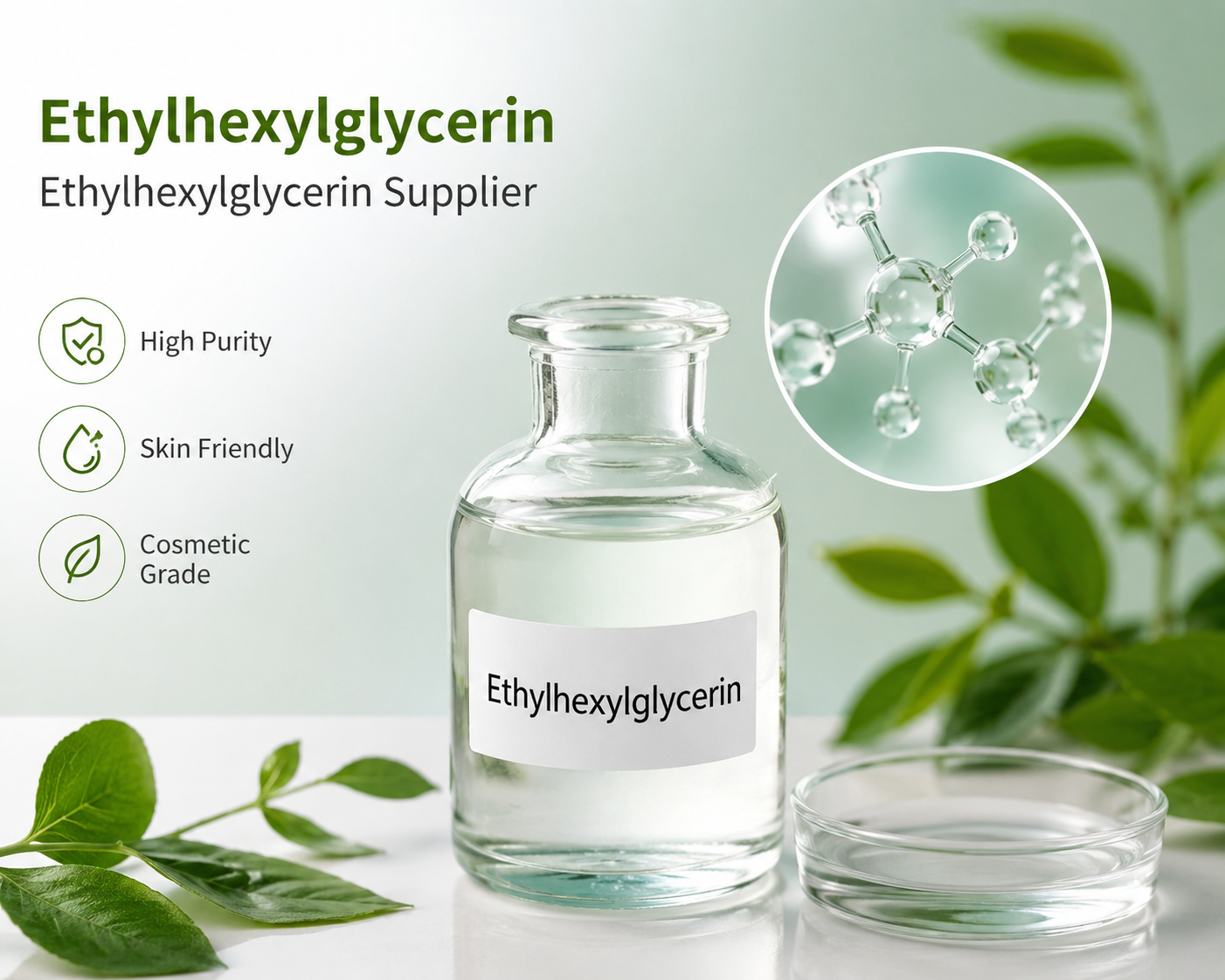
The cosmetic and personal care industry is continuously evolving, with manufacturers seeking ingredients that improve product performance while meeting consumer demand for safer and more effective formulations. One such ingredient that has gained significant attention is Ethylhexylglycerin. This multifunctional ingredient is widely used in skincare, haircare, and cosmetic products due to its preservative-boosting and skin-conditioning properties.
As the demand for high-quality ingredients increases, finding a reliable Ethylhexylglycerin Supplier has become essential for cosmetic brands and manufacturers. This blog explores the benefits, applications, and factors to consider when selecting the right supplier for this valuable cosmetic ingredient.
What Is Ethylhexylglycerin?
Ethylhexylglycerin is a synthetic ingredient derived from glycerin. It is commonly used as a preservative enhancer, emollient, and deodorizing agent in cosmetic and personal care products.
Unlike traditional preservatives, Ethylhexylglycerin does not work alone to prevent microbial growth. Instead, it boosts the effectiveness of other preservatives, allowing manufacturers to reduce the amount of harsh preservatives in formulations.
Key Characteristics of Ethylhexylglycerin
- Colorless to pale yellow liquid
- Mild odor
- Excellent skin compatibility
- Multifunctional cosmetic ingredient
- Suitable for sensitive skin formulations
- Compatible with various preservatives
Why Is Ethylhexylglycerin Popular in Cosmetics?
Modern consumers prefer products that contain gentle and skin-friendly ingredients. Ethylhexylglycerin addresses this need by improving product safety and enhancing the overall user experience.
Major Benefits
- Enhances preservative performance.
- Improves skin feel and texture.
- Helps reduce unpleasant odors.
- Supports mild and sensitive formulations.
- Increases product shelf life.
Applications of Ethylhexylglycerin
The versatility of Ethylhexylglycerin makes it suitable for a wide range of products.
Skincare Products
- Face creams
- Serums
- Moisturizers
- Sunscreens
- Anti-aging products
Hair Care Products
- Shampoos
- Conditioners
- Hair masks
- Styling products
Personal Care Products
- Deodorants
- Wet wipes
- Body lotions
- Liquid soaps
- Hand sanitizers
Makeup Products
- Foundations
- BB creams
- Concealers
- Primers
- Makeup removers
Benefits of Using Ethylhexylglycerin in Formulations
| Benefit | Description |
| Preservative Booster | Enhances the effectiveness of preservatives |
| Skin Conditioning | Leaves skin feeling soft and smooth |
| Deodorizing Effect | Helps reduce body odor-causing bacteria |
| Mild Ingredient | Suitable for sensitive skin products |
| Broad Compatibility | Works well with various cosmetic ingredients |
Why Choosing the Right Ethylhexylglycerin Supplier Matters
The quality of cosmetic ingredients directly impacts product performance and consumer safety. Therefore, selecting a dependable Ethylhexylglycerin Supplier is crucial.
Factors to Consider
Product Quality
A trusted Ethylhexylglycerin Supplier should provide:
- High-purity ingredients
- Consistent quality standards
- Batch-to-batch reliability
Certifications and Compliance
Look for suppliers that comply with:
- ISO standards
- Cosmetic regulations
- REACH compliance
- GMP guidelines
Technical Support
A professional Ethylhexylglycerin Supplier offers:
- Technical documentation
- Formulation guidance
- Safety data sheets
- Regulatory assistance
Supply Chain Stability
Reliable suppliers ensure:
- Timely deliveries
- Adequate inventory
- Global distribution support
Industries That Use Ethylhexylglycerin
The demand for Ethylhexylglycerin extends beyond cosmetics.
Major Industries
- Cosmetics and skincare
- Pharmaceuticals
- Personal care manufacturing
- Baby care products
- Hygiene and sanitation products
Comparison: Traditional Preservatives vs Ethylhexylglycerin
| Feature | Traditional Preservatives | Ethylhexylglycerin |
| Skin Friendliness | Moderate | High |
| Preservative Boosting | No | Yes |
| Moisturizing Effect | Limited | Excellent |
| Sensitivity Risk | Higher | Lower |
| Multifunctionality | Limited | High |
How to Identify a Reliable Ethylhexylglycerin Supplier
Choosing the right supplier can significantly impact your product quality and market reputation.
Checklist for Selecting a Supplier
Experience in the Industry
A well-established Ethylhexylglycerin Supplier often has extensive technical knowledge and industry expertise.
Product Traceability
Reliable suppliers provide complete documentation and quality certificates.
Custom Solutions
Some suppliers offer customized packaging and logistics services.
Customer Support
Responsive communication and technical assistance are signs of a trustworthy supplier.
Future Trends in the Ethylhexylglycerin Market
The global beauty industry is shifting toward safer and multifunctional ingredients. As clean beauty and sustainable formulations continue to grow, Ethylhexylglycerin is expected to witness increasing demand.
Emerging trends include:
- Clean-label cosmetic formulations
- Minimal preservative systems
- Sensitive skin products
- Natural-inspired ingredients
- Premium personal care products
Frequently Asked Questions (FAQs)
1. What is Ethylhexylglycerin used for?
It is used as a preservative booster and skin-conditioning agent in cosmetics and personal care products.
2. Is Ethylhexylglycerin safe for the skin?
Yes, it is generally considered safe and is widely used in sensitive skin formulations.
3. Can Ethylhexylglycerin replace preservatives?
No, it mainly enhances the effectiveness of other preservatives.
4. Is Ethylhexylglycerin suitable for natural products?
It is commonly used in products marketed as gentle and skin-friendly.
5. Why is choosing the right Ethylhexylglycerin Supplier important?
A reliable supplier ensures product quality, consistency, and regulatory compliance.
6. In which products is Ethylhexylglycerin commonly found?
It is found in creams, lotions, shampoos, deodorants, and makeup products.
7. Does Ethylhexylglycerin help improve shelf life?
Yes, it improves preservative efficiency and supports product stability.
8. Is Ethylhexylglycerin suitable for baby care products?
Yes, it is often used in gentle formulations, including baby care products.
9. What documents should a professional Ethylhexylglycerin Supplier provide?
Suppliers should provide COA, MSDS, and regulatory documentation.
10. Is the demand for Ethylhexylglycerin increasing?
Yes, the growing preference for mild and multifunctional cosmetic ingredients is driving demand worldwide.