
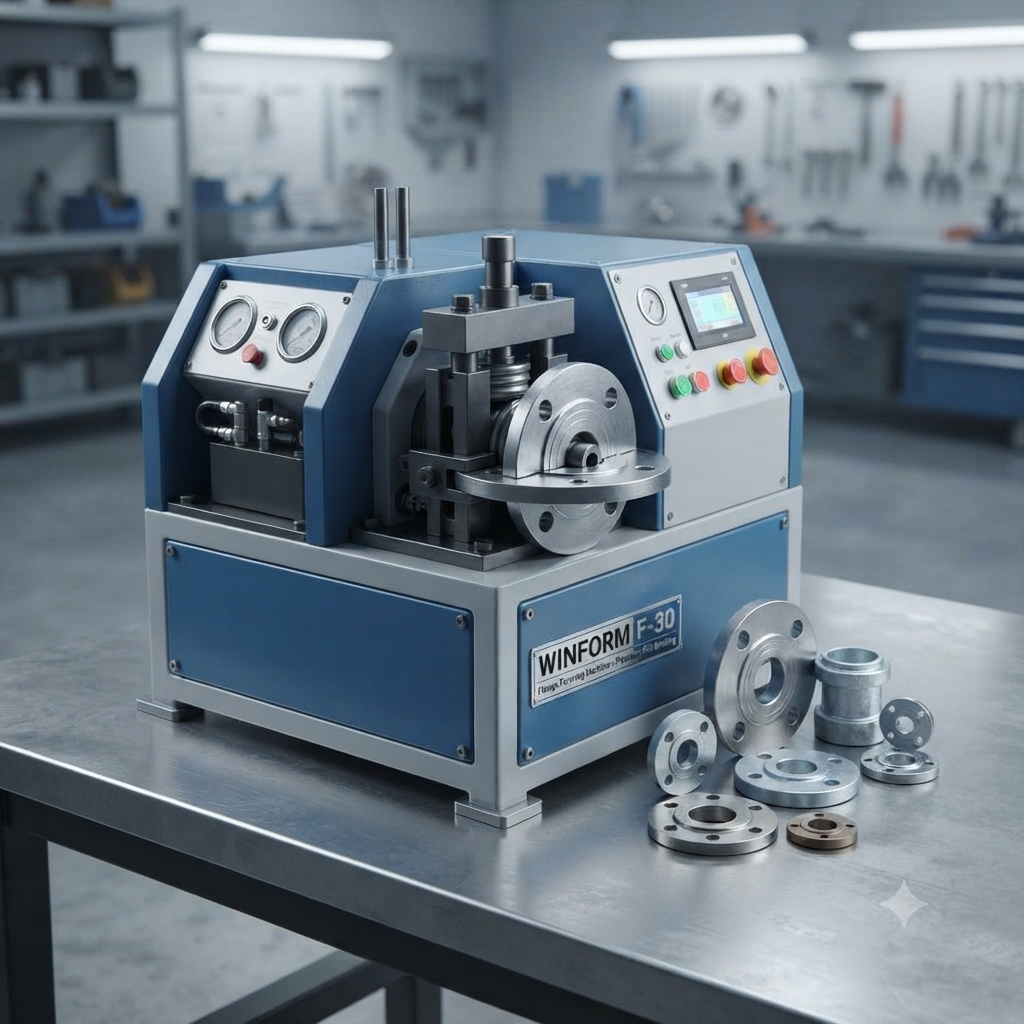
A flange forming machine is a specialized industrial machine used to create precise flange profiles on metal sheets, pipes, ducts, and cylindrical components. Flanges are essential in industries such as HVAC, automotive, aerospace, construction, and pipeline manufacturing because they provide strong, leak-proof connections between parts.
What Is a Flange Forming Machine?
A flange forming machine bends or rolls the edge of a metal component to create a raised rim or flange. The machine uses rollers, dies, and hydraulic or servo-driven systems to ensure accurate forming without damaging the material.
Common materials processed
- Stainless steel
- Mild steel
- Aluminum
- Copper
- Galvanized steel
Types of Flange Forming Machines
1. Hydraulic flange forming machine
Uses hydraulic pressure for high-force applications and thick materials.
2. Servo-driven flange forming machine
Offers excellent precision, repeatability, and energy efficiency.
3. Roll-type flange forming machine
Ideal for continuous production of ducts and cylindrical components.
4. CNC flange forming machine
Computer-controlled for complex flange geometries and automated production lines.
Working Principle
The basic process involves:
- Feeding the metal sheet or pipe into the machine.
- Clamping the workpiece securely.
- Forming the flange using rollers or dies.
- Calibrating the flange dimensions.
- Releasing the finished component.
Modern machines often include automatic lubrication, digital controls, and safety interlocks to improve productivity and operator safety.
Key Features
| Feature | Benefit |
| Digital control panel | Easy operation |
| Servo motor | High accuracy |
| Quick die change | Reduced downtime |
| Automatic feeding | Higher production speed |
| Safety guards | Operator protection |
Advantages of Using a Flange Forming Machine
- Consistent flange dimensions
- Reduced material wastage
- Faster production cycles
- Lower labor costs
- Improved product quality
- Compatibility with automated manufacturing systems
Compared with manual forming methods, automated flange forming machines can significantly increase output while maintaining tight tolerances.
Industrial Applications
HVAC Industry
Used for manufacturing duct flanges and ventilation components.
Pipeline Manufacturing
Forms flanges on pipes for secure bolted connections.
Automotive Sector
Produces exhaust system components and structural parts.
Construction
Creates metal framing and cladding components with reinforced edges.
How to Choose the Right Machine
Consider the following factors before purchasing:
Material thickness
Ensure the machine can handle your maximum sheet or pipe thickness.
Production volume
For high-volume manufacturing, choose a CNC or servo-driven model.
Flange size range
Check the minimum and maximum flange dimensions supported.
Automation requirements
Look for features such as automatic feeding, programmable settings, and integration with existing production lines.
Maintenance Tips
Proper maintenance extends machine life and ensures consistent performance.
Daily checks
- Clean rollers and dies
- Inspect hydraulic hoses
- Check lubrication levels
Weekly checks
- Tighten fasteners
- Inspect electrical connections
- Verify alignment
Monthly checks
- Replace worn rollers
- Calibrate sensors
- Test safety systems
Frequently Asked Questions
What does a flange forming machine do?
It forms a raised edge or flange on metal sheets, pipes, or cylindrical components.
Which industries use flange forming machines?
HVAC, automotive, aerospace, construction, and pipeline industries commonly use them.
Can stainless steel be processed?
Yes, most modern machines can form stainless steel, aluminum, and other metals.
What is the difference between hydraulic and servo machines?
Hydraulic machines provide higher forming force, while servo machines offer better precision and energy efficiency.
Is CNC control necessary?
CNC control is recommended for complex shapes and high-volume production.
How accurate are these machines?
High-quality machines can achieve tolerances within a fraction of a millimeter.
What maintenance is required?
Regular cleaning, lubrication, alignment checks, and inspection of rollers and hydraulic components.
Can the machine handle different flange sizes?
Yes, adjustable tooling allows multiple flange sizes on the same machine.
Is operator training important?
Proper training improves safety, reduces errors, and increases machine efficiency.
What should I check before buying?
Material thickness capacity, flange size range, automation level, production speed, and after-sales support.