
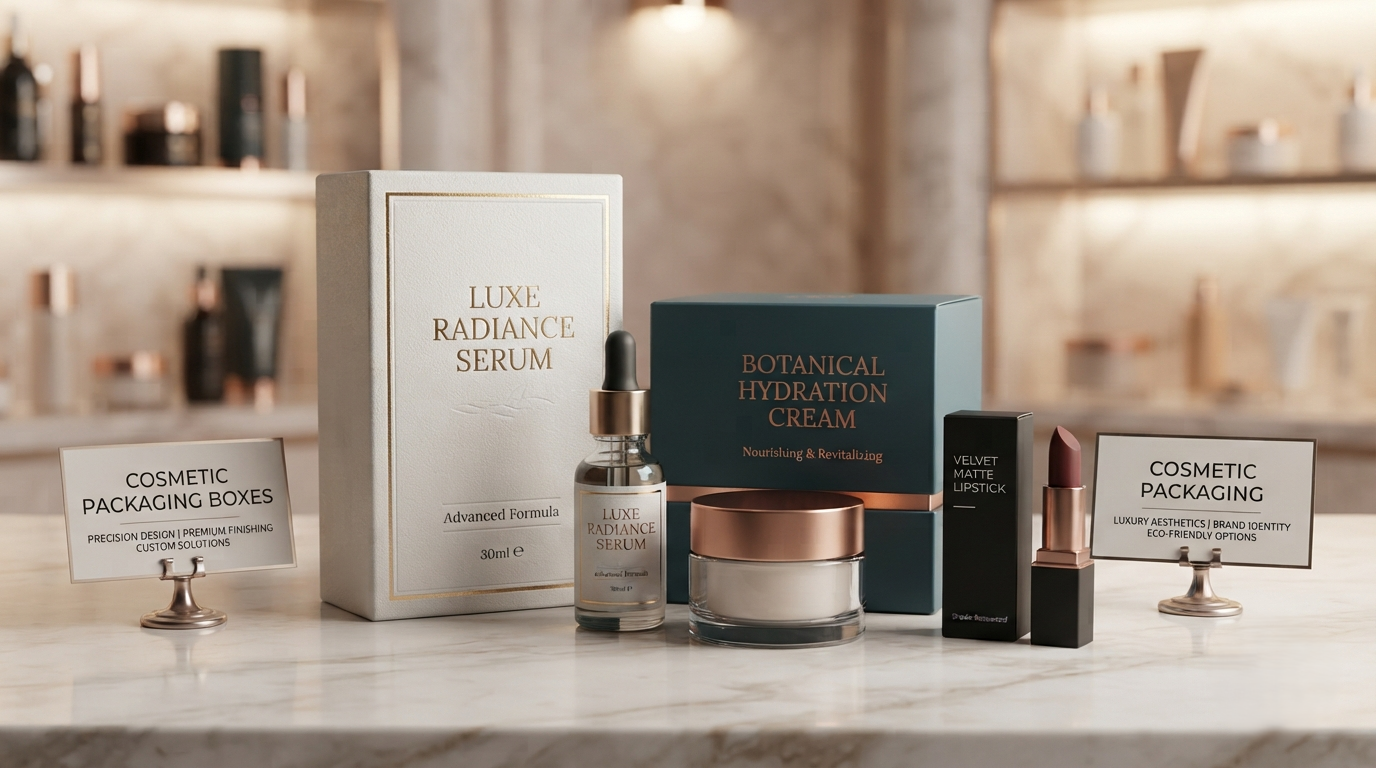
The beauty industry has always been closely connected with presentation. A cosmetic product may contain an advanced formula, but customers often encounter its package before they experience the product itself. This has made cosmetic packaging boxes an increasingly important part of product development, branding, retail presentation, and customer experience.
Over time, packaging has changed from simple product protection into a sophisticated communication and marketing tool. Changes in manufacturing, retail, e-commerce, consumer preferences, and environmental awareness have all contributed to this transformation. Understanding this evolution can help beauty businesses make better packaging decisions for the future.
How Cosmetic Packaging Started
The earliest cosmetic containers were developed mainly to hold and protect beauty preparations. Depending on the period and region, products were stored in ceramic vessels, glass containers, metal tins, wooden boxes, or basic paper packaging.
The appearance of these containers was generally less important than their practical purpose. They needed to prevent damage, contamination, leakage, or deterioration during storage and use.
As beauty products became commercially manufactured, however, the requirements surrounding packaging began to change.
Manufacturers needed packages that could be transported efficiently, identify products, and attract consumers in increasingly competitive marketplaces.
The Transition From Containers to Cosmetic Boxes
The development of paperboard manufacturing and commercial printing created new possibilities for the beauty sector.
Boxes could be produced in different sizes and printed with detailed graphics. Brands gained additional space for communicating product information while creating recognizable visual identities.
Modern cosmetic packaging boxes began serving several purposes at once:
- Protecting the product
- Displaying the brand name
- Communicating product information
- Supporting retail presentation
- Creating visual differentiation
- Reinforcing brand positioning
This shift marked an important change in packaging philosophy. The package was no longer simply something surrounding the product. It became part of the product’s marketing strategy.
Packaging and the Growth of Beauty Brands
As the number of beauty brands increased, differentiation became more difficult.
Packaging offered companies an opportunity to establish a distinctive identity. Consistent colors, typography, graphics, box structures, and finishing techniques could help consumers recognize products quickly.
Luxury brands pushed this concept even further.
High-end cosmetic packaging began incorporating rigid structures, premium papers, embossing, foil stamping, textured surfaces, custom inserts, and carefully designed opening mechanisms.
These features helped create a perception of exclusivity and made packaging an important part of the premium beauty experience.
The Digital Shopping Revolution
E-commerce introduced another major change.
In a traditional store, shoppers could physically hold a cosmetic package and inspect its details before buying. Online shoppers often make their initial judgment from product photographs, videos, descriptions, and reviews.
Packaging therefore became part of the digital presentation of a product.
A box needs to look attractive when photographed while also providing appropriate protection during shipping. This has increased interest in structural durability, compact dimensions, protective inserts, and memorable unboxing experiences.
Social media has strengthened this trend. Consumers can now share their purchases with photographs and videos, turning attractive packaging into an informal marketing opportunity.
Sustainability Changes Industry Priorities
One of the most significant developments in modern cosmetic packaging is the growing emphasis on environmental responsibility.
Packaging waste has encouraged brands and manufacturers to reconsider material choices and package structures. Rather than focusing only on appearance and cost, companies increasingly examine material efficiency, recyclability, reuse, and end-of-life considerations.
Potential approaches include:
- Recycled paper and board
- Recyclable packaging structures
- Responsibly sourced fiber
- Lightweight designs
- Refillable systems
- Reusable components
- Reduced unnecessary packaging
However, sustainable packaging must remain functional.
A cosmetic package may need to protect a product from impact, moisture, contamination, light, or other environmental factors. Therefore, responsible packaging design requires a balance between environmental objectives and product performance.
Comparing Different Stages of Packaging Development
| Packaging Stage | Main Objective | Typical Characteristics |
| Early packaging | Product containment | Simple containers |
| Industrial packaging | Protection and information | Printed cartons |
| Premium packaging | Brand differentiation | Luxury finishes |
| E-commerce packaging | Protection and presentation | Durable, visually attractive structures |
| Future packaging | Complete experience | Sustainable, customized, connected systems |
Why Custom Cosmetic Packaging Is Growing
Standard packaging can be useful for products with simple requirements, but customized solutions allow brands to control more aspects of the customer experience.
Custom cosmetic packaging boxes can be developed around a product’s exact dimensions and may include specialized inserts, unique structures, customized graphics, and premium finishing.
Customization is particularly useful for:
- Luxury cosmetics
- Gift sets
- New product launches
- Limited editions
- Seasonal campaigns
- Promotional collections
- Brand collaborations
A well-designed custom package can also improve product consistency across different sales channels.
Packaging as a Customer Experience
Packaging influences customers before, during, and after purchase.
Before purchase, it helps attract attention. During purchase, it provides information and communicates value. After purchase, it contributes to the unboxing and product-use experience.
This makes packaging an important connection between marketing and customer satisfaction.
The most effective package is therefore not necessarily the most decorative. It is the one that combines visual appeal with practical usability.
What the Future of Cosmetic Packaging May Bring
The future of cosmetic packaging boxes is expected to involve several developments at the same time.
Sustainable materials will remain important, but packaging manufacturers are also likely to focus on lightweight structures, flexible production, personalization, digital connectivity, and improved logistics.
These developments could make packaging more adaptable to the needs of both large and emerging beauty brands.
Digital Printing Supports Greater Flexibility
Digital printing can provide brands with greater freedom to experiment with artwork and packaging variations.
Instead of relying exclusively on very large production quantities, businesses may increasingly produce smaller batches for specific campaigns.
This can support:
- Seasonal packaging
- Limited-edition collections
- Festival promotions
- Regional campaigns
- Influencer partnerships
- Special customer events
Such flexibility can help brands keep their packaging visually fresh while responding more quickly to market opportunities.
Smart Packaging Creates New Connections
The traditional box communicates through printed text and graphics. Future packaging may communicate through both physical and digital channels.
QR codes, NFC features, and digital identifiers can potentially connect consumers with online resources.
A customer may be able to access product instructions, ingredient information, tutorials, authenticity details, recycling guidance, loyalty programs, or brand stories.
This development can turn cosmetic packaging into a continuing communication platform rather than a one-time presentation tool.
Personalization and Limited Editions
Beauty customers increasingly encounter products designed around specific occasions and trends. Packaging can support this strategy through customized artwork and limited-edition designs.
Personalized packages may feature special messages, seasonal graphics, collaborative artwork, or campaign-specific visual identities.
For brands, this can create additional excitement around established products. For consumers, limited packaging can make a purchase feel more distinctive.
Efficient Packaging Will Become More Important
Future packaging design will also need to consider resource efficiency.
Oversized boxes can require more material and occupy additional space during transportation. Carefully optimized dimensions can help brands improve storage and shipping efficiency.
Designers may increasingly consider the complete packaging lifecycle, including:
- Material sourcing
- Manufacturing
- Transportation
- Consumer use
- Recycling or disposal
This broader approach can support more responsible packaging decisions.
Different Design Styles Will Continue to Compete
The future of cosmetic packaging will not be limited to one aesthetic.
Minimalist packaging can create a sense of elegance using simple typography, neutral colors, subtle textures, and restrained graphics.
Meanwhile, expressive designs can use bright colors, unusual shapes, illustrations, and distinctive finishes to attract attention.
The appropriate design depends on the target audience and brand positioning. Successful packaging communicates a clear identity rather than simply following the latest trend.
Steps for Developing Effective Cosmetic Packaging
Brands planning new packaging can consider the following process:
- Identify the product’s protection requirements.
- Understand the target customer.
- Define the desired brand image.
- Select appropriate packaging materials.
- Develop the structural concept.
- Consider sustainability objectives.
- Optimize dimensions and shipping requirements.
- Design for both retail and e-commerce.
- Test prototypes under realistic conditions.
- Collect customer feedback after launch.
This structured approach can help businesses balance appearance, performance, cost, and customer expectations.
Frequently Asked Questions
What are cosmetic packaging boxes?
Cosmetic packaging boxes are cartons or boxes used to protect, present, identify, and provide information about beauty and personal-care products.
Why is cosmetic packaging important?
It protects products while supporting branding, communication, product presentation, and customer experience.
How did cosmetic packaging develop?
It evolved from simple containers focused on protection into printed, customized, and increasingly technology-enabled packaging systems.
What materials are commonly used?
Paperboard, cardboard, rigid board, glass, plastic, metal, recycled fibers, and specialized packaging materials may be selected according to product requirements.
What is custom cosmetic packaging?
Custom packaging is developed specifically for a product’s dimensions, brand identity, structural requirements, and marketing objectives.
Why is sustainability important in cosmetic packaging?
Sustainability addresses concerns such as material consumption, packaging waste, recyclability, reuse, and responsible resource management.
Is packaging important for online beauty sales?
Yes. Packaging must survive shipping while also creating an attractive presentation for product photography, social media, and unboxing.
What is smart cosmetic packaging?
Smart packaging incorporates technologies such as QR codes or NFC to connect physical packaging with digital information and services.
Can small brands use customized packaging?
Yes. Flexible production and digital printing can make customized packaging increasingly practical for smaller quantities and specialized campaigns.
What will shape the future of cosmetic packaging?
Sustainability, customization, material efficiency, digital connectivity, flexible manufacturing, product protection, and customer experience are likely to remain major influences.