
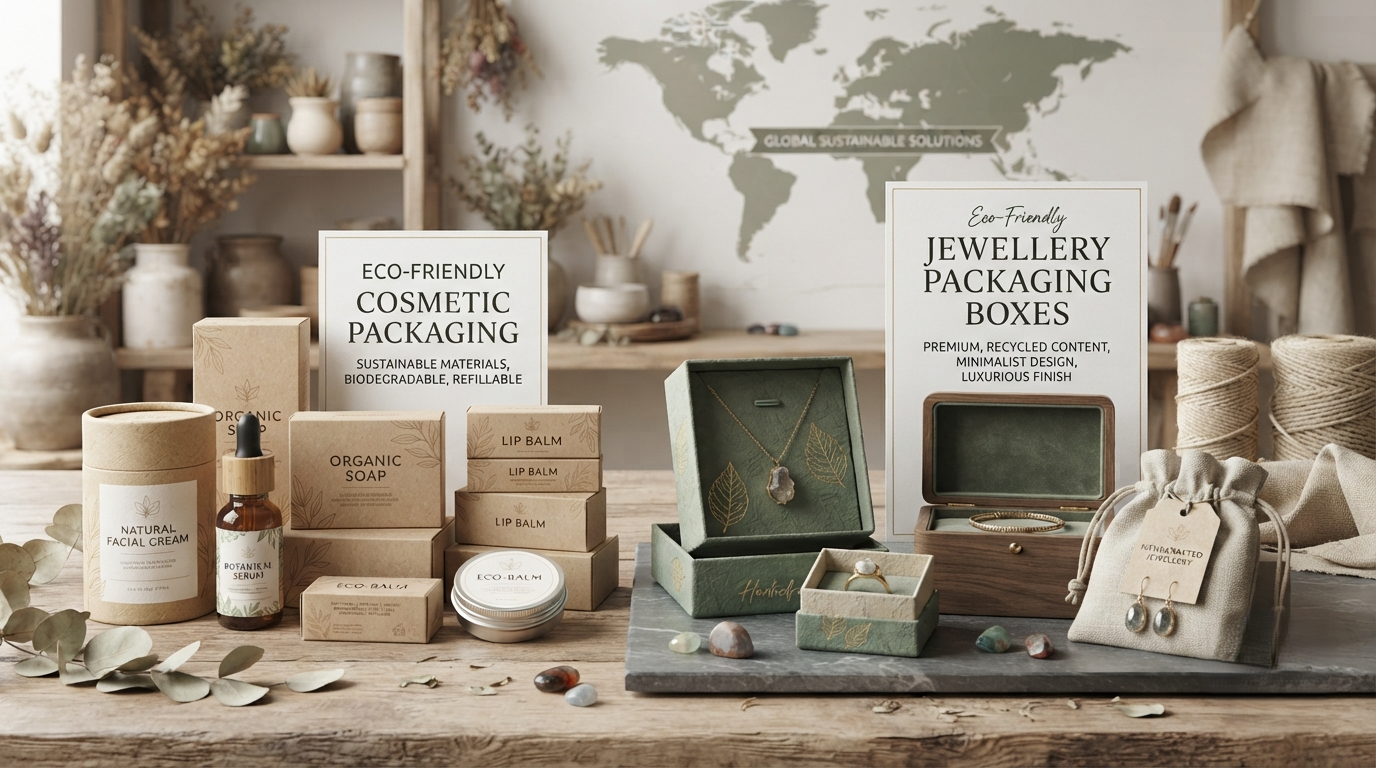
Packaging manufacturers and consumer brands are increasingly rethinking how cosmetics and jewellery are packed, presented, and delivered as sustainability becomes a stronger consideration across the product supply chain.
The shift is particularly visible in the growing interest in eco friendly cosmetic packaging and redesigned jewellery packaging boxes, where businesses are attempting to combine premium presentation with more efficient use of materials.
The change represents a significant departure from the packaging philosophy of previous decades, when appearance, protection, durability, and manufacturing cost were generally the main priorities.
From Traditional Packaging to Responsible Design
For much of the modern packaging era, cosmetic manufacturers depended heavily on plastic bottles, tubes, jars, caps, and cartons. The material offered several advantages, including low weight, flexibility, durability, and large-scale manufacturing efficiency.
Jewellery packaging developed around presentation and protection. Wooden boxes, rigid cartons, velvet interiors, decorative coverings, and specialized inserts helped jewellery brands create a premium customer experience.
While these formats remain widely used, the growing discussion around packaging waste has encouraged companies to reconsider how much material is necessary and what happens after the package is discarded.
The industry is now moving toward a broader packaging assessment that includes material origin, production, transportation, customer use, reuse, recycling, and disposal.
Eco Friendly Cosmetic Packaging Sees Growing Interest
Cosmetic companies are increasingly examining alternatives and improvements to conventional packaging. Eco friendly cosmetic packaging can involve recycled paperboard, kraft paper, glass, aluminum, bamboo, molded fiber, recycled-content materials, and refillable systems.
However, industry development is not simply about replacing one material with another.
Cosmetic packaging must continue to meet important technical requirements. Depending on the product, packaging may need to protect against moisture, air exposure, contamination, light, temperature changes, and physical impact.
This has made packaging design a balancing exercise between sustainability, performance, cost, aesthetics, and consumer convenience.
Jewellery Packaging Moves Toward Reuse
The jewellery sector is taking a similar approach.
Today’s jewellery packaging boxes are increasingly being designed with longer-term use in mind. Recycled paperboard, kraft materials, molded fiber, responsibly sourced papers, and reusable structures can provide alternatives for brands seeking to reduce unnecessary material use.
One notable development is the growing emphasis on reusable boxes.
A jewellery package that can later be used as a storage case for rings, earrings, necklaces, or bracelets has a longer functional life than a package designed only for the initial presentation.
This also gives brands an opportunity to make packaging part of the customer’s long-term relationship with the product.
Luxury Packaging Gets a New Definition
The changing packaging landscape is also challenging the traditional meaning of luxury.
Previously, luxury packaging often relied on heavy structures, multiple layers, decorative materials, and elaborate finishes. Today, sophisticated packaging can be achieved through precision rather than excess.
Premium paper textures, subtle branding, embossing, carefully engineered inserts, elegant typography, and reusable construction can all contribute to a high-end experience.
This means sustainable packaging does not necessarily require brands to compromise on visual appeal.
Refillable Systems Could Change Cosmetics
Refillable packaging is another area receiving attention within the cosmetics sector.
The concept is straightforward: customers retain a durable primary container and purchase a replacement product instead of receiving an entirely new package.
If implemented effectively, refill systems can reduce packaging consumption over multiple product cycles. They may be particularly suitable for products where the outer container can safely be reused.
The success of such systems will depend on product compatibility, hygiene, convenience, pricing, logistics, and consumer acceptance.
Digital Technology Enters the Packaging Conversation
Packaging is also becoming more connected.
QR codes, NFC technology, and digital product identification can add information without requiring packaging to carry large amounts of printed content.
For jewellery companies, digital features could connect customers with authenticity information, certificates, care instructions, product details, and brand stories.
For cosmetic brands, digital connections could provide ingredient information, usage guidance, product education, recycling instructions, and customer support.
This creates a packaging experience that extends beyond the physical box or container.
Personalization Becomes a Growing Opportunity
Another change expected to influence packaging is the increasing accessibility of customization.
Digital printing allows businesses to create packaging for smaller campaigns, limited collections, seasonal launches, special occasions, and personalized orders.
For jewellery companies, customized boxes can support wedding collections, festive campaigns, anniversary products, or premium launches.
Cosmetic brands can similarly create packaging tailored to individual collections or marketing campaigns.
Packaging Becomes Part of the Product Experience
The packaging industry is increasingly recognizing that a package is not simply a container.
It can influence how customers perceive quality, value, responsibility, and brand personality.
A carefully designed box can create excitement during unboxing. A reusable package can provide value after purchase. A digital connection can provide useful information. A recyclable structure can simplify disposal.
Together, these elements can turn packaging into an important part of the overall customer experience.
What Could Define the Next Generation of Packaging?
The future packaging market is expected to move toward systems that keep materials in use for longer.
Potential developments include:
- Refillable cosmetic containers
- Reusable jewellery packaging
- Increased use of recycled materials
- Lightweight packaging structures
- Simplified material combinations
- Smart packaging technology
- Digital product information
- Greater customization
- Improved material traceability
- More efficient packaging dimensions
Not every solution will work for every product. Packaging decisions will continue to depend on safety, durability, cost, logistics, manufacturing, and customer expectations.
Businesses Reconsider Packaging Strategy
For businesses, the current transition represents more than a material change. It requires a broader review of the entire packaging strategy.
Manufacturers and brands may need to consider whether packaging contains unnecessary components, whether box dimensions can be optimized, whether materials can be recovered after use, and whether the package can serve another purpose.
At the same time, companies need to communicate environmental claims accurately. Sustainable packaging should be supported by genuine material and design choices rather than vague marketing language.
Frequently Asked Questions
What is eco friendly cosmetic packaging?
It is cosmetic packaging developed to reduce environmental impact through strategies such as reuse, refillability, recycling, recycled content, renewable materials, or efficient material design.
Why are cosmetic brands changing their packaging?
Environmental awareness, customer expectations, brand positioning, material innovation, and waste reduction goals are encouraging packaging changes.
What materials can be used for sustainable cosmetic packaging?
Depending on the product, options may include recycled paperboard, kraft paper, glass, aluminum, bamboo, molded fiber, and suitable recycled materials.
What is the purpose of jewellery packaging boxes?
They protect jewellery during storage and transportation while creating a presentation that supports the product and brand.
Can jewellery boxes be environmentally responsible?
Yes. Recycled materials, reusable structures, efficient designs, and appropriate recyclable components can contribute to more responsible packaging.
Can sustainable packaging provide a luxury appearance?
Yes. Luxury can be achieved through construction quality, premium textures, precise printing, embossing, and carefully designed interiors.
What is refillable packaging?
It allows customers to retain a primary package and replace the product inside using a refill.
Does using paper automatically make packaging sustainable?
No. The complete lifecycle, including sourcing, manufacturing, transportation, use, and disposal, must be considered.
Why are reusable jewellery boxes important?
They can remain useful after purchase as storage containers, extending the functional life of the packaging.
What will influence future packaging?
Circular design, reuse, refill systems, recycled materials, digital technology, customization, lightweight construction, and improved resource efficiency are likely to be important influences.