
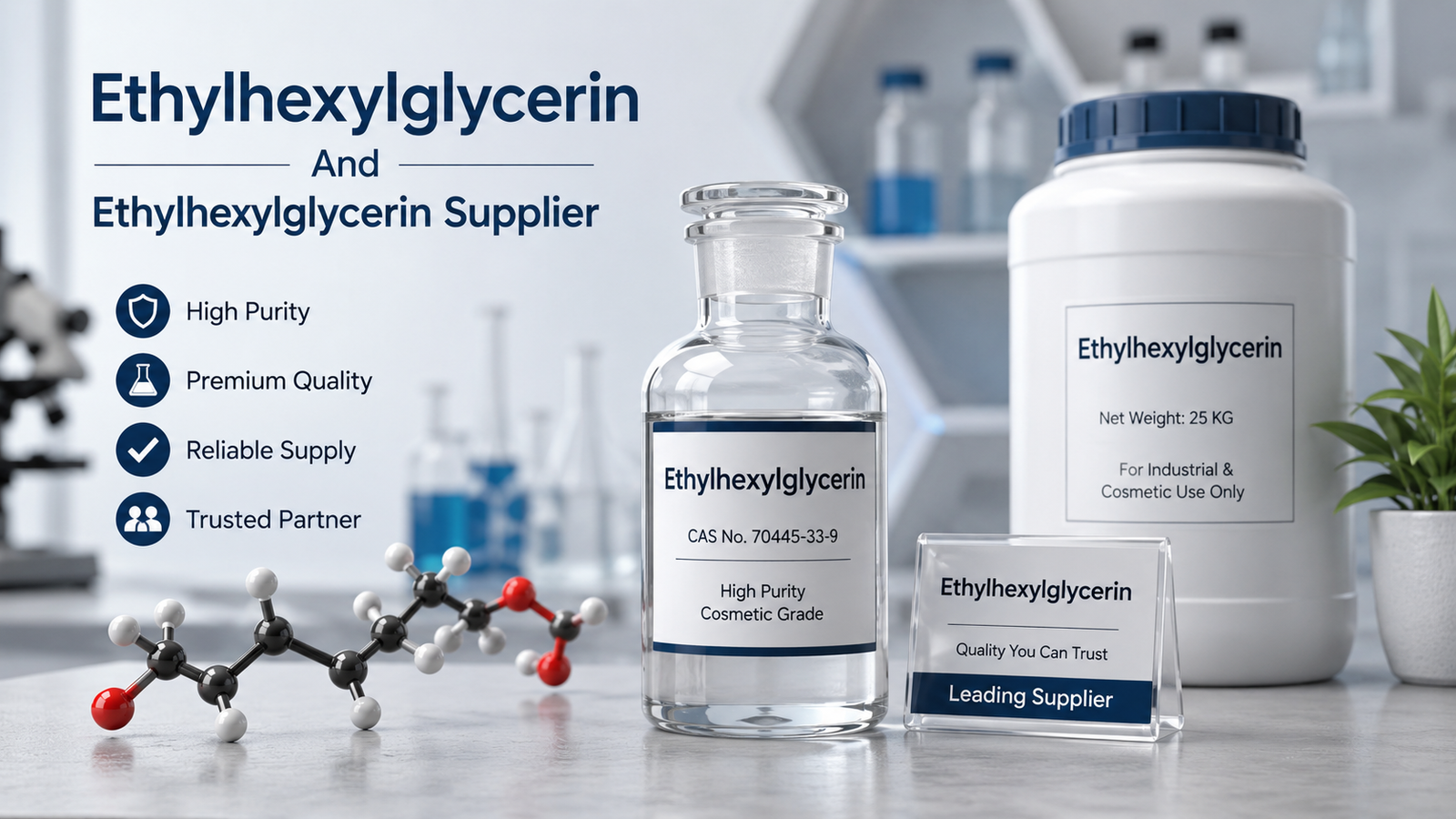
The personal care industry is witnessing a noticeable transformation in how cosmetic products are formulated and manufactured. Instead of evaluating ingredients according to a single function, product developers are increasingly interested in materials capable of supporting multiple formulation objectives. Ethylhexylglycerin has emerged as one ingredient fitting this changing approach.
Used across skincare, haircare, cleansing, deodorant, and hygiene products, Ethylhexylglycerin is particularly valued for skin conditioning and its supporting role in preservation systems. Meanwhile, manufacturers are paying closer attention to the capabilities of their Ethylhexylglycerin Supplier, recognizing that consistent sourcing can be as important as ingredient functionality.
Formulation Efficiency Becomes an Industry Priority
Modern cosmetic development requires manufacturers to manage numerous technical considerations simultaneously.
A successful product needs appropriate stability, microbial protection, attractive sensory characteristics, packaging compatibility, and consistent performance throughout its expected shelf life.
Multifunctional ingredients can help formulators approach these requirements more efficiently.
Ethylhexylglycerin is particularly interesting because it can potentially contribute to:
- Preservation enhancement
- Skin conditioning
- Deodorizing systems
- Antimicrobial support
- Sensory performance
- Formulation flexibility
The ingredient’s usefulness across different functions has expanded its relevance within personal care development.
Ethylhexylglycerin Finds a Role in Preservation Systems
Preservation remains a major technical issue for manufacturers producing water-based cosmetics.
Microorganisms may enter products at different stages, ranging from raw-material handling and production to consumer use. An effective preservation strategy is therefore essential for maintaining appropriate microbiological quality.
Industry Moves Toward Complementary Preservation
Ethylhexylglycerin is commonly used as a preservative booster. This means formulators can incorporate it to complement certain antimicrobial ingredients within a broader preservation strategy.
A frequently encountered pairing involves phenoxyethanol and Ethylhexylglycerin.
This type of complementary system demonstrates an important industry trend: preservation is increasingly considered as an integrated formulation strategy rather than the responsibility of one ingredient.
Finished Product Conditions Remain Critical
Experts recognize that no preservation ingredient works independently of its formulation environment.
Performance may be influenced by:
- pH level
- Water activity
- Ingredient interactions
- Manufacturing conditions
- Packaging type
- Storage conditions
- Consumer handling
Consequently, appropriate stability and microbiological testing remain important when developing commercial products.
Manufacturers should verify preservation performance within the finished formula instead of assuming that an ingredient combination will behave identically across different applications.
Skin-Conditioning Functionality Broadens Market Potential
The role of Ethylhexylglycerin extends beyond product preservation.
Skin conditioning is another important function associated with the ingredient, making it relevant to manufacturers focused on improving consumer experience.
Sensory Performance Receives Greater Attention
Consumers often evaluate a skincare product immediately after application. Texture, spreadability, softness, absorption, and after-feel can all influence their perception.
This has encouraged manufacturers to pay greater attention to ingredients that can contribute to sensory performance alongside technical functionality.
Potential applications include:
- Moisturizing creams
- Body lotions
- Facial serums
- Cleansers
- Sunscreens
- Underarm products
- Personal hygiene formulations
Deodorant Segment Creates Additional Demand
Changing deodorant formulation strategies are creating another area of interest for Ethylhexylglycerin.
Body odor is influenced partly by microorganisms present on the skin. Managing odor-associated microbial activity can therefore contribute to effective deodorizing products.
Moving Beyond Fragrance-Based Odor Management
Traditional approaches may rely heavily on fragrance to cover undesirable odors. Modern formulation strategies can also focus on factors involved in odor development.
Ethylhexylglycerin may therefore be considered for products such as deodorant roll-ons, sprays, underarm formulations, body wipes, and personal cleansing products.
Its multifunctional properties can allow manufacturers to address several formulation objectives through a coordinated ingredient system.
Personal Care Applications Continue to Diversify
Industry interest is supported by the broad range of potential product applications.
| Personal Care Product | Potential Function |
| Face moisturizer | Conditioning and preservation support |
| Facial serum | Preservation enhancement |
| Body lotion | Skin-conditioning support |
| Shampoo | Preservation assistance |
| Conditioner | Conditioning support |
| Cleanser | Microbial protection support |
| Deodorant | Odor-control assistance |
| Wet wipes | Preservation support |
| Sunscreen | Formula protection |
| Hygiene products | Multifunctional support |
The actual use of Ethylhexylglycerin should be determined according to the complete formulation, technical specifications, applicable regulations, and testing.
Raw-Material Consistency Moves Higher on Procurement Agendas
As cosmetic companies increase production volumes, ingredient consistency becomes a major commercial consideration.
Manufacturers need confidence that the raw material used during initial development can be supplied consistently during repeated production cycles.
This places additional responsibility on the Ethylhexylglycerin Supplier.
Manufacturers Strengthen Supplier Expectations
When qualifying suppliers, businesses may now investigate:
- Product purity
- Technical specifications
- Batch consistency
- Quality-control systems
- Manufacturing standards
- Packaging integrity
- Traceability
- Storage requirements
- Logistics capabilities
- Supply continuity
The objective is not simply to purchase an ingredient but to establish a predictable supply chain.
Technical Documentation Becomes Essential
Documentation plays an important role in modern cosmetic manufacturing.
Quality, formulation, procurement, and regulatory teams often need detailed information about raw materials before approving them for production.
A qualified Ethylhexylglycerin Supplier should be prepared to provide relevant technical information.
Documents Buyers Commonly Request
These can include:
- Certificate of Analysis
- Safety Data Sheet
- Technical Data Sheet
- Product specifications
- Batch identification
- Shelf-life information
- Storage recommendations
- Applicable regulatory documents
Clear documentation can help manufacturers improve internal qualification and traceability processes.
Cost Is No Longer the Only Purchasing Metric
Ingredient price remains important, but procurement decisions increasingly consider overall supply value.
| Supplier Consideration | Strategic Supplier | Price-Only Source |
| Batch consistency | Controlled | May fluctuate |
| COA support | Available | Potentially limited |
| Traceability | Established | May be unclear |
| Technical assistance | Accessible | Often minimal |
| Supply planning | Structured | Less predictable |
| Long-term availability | Prioritized | Potentially uncertain |
An attractive quotation can lose its value if material inconsistency or delayed deliveries interrupt production.
Supplier Qualification Becomes More Structured
Manufacturers looking for an Ethylhexylglycerin Supplier can reduce procurement risks by following a clear qualification process.
Confirm Technical Suitability
The first step is comparing supplier specifications with formulation and quality requirements.
Review Supporting Documentation
Technical, safety, quality, storage, and regulatory information should be examined before approval.
Conduct Sample Trials
Representative samples can be tested within intended formulations before purchasing large quantities.
Assess Commercial Capacity
MOQ, bulk packaging, pricing, inventory, lead times, transportation, and production capacity should be evaluated.
Consider Future Requirements
Manufacturers should select suppliers capable of supporting increased demand as their finished products gain market traction.
Frequently Asked Questions
What is Ethylhexylglycerin used for?
Ethylhexylglycerin is commonly used for skin conditioning, preservation enhancement, deodorizing support, and antimicrobial system assistance.
Why is the cosmetics industry interested in Ethylhexylglycerin?
Its multifunctional characteristics allow formulators to address several product-development requirements through one ingredient.
Is Ethylhexylglycerin a primary preservative?
It is generally used as a preservation booster or supporting ingredient rather than automatically as a complete standalone preservative.
Why is it paired with phenoxyethanol?
The ingredients can complement each other within appropriately developed cosmetic preservation systems.
Which products may contain Ethylhexylglycerin?
It may be found in creams, lotions, serums, cleansers, shampoos, conditioners, deodorants, wipes, sunscreens, and hygiene products.
Does Ethylhexylglycerin help with skin conditioning?
Yes. Skin conditioning is an important function of Ethylhexylglycerin in personal care applications.
What role does it have in deodorants?
It can support the control of microorganisms associated with undesirable body odor.
How can manufacturers identify a reliable Ethylhexylglycerin Supplier?
Evaluate quality consistency, specifications, documentation, traceability, technical support, logistics, and long-term supply capacity.
What documentation should buyers request?
Relevant documents can include COA, SDS, TDS, product specifications, storage guidance, and applicable regulatory information.
Why should finished formulations be tested?
Testing helps verify stability, compatibility, and microbial protection under conditions representative of the final product.