
Introduction
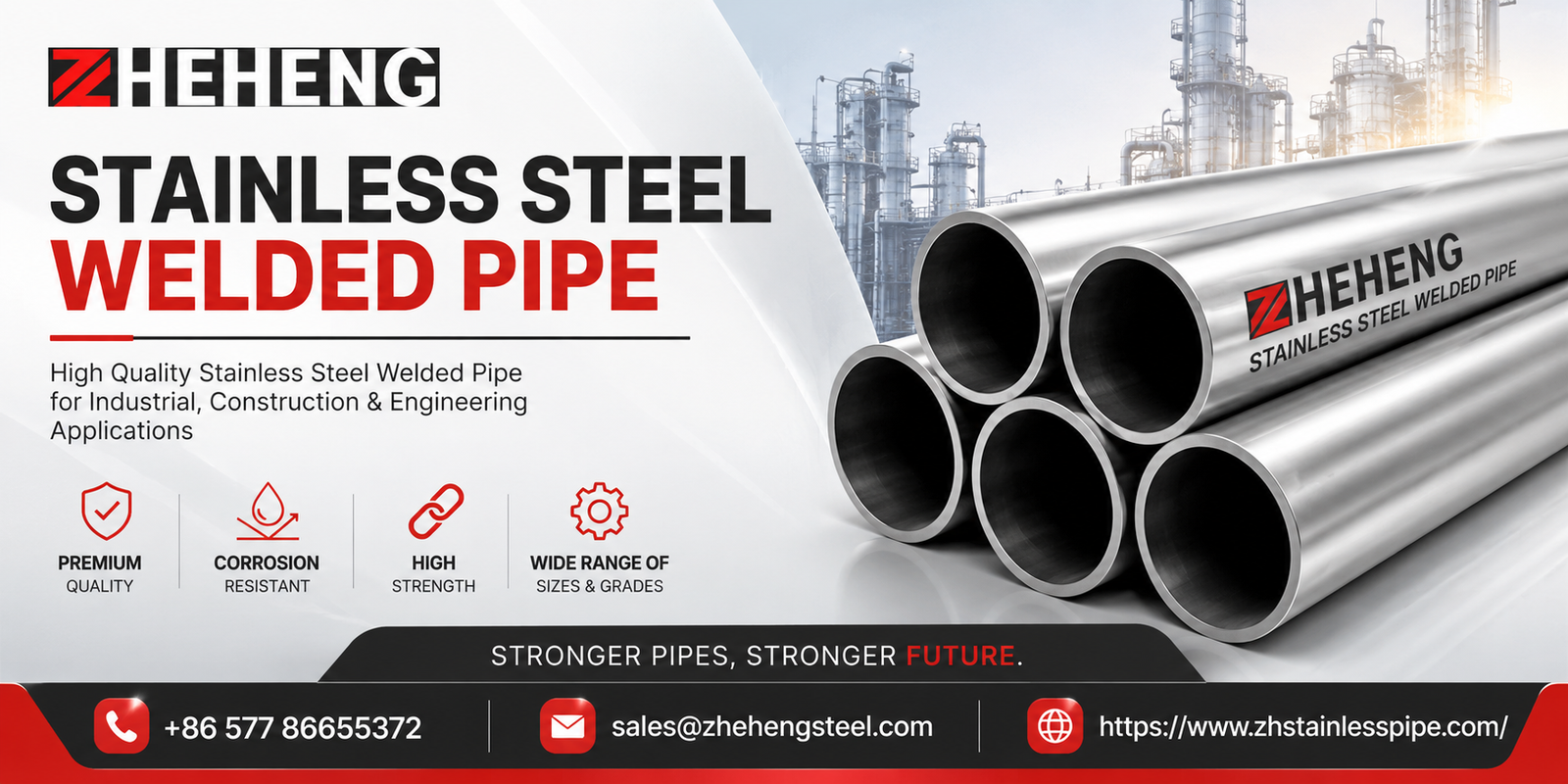
When industries need piping that can withstand demanding environments while maintaining durability and performance, Stainless Steel Welded Pipe is a trusted choice. Manufactured by forming stainless steel sheets or strips and joining the edges through a controlled welding process, these pipes offer an excellent combination of corrosion resistance, strength, dimensional flexibility, and cost efficiency. From chemical processing and food manufacturing to construction and water treatment, stainless steel welded pipes are used in a wide variety of applications. Choosing the right grade, dimensions, wall thickness, and finish can significantly influence the performance and service life of a piping system.
Why Stainless Steel Welded Pipe Is a Smart Industrial Choice
Modern industries require piping materials that can deliver reliable performance while minimizing maintenance requirements. Stainless steel welded pipe meets these expectations through its strong material properties and versatile manufacturing options.
Key Advantages of Stainless Steel Welded Pipe
- Excellent corrosion resistance: Helps withstand moisture, chemicals, and challenging environments.
- High durability: Designed to provide dependable performance over extended periods.
- Versatile applications: Suitable for industrial, commercial, construction, and processing systems.
- Wide dimensional availability: Manufactured in different diameters, wall thicknesses, and lengths.
- Easy fabrication: Can be cut, formed, welded, and fabricated according to project requirements.
- Attractive surface finish: Stainless steel can be supplied with polished, brushed, or other finishes.
- Lower maintenance needs: Its corrosion-resistant surface can help reduce frequent replacement and maintenance.
How Is Stainless Steel Welded Pipe Manufactured?
The manufacturing process plays an important role in determining the quality and reliability of welded pipe. Although production methods can vary depending on the required specification, the process generally involves several carefully controlled stages.
1. Stainless Steel Material Selection
The appropriate stainless steel grade is selected according to the intended application. Common grades include 304, 304L, 316, and 316L, with each offering different properties for specific operating environments.
2. Forming and Welding
Stainless steel strip or sheet is formed into a cylindrical shape. The longitudinal edges are then joined using an appropriate welding technique to create the pipe.
3. Sizing and Finishing
After welding, the pipe is sized to achieve the required dimensions and tolerances. Surface treatment may then be performed to achieve the desired finish and appearance.
4. Inspection and Testing
Quality checks can include dimensional inspection, visual examination, mechanical testing, hydrostatic testing, and other examinations depending on the applicable specification and project requirements.
Applications of Stainless Steel Welded Pipe
The versatility of welded stainless steel piping makes it suitable for numerous industries.
Food and Beverage Industry
Stainless steel is widely used in food and beverage processing because properly selected stainless steel surfaces are durable, cleanable, and resistant to many common forms of corrosion.
Chemical Processing
Chemical facilities require materials that can withstand potentially aggressive environments. Selecting the correct stainless steel grade is essential for achieving reliable service in chemical applications.
Water Treatment
Stainless steel welded pipe can be used in water treatment facilities, filtration systems, process-water lines, and related infrastructure where corrosion resistance and durability are important.
Construction and Architecture
Beyond fluid transportation, stainless steel welded pipe is used for railings, supports, structural components, decorative installations, and architectural projects where both appearance and durability matter.
Industrial Manufacturing
Manufacturing plants can use stainless steel welded pipe in process lines, equipment connections, compressed-fluid systems, and other industrial applications.
Welded vs. Seamless Stainless Steel Pipe: Which One Should You Choose?
Both welded and seamless pipes have important roles in industrial piping. The right choice depends on operating conditions and project specifications.
| Feature | Welded Pipe | Seamless Pipe |
| Manufacturing | Formed and welded | Produced without a longitudinal weld |
| Cost | Often economical for many applications | Generally more complex to manufacture |
| Size Availability | Broad range of sizes | Broad range of sizes |
| Weld Seam | Present | No longitudinal weld |
| Applications | Industrial, water, construction, processing | Specialized and demanding applications |
| Selection | Based on application and specification | Based on application and specification |
Rather than choosing solely based on whether a pipe is welded or seamless, buyers should consider pressure, temperature, corrosion conditions, dimensions, applicable standards, and engineering requirements.
How to Select the Right Stainless Steel Welded Pipe
Selecting the correct pipe can improve system reliability and help prevent unnecessary replacement or maintenance.
Consider these factors before purchasing:
- Material grade: Select a grade suitable for the operating environment.
- Outside diameter: Ensure the pipe dimensions meet system requirements.
- Wall thickness: Choose an appropriate thickness based on pressure and service conditions.
- Pipe schedule: Confirm the required schedule for the application.
- Surface finish: Select polished, brushed, mill, or another finish as required.
- Temperature: Consider both operating and environmental temperatures.
- Corrosion exposure: Evaluate moisture, chlorides, chemicals, and other corrosive agents.
- Industry standards: Confirm the required ASTM, ASME, EN, or other applicable specifications.
- Testing and certification: Request appropriate inspection reports and material documentation when required.
What Makes a Reliable Stainless Steel Pipe Supplier?
A quality supplier should provide more than just a product. Buyers should look for consistency, technical knowledge, accurate specifications, quality control, and dependable communication.
Before placing an order, ask the supplier about:
- Available stainless steel grades
- Pipe sizes and wall thicknesses
- Manufacturing standards
- Surface finishes
- Testing and inspection procedures
- Material certificates
- Custom sizing options
- Packaging and shipping
- Production and delivery timelines
A supplier capable of understanding the complete application can help buyers select a pipe that matches their technical and commercial requirements.
Frequently Asked Questions
1. What is stainless steel welded pipe?
Stainless steel welded pipe is manufactured by forming stainless steel material into a tubular shape and joining the edges through welding.
2. What are the most common stainless steel grades?
304, 304L, 316, and 316L are among the commonly used grades for stainless steel piping applications.
3. Is welded stainless steel pipe durable?
Yes. When the appropriate grade, dimensions, manufacturing quality, and application requirements are matched correctly, welded stainless steel pipe can provide long-term service.
4. Is stainless steel welded pipe corrosion resistant?
Yes, stainless steel offers corrosion resistance, although the level of resistance depends on the grade and environmental conditions.
5. Where is welded stainless steel pipe used?
It is commonly used in food processing, chemical processing, water treatment, construction, manufacturing, and industrial piping systems.
6. Can stainless steel welded pipe be polished?
Yes. Various surface finishes, including polished and brushed finishes, can be available depending on the product and application.
7. What is the difference between 304 and 316 stainless steel?
Both provide corrosion resistance, but 316 contains molybdenum, which can provide improved resistance in certain chloride-containing and corrosive environments.
8. How do I determine the correct pipe thickness?
Pipe thickness should be selected according to pressure, temperature, fluid characteristics, mechanical requirements, applicable codes, and engineering calculations.
9. Is welded pipe cheaper than seamless pipe?
Welded pipe can be more economical for many applications because its manufacturing process can be more efficient. However, pricing depends on grade, size, thickness, quantity, specifications, and market conditions.
10. What standards apply to stainless steel welded pipe?
The applicable standard depends on the application and product requirements. ASTM and ASME specifications are commonly referenced, but the project may require other international standards.
Final Thoughts
The right piping material can make a significant difference in the reliability, efficiency, and longevity of an industrial system. Stainless Steel Welded Pipe offers an attractive combination of corrosion resistance, strength, versatility, and manufacturing flexibility, making it suitable for a broad range of applications.
Whether you need stainless steel piping for manufacturing, water treatment, construction, food processing, or industrial systems, selecting the correct grade and specification is essential. ZhstainLessPipe provides stainless steel pipe solutions designed to meet diverse application requirements. Get in touch today to discuss your required grade, size, schedule, finish, quantity, and specifications, and take the next step toward a reliable stainless steel piping solution.
 – +86 577 86655372
✉ – sales@zhehengsteel.com
 –
–