
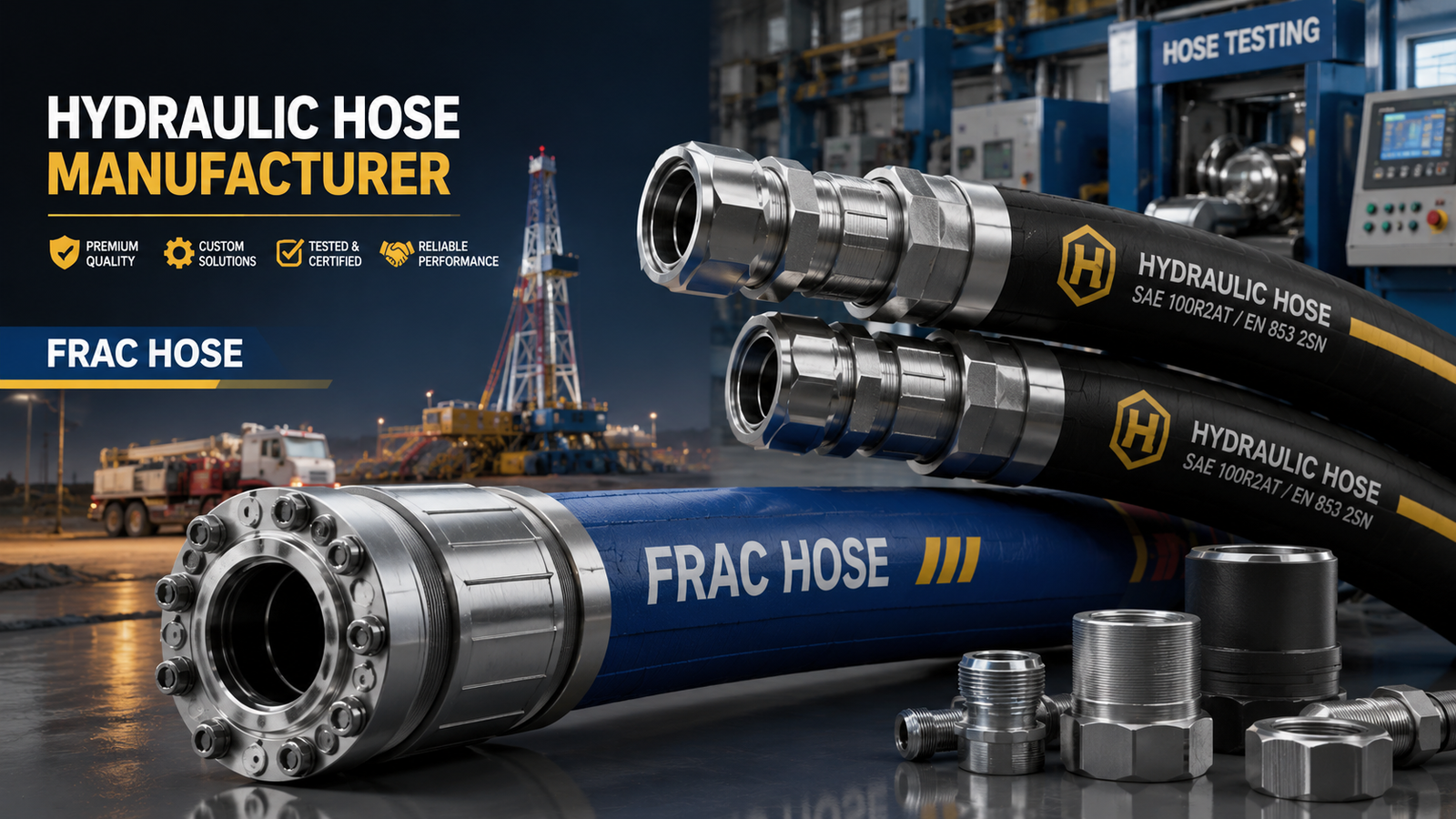
Hydraulic systems operate under conditions where reliability is not optional. High pressure, continuous movement, temperature variations, abrasion and exposure to oils or harsh environments can all affect hose performance. For this reason, choosing an experienced Hydraulic Hose Manufacturer is an important technical and commercial decision for businesses that depend on fluid power equipment.
From construction machinery and manufacturing equipment to mining, oilfield operations and drilling systems, hydraulic hoses perform the critical job of transferring pressurised fluids safely and efficiently. Specialised products such as a drilling hose face even more demanding operating conditions and therefore require careful consideration of pressure rating, construction, compatibility and application requirements.
What Does a Hydraulic Hose Manufacturer Do?
A Hydraulic Hose Manufacturer designs and produces flexible hose solutions for transferring hydraulic fluids between different components of a system.
Unlike ordinary industrial hoses, hydraulic hoses are typically constructed from several engineered layers. Depending on the application, these may include:
· An inner tube compatible with the fluid being conveyed
· Reinforcement layers designed to withstand operating pressure
· A protective outer cover for resistance to abrasion and environmental exposure
· Suitable end connections or fittings as part of a complete hose assembly
The exact construction varies according to pressure, temperature, bend requirements, fluid type and operating environment.
A capable manufacturer should therefore focus not simply on supplying a hose of the correct diameter, but on helping customers identify a product suitable for the complete operating condition.
Suggested internal link: Explore our hydraulic hose range
Why Hydraulic Hose Quality Matters
Hydraulic hoses often work as flexible connections between pumps, valves, cylinders, motors and other components. When the wrong hose is selected, the consequences can extend beyond the hose itself.
Premature wear can result in leakage, pressure loss, unplanned maintenance and equipment downtime. In safety-critical environments, hose failure may also create additional operational hazards.
A properly selected hose should account for factors such as:
Working Pressure
The hose must be suitable for the system’s normal operating pressure. Pressure spikes and other operating characteristics should also be considered when selecting an appropriate hose.
Temperature
Both the temperature of the conveyed fluid and the surrounding environment matter. Excessive temperatures can affect hose materials and reduce service life.
Fluid Compatibility
Hydraulic oils, water-based fluids and specialised media can interact differently with hose materials. The inner tube must be compatible with the fluid being transferred.
Bend Radius
Installing a hose below its recommended minimum bend radius can place unnecessary stress on the reinforcement and shorten its useful life.
External Conditions
Abrasion, sunlight, chemicals, weather, mechanical movement and contact with surrounding equipment should all be considered.
These factors explain why selecting a Hydraulic Hose Manufacturer based purely on price may create greater costs later through maintenance and replacement.
Understanding Drilling Hose Applications
A drilling hose is designed for demanding drilling and oilfield applications where flexible fluid transfer is required under challenging operating conditions.
Depending on its design and intended service, drilling-related hose products may be used in systems involving drilling fluids, mud circulation or other specialised fluid-transfer operations.
Because drilling environments can involve pressure, vibration, movement, abrasion and severe external conditions, hose selection needs to be based on the actual application rather than simply choosing a product with similar dimensions.
What Should You Consider When Selecting a Drilling Hose?
Before specifying a drilling hose, buyers and engineers should identify:
1. Required working pressure
2. Hose internal diameter
3. Operating and ambient temperatures
4. Fluid or media being conveyed
5. Required hose length
6. End connection requirements
7. Minimum bend radius
8. Movement and installation configuration
9. External abrasion or environmental exposure
10. Applicable technical or project specifications
Providing this information to the manufacturer helps reduce the risk of selecting an unsuitable hose.
Suggested internal link: View drilling and oilfield hose solutions
Hydraulic Hose vs Drilling Hose: What Is the Difference?
Although both products provide flexible fluid transfer, they are designed around different application requirements.
| Factor | Hydraulic Hose | Drilling Hose |
| Typical use | Hydraulic machinery and fluid power systems | Drilling and specialised oilfield operations |
| Application environment | Industrial, mobile and construction equipment | Demanding drilling environments |
| Main considerations | Pressure, fluid, temperature and flexibility | Pressure, movement, media, abrasion and drilling conditions |
| Selection basis | Hydraulic system specifications | Detailed drilling application requirements |
| Construction | Varies by hydraulic pressure class and service | Engineered for the specified drilling duty |
The terms should not be treated as interchangeable. A general-purpose hydraulic hose should never automatically be assumed suitable for a specialised drilling application.
Industries That Depend on Hydraulic Hose Solutions
A reliable Hydraulic Hose Manufacturer can serve a wide range of industries because hydraulic power is used wherever controlled force and movement are required.
Construction and Earthmoving
Excavators, loaders, cranes and other heavy equipment depend on hydraulic hoses for cylinders, steering systems, attachments and auxiliary hydraulic circuits.
Manufacturing
Hydraulic presses, injection moulding equipment, machine tools and automated machinery require dependable fluid transfer to maintain consistent operation.
Mining
Mining machinery can expose hoses to dust, abrasion, movement and demanding operating cycles. Correct routing and hose construction become particularly important in these conditions.
Agriculture
Tractors, harvesters and agricultural attachments use hydraulic hoses for lifting, steering and implement-control functions.
Oilfield and Drilling
This sector can require specialised hose assemblies, including drilling hose solutions designed around the pressure, fluid and movement requirements of drilling operations.
Material Handling
Forklifts, lifting systems and other material-handling equipment use hydraulic circuits for controlled movement and load management.
How to Choose the Right Hydraulic Hose Manufacturer
Not every supplier offers the same technical capabilities. Buyers should evaluate manufacturers based on their ability to understand the application and provide appropriate product information.
1. Review the Product Range
A broad product portfolio can be valuable when a business operates different types of hydraulic equipment. It may simplify sourcing and help maintain consistency across applications.
2. Check Technical Documentation
Ask for relevant product specifications covering dimensions, pressure ratings, temperature ranges, construction and other application-specific information.
Technical documentation allows engineers and purchasing teams to make more informed comparisons.
3. Discuss the Actual Application
A professional Hydraulic Hose Manufacturer should ask questions before recommending a product.
If a supplier does not ask about pressure, temperature, media, size or application, buyers should be cautious about accepting a recommendation based only on hose appearance or dimensions.
4. Consider Hose and Fitting Compatibility
A hose assembly functions as a complete system. Hose, fittings and assembly procedures therefore need to be appropriately matched.
5. Evaluate Quality Control
Ask the manufacturer about its manufacturing processes, inspection procedures, testing capabilities and traceability where relevant to your application.
Requirements will differ between a standard industrial hydraulic line and a specialised drilling hose, so quality expectations should be defined accordingly.
6. Consider Technical Support
Technical support can be particularly valuable when replacing an existing hose, developing new machinery or sourcing products for unusual operating conditions.
Suggested internal link: Speak with our hose application specialists
Common Hydraulic Hose Selection Mistakes
One of the most common mistakes is choosing a replacement hose only by its internal diameter. Two hoses of the same size may have very different pressure, temperature, reinforcement and fluid-compatibility characteristics.
Other mistakes include:
· Ignoring minimum bend radius
· Selecting incompatible hose and fittings
· Using a hose beyond its intended temperature range
· Allowing excessive twisting during installation
· Routing hoses against sharp or abrasive surfaces
· Failing to account for machine movement
· Replacing a specialised hose with a general-purpose alternative
· Selecting solely on initial purchase price
For a drilling hose, overlooking application-specific pressure, media or movement requirements can be particularly problematic.
Practical Example: Selecting a Hose for Heavy Equipment
Consider a construction company replacing a hydraulic hose on an excavator.
Ordering a new hose based only on length and diameter would be incomplete. The maintenance team should also identify the system pressure, hydraulic fluid, operating temperature, connection type, routing and movement of the machine.
Suppose the hose passes through an area where it regularly rubs against surrounding components. In that case, abrasion resistance and improved routing or protection may need consideration as well.
This application-focused approach is more reliable than simply finding a hose that physically fits.
What Information Should You Send When Requesting a Quote?
Providing complete information can make the quotation process faster and more accurate.
When contacting a Hydraulic Hose Manufacturer, provide details such as:
· Hose application
· Required internal diameter
· Length
· Working pressure
· Operating temperature
· Fluid or media
· End fitting or connection details
· Quantity
· Installation conditions
· Relevant standards or customer specifications
· Existing hose identification, where available
For a drilling hose, also provide detailed information about the drilling application and any project-specific technical requirements.
A drawing, specification sheet or clear photographs of an existing assembly may also help where appropriate.
Maintenance Is as Important as Initial Selection
Even a correctly specified hydraulic hose requires routine inspection.
Maintenance personnel should regularly check hoses and assemblies for visible damage, leakage, abrasion, cracking, damaged fittings, unusual deformation or other signs of deterioration.
Hose routing should also be reviewed. Excessive bending, twisting or rubbing can shorten service life even when the hose itself is correctly specified.
Replacement decisions should follow the equipment manufacturer’s guidance, applicable standards and site-specific maintenance procedures rather than relying only on visual appearance.
Frequently Asked Questions
What is a hydraulic hose?
A hydraulic hose is a flexible reinforced hose designed to carry hydraulic fluid between components in a fluid power system.
What does a Hydraulic Hose Manufacturer supply?
Depending on its capabilities, a manufacturer may supply hydraulic hoses, specialised industrial hoses, fittings and complete hose assemblies for different applications.
How do I select the correct hydraulic hose?
Consider hose size, working pressure, temperature, fluid compatibility, bend radius, fittings, routing and environmental conditions.
What is a drilling hose?
A drilling hose is a specialised hose designed for fluid-transfer requirements associated with drilling and oilfield operations.
Can an ordinary hydraulic hose be used as a drilling hose?
Not automatically. The hose must be specifically suitable for the intended drilling application, pressure, media and operating conditions.
Why is working pressure important?
Selecting a hose with an appropriate pressure rating is essential for reliable operation within the hydraulic system’s specified conditions.
Does hydraulic fluid affect hose selection?
Yes. The hose tube material must be compatible with the fluid or media passing through it.
Why does bend radius matter?
Excessive bending can place stress on hose construction, restrict flow and contribute to premature deterioration.
Should fittings be selected separately from the hose?
Hose and fittings should be considered as part of the complete assembly and selected for compatibility with each other and the application.
What details are needed for a drilling hose enquiry?
Provide the application, pressure, media, dimensions, temperature, connections, length, movement requirements and applicable technical specifications.