
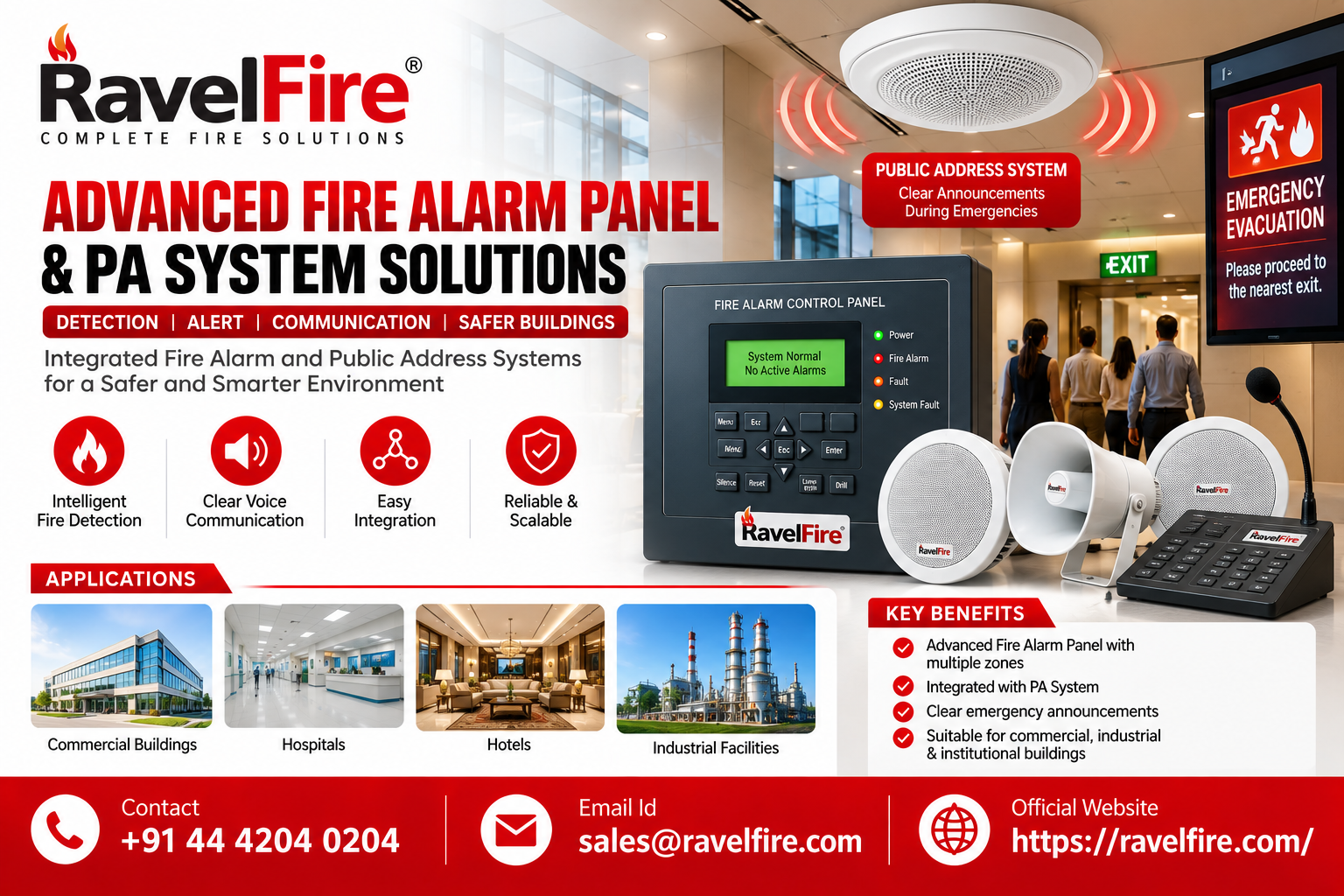
Modern building protection is no longer limited to detecting smoke or activating warning sirens. In commercial complexes, industrial facilities, hospitals, educational institutions, and other large properties, communicating clear emergency instructions is equally important.
An Advanced Fire Alarm Panel serves as a central component of a fire detection system, processing signals from compatible devices and coordinating appropriate alarm responses.
Meanwhile, a professional pa system manufacturer develops public address equipment that can support everyday announcements or, when specifically designed and approved for the purpose, emergency voice communication.
Understanding how these technologies complement each other can help building owners, fire safety consultants, and facility managers develop more effective emergency preparedness strategies.
Why Emergency Communication Is Becoming More Important
In a large building, occupants may not immediately understand the meaning of an alarm signal.
Some may be unfamiliar with emergency exits, while others require additional instructions to evacuate safely.
Clear voice communication can provide information about the emergency and direct occupants toward appropriate actions.
This highlights the importance of coordinating fire detection with suitable emergency communication arrangements.
What Is an Advanced Fire Alarm Panel?
An Advanced Fire Alarm Panel is a control and indicating unit designed to monitor compatible fire detection devices, evaluate incoming signals, and initiate defined responses.
Depending on its approved design, a panel may support conventional zones, addressable devices, event information, and monitoring functions.
Important Capabilities
- Alarm Processing: Receives and evaluates signals from compatible detectors and manual call points.
- Device Identification: Identifies affected zones or individual devices where supported.
- Fault Monitoring: Indicates specified electrical or equipment abnormalities.
- Notification Control: Activates approved warning devices.
- System Integration: Communicates with compatible building safety interfaces.
- Operational Supervision: Helps authorized personnel monitor relevant system conditions.
Specific features vary between panel models and should be confirmed through technical documentation.
How Public Address Systems Support Building Operations
A public address system distributes spoken announcements or other audio signals through connected speakers.
In commercial buildings, such systems may support visitor information, staff communication, and general announcements.
However, ordinary public address equipment is not automatically suitable for emergency evacuation.
Emergency voice communication systems require appropriate design, supervision, backup power, and compliance with applicable life safety requirements.
A pa system manufacturer supplying equipment for emergency applications must provide products with the necessary documented capabilities and approvals.
The Difference Between General PA and Emergency Voice Systems
Although both systems use audio equipment, their operational requirements can differ significantly.
| Feature | General PA System | Emergency Voice Communication System |
| Main purpose | Routine announcements | Emergency instructions |
| Audio priority | Normal communication controls | Approved emergency message priority |
| Circuit supervision | Depends on equipment | Required according to applicable standards |
| Backup power | Depends on application | Designed for specified emergency operation |
| Fire alarm integration | Optional | Requires approved coordination |
A building’s emergency communication design must account for the intended occupancy, local requirements, and evacuation procedures.
Why Integration Requires Careful Planning
Coordinating fire alarm equipment and emergency voice communication involves more than connecting two electronic systems.
The fire detection arrangement must deliver suitable alarm information to compatible communication equipment.
An approved emergency voice system may then activate prerecorded messages or permit authorized personnel to issue live instructions.
The actual control sequence must be defined through an approved cause-and-effect strategy.
Improper integration can create confusing announcements, equipment faults, or delays in communicating emergency instructions.
Understanding Emergency Communication Zones
Large properties often contain several floors, departments, or separate occupancy areas.
A suitable emergency communication system may support independently controlled speaker zones.
For example, an approved evacuation strategy might require different instructions for occupants in separate building areas.
However, zoning must be determined through professional fire safety design rather than convenience alone.
An Advanced Fire Alarm Panel may provide relevant detection information, while compatible emergency communication equipment manages the approved announcement sequence.
Why Speech Intelligibility Matters
An announcement is useful only when occupants can understand it.
Background noise, room acoustics, speaker positioning, and sound distortion can affect message clarity.
An experienced pa system manufacturer should be able to provide appropriate product specifications for the intended communication application.
Important technical considerations include speaker performance, amplifier capacity, acoustic coverage, message clarity, and environmental conditions.
For emergency systems, speech intelligibility must be evaluated according to applicable design and testing requirements.
Simply increasing speaker volume does not guarantee better communication.
Applications in Different Building Environments
Emergency communication needs vary across different properties.
Commercial Complexes: Large visitor populations may require coordinated announcements and clear evacuation instructions.
Hospitals: Communication arrangements must account for patients, staff, and occupants who may need assistance.
Educational Institutions: Clear instructions can support organized emergency responses across classrooms and common areas.
Industrial Facilities: High background noise and operational hazards may require specialized communication design.
Hotels: Multiple floors, guest rooms, and shared facilities create additional communication considerations.
Each environment requires a building-specific risk assessment.
The Importance of System Reliability
Fire detection and emergency communication equipment must remain dependable under specified operating conditions.
Designers should evaluate power supplies, backup capacity, equipment supervision, fault reporting, and relevant cable requirements.
For voice systems, amplifier arrangements and speaker circuit monitoring may also be important.
Regular inspection and approved functional testing help identify problems that could compromise performance.
Documentation should clearly identify system components, communication zones, and approved emergency sequences.
What Should Buyers Evaluate Before Selecting Equipment?
Organizations comparing fire alarm panels and public address equipment should begin with their building’s safety requirements.
Selection should consider:
- Applicable technical standards and required certifications.
- Compatibility between fire detection and communication equipment.
- Approved emergency message functionality.
- Building size, occupancy, and acoustic conditions.
- Installation and commissioning requirements.
- Availability of maintenance and technical support.
A suitable pa system manufacturer should provide clear product documentation explaining the intended applications and operating limitations.
Equipment should be evaluated for the complete system rather than purchased solely according to individual features or price.
Frequently Asked Questions (FAQs)
1. What is an Advanced Fire Alarm Panel?
It is a fire alarm control unit that processes signals from compatible detection devices and coordinates specified alarm, fault, and notification functions.
2. What does a pa system manufacturer provide?
A PA system manufacturer produces audio communication equipment such as amplifiers, microphones, speakers, and related control devices. Emergency applications require equipment with suitable documented capabilities.
3. Can a fire alarm panel connect to a public address system?
Some fire alarm panels can interface with compatible communication equipment, but integration must be professionally designed, approved, and tested.
4. Is a normal PA system suitable for fire evacuation announcements?
Not automatically. Emergency voice systems must satisfy relevant life safety, supervision, reliability, and communication requirements.
5. Why are emergency communication zones important?
Zoning allows appropriately designed systems to deliver relevant instructions to defined building areas in accordance with an approved emergency strategy.
Media Contact
Department: Fire Alarm Systems and Technical Enquiries
Email: sales@ravelfire.com
Contact: +91 44 4204 0204
Official Website: https://ravelfire.com/