
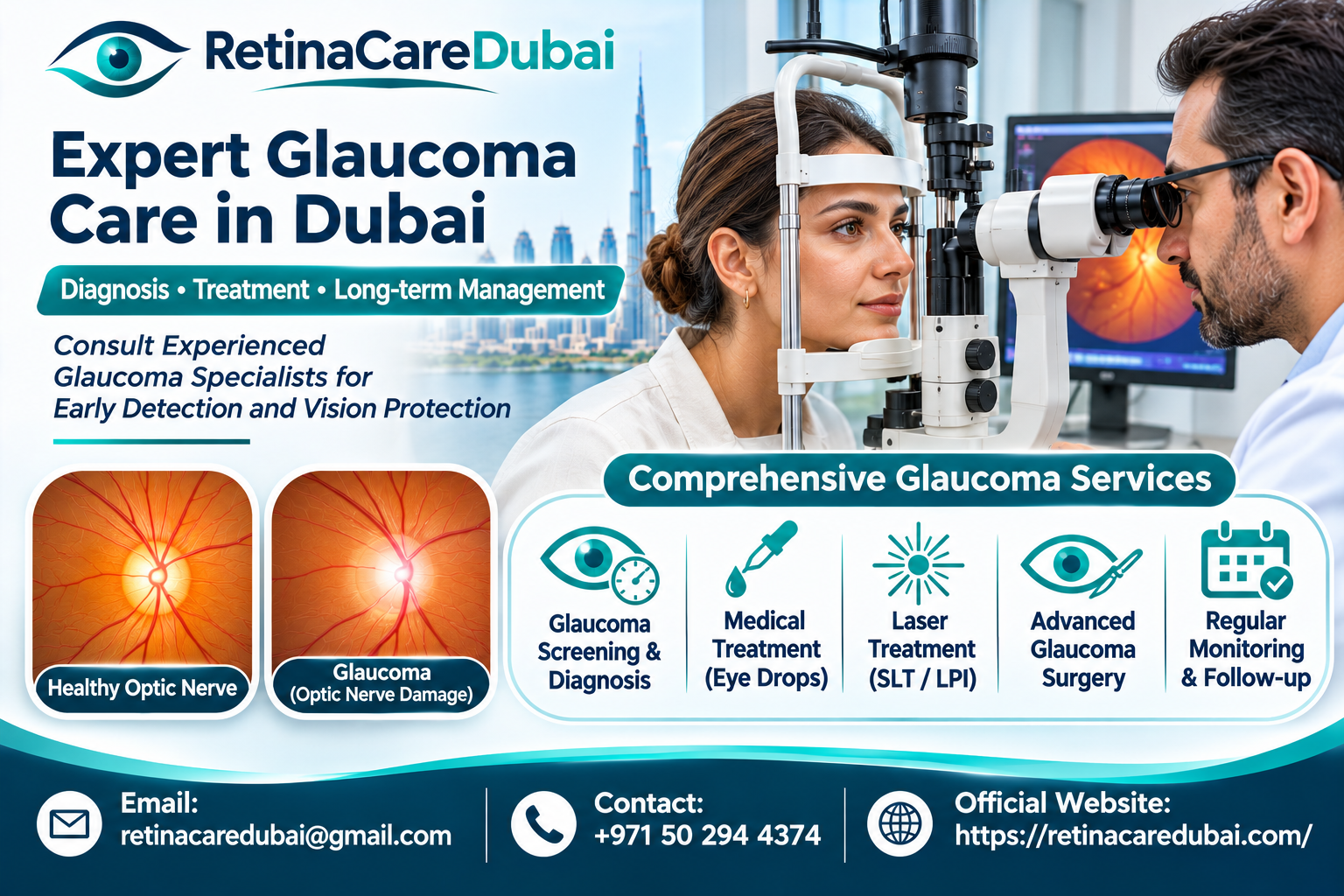
Glaucoma remains an important concern in ophthalmology because it can gradually damage the optic nerve and lead to irreversible vision loss.
For patients seeking glaucoma treatment specialists in dubai, understanding the available diagnostic procedures, treatment options, and long-term management strategies is essential for making informed healthcare decisions.
Professional glaucoma specialists in dubai focus on evaluating eye pressure, examining optic nerve health, identifying visual field changes, and recommending individualized treatment plans.
As ophthalmic technology continues to support more detailed examinations, patients can benefit from a comprehensive approach that combines early detection, evidence-based treatment, and appropriate specialist monitoring.
Why Glaucoma Requires Specialized Medical Attention
Glaucoma refers to a group of eye disorders associated with progressive optic nerve damage.
The optic nerve transfers visual information from the retina to the brain. Damage to this structure can affect peripheral vision and, in advanced cases, central vision.
Elevated intraocular pressure is an important risk factor, although glaucoma can also develop when eye pressure is within the normal range.
One significant challenge is that common forms of glaucoma may progress without noticeable symptoms.
Specialist examinations are therefore essential for patients with glaucoma risk factors or suspected disease.
What Do Glaucoma Treatment Specialists in Dubai Do?
Glaucoma treatment specialists in dubai are ophthalmologists with expertise in diagnosing and managing glaucoma and related optic nerve conditions.
Their responsibilities extend beyond measuring eye pressure.
They assess several clinical findings to determine disease severity, estimate the risk of progression, and recommend appropriate management.
Important Specialist Services
- Comprehensive Eye Evaluation: Examining eye structures and visual function.
- Intraocular Pressure Measurement: Assessing pressure inside the eye.
- Optic Nerve Assessment: Identifying structural abnormalities.
- Visual Field Testing: Detecting functional vision changes.
- Treatment Planning: Recommending medication, laser treatment, or surgery when appropriate.
- Disease Monitoring: Evaluating changes in eye health and treatment response.
The specific services available depend on the ophthalmologist’s qualifications and clinical facilities.
Understanding Different Types of Glaucoma
Glaucoma includes several conditions with different characteristics.
Primary Open-Angle Glaucoma
This common form generally develops gradually and may remain unnoticed until significant optic nerve damage occurs.
Angle-Closure Glaucoma
This condition involves narrowing or closure of the eye’s drainage angle.
Acute angle closure may cause severe eye pain, headache, redness, blurred vision, and nausea. These symptoms require immediate emergency assessment.
Normal-Tension Glaucoma
Optic nerve damage occurs despite eye pressure measurements within the statistically normal range.
Secondary Glaucoma
Certain medications, eye injuries, inflammation, or other eye conditions can contribute to increased eye pressure and glaucomatous damage.
Identifying the correct type is important because treatment approaches differ.
How Glaucoma Specialists Diagnose the Condition
Professional glaucoma specialists in dubai may use several diagnostic techniques to evaluate optic nerve health.
| Diagnostic Test | Main Purpose |
| Tonometry | Measures intraocular pressure |
| Optical Coherence Tomography (OCT) | Evaluates optic nerve and retinal nerve fiber structures |
| Visual Field Testing | Assesses glaucoma-related vision loss |
| Gonioscopy | Examines the eye’s drainage angle |
| Pachymetry | Measures corneal thickness |
| Dilated Eye Examination | Evaluates optic nerve appearance |
No single test confirms every form of glaucoma.
An ophthalmologist considers medical history, examination findings, and relevant test results before making a diagnosis.
Personalized Glaucoma Treatment Options
The main objective of glaucoma treatment is to lower intraocular pressure sufficiently to reduce the risk of further optic nerve damage.
Treatment cannot generally restore vision already lost through glaucoma.
Prescription Eye Drops
Medications may reduce fluid production inside the eye or improve fluid drainage.
Different formulations have different effects and potential side effects.
Laser Treatment
Selective laser trabeculoplasty may be suitable for certain patients with open-angle glaucoma.
Laser peripheral iridotomy may be recommended for selected patients with angle-closure disease or relevant anatomical risks.
Surgical Treatment
Procedures such as trabeculectomy, glaucoma drainage implants, and selected minimally invasive glaucoma surgeries may be considered according to clinical needs.
Why Target Eye Pressure Matters
An ophthalmologist may establish an individualized target intraocular pressure based on the patient’s clinical findings.
This target is not identical for every patient.
Factors such as existing optic nerve damage, disease progression, and initial pressure measurements can influence treatment planning.
A patient with advanced glaucoma may require a different pressure-management strategy from someone with early disease.
The target may also need adjustment when additional examination findings become available.
Treatment Adherence and Patient Education
Prescribed glaucoma medication can be effective only when used appropriately.
Patients may experience difficulties remembering medication schedules, administering drops correctly, or managing side effects.
Specialists should explain treatment instructions clearly and encourage patients to discuss problems with medication use.
Important Patient Responsibilities
- Use prescribed medication according to medical instructions.
- Avoid stopping treatment without professional guidance.
- Report significant eye irritation or suspected side effects.
- Attend recommended examinations.
- Communicate changes in vision promptly.
- Discuss other relevant medical conditions and medications.
Effective communication can support treatment adherence and more informed care decisions.
Why Regular Monitoring Is Essential
Glaucoma management requires continued observation because optic nerve damage may progress despite a patient feeling well.
Monitoring may involve repeated eye pressure measurements, optic nerve imaging, and visual field examinations.
These tests help ophthalmologists evaluate whether treatment remains appropriate.
For patients consulting glaucoma treatment specialists in dubai, understanding the purpose of follow-up care is essential.
Monitoring arrangements depend on disease severity, risk factors, and specialist recommendations.
Glaucoma Care and Everyday Lifestyle
Medical treatment remains the foundation of glaucoma management, but patients can also support general eye health through appropriate habits.
Managing relevant medical conditions, maintaining regular physical activity where suitable, and following professional guidance may contribute to overall well-being.
However, dietary supplements, home remedies, and lifestyle changes should not replace prescribed glaucoma treatment.
Patients should also discuss activities or medications that may affect their individual eye condition.
Choosing the Right Glaucoma Specialist in Dubai
Selecting an appropriate ophthalmologist requires evaluating medical qualifications, professional experience, and available diagnostic resources.
Patients should consider whether the specialist provides clear explanations of their condition and discusses different treatment possibilities.
Important factors include relevant ophthalmology credentials, experience managing glaucoma, access to diagnostic testing, and appropriate follow-up arrangements.
Medical licensing can be checked through the relevant Dubai healthcare regulatory authority.
The most appropriate specialist is one whose expertise matches the patient’s individual medical requirements.
Frequently Asked Questions (FAQs)
1. What do glaucoma treatment specialists in dubai treat?
They diagnose and manage different forms of glaucoma through eye examinations, pressure management, medication, laser procedures, and surgery when appropriate.
2. When should someone consult glaucoma specialists in dubai?
Specialist assessment may be appropriate for elevated eye pressure, suspicious optic nerve findings, abnormal visual field results, or a family history of glaucoma.
3. Can glaucoma be treated without surgery?
Yes. Many patients receive prescription eye drops or suitable laser treatment. Surgery may be recommended when clinically necessary.
4. Is vision loss caused by glaucoma reversible?
Glaucoma-related optic nerve damage is generally irreversible. Treatment aims to prevent or slow additional damage.
5. How is glaucoma monitored after treatment?
Ophthalmologists may use eye pressure measurements, OCT imaging, visual field examinations, and clinical assessments to evaluate disease progression.
Media Contact
Department: Glaucoma Consultation and Specialist Eye Care Enquiries
Email: retinacaredubai@gmail.com
Contact: +971 50 294 4374
Official Website: https://retinacaredubai.com/