
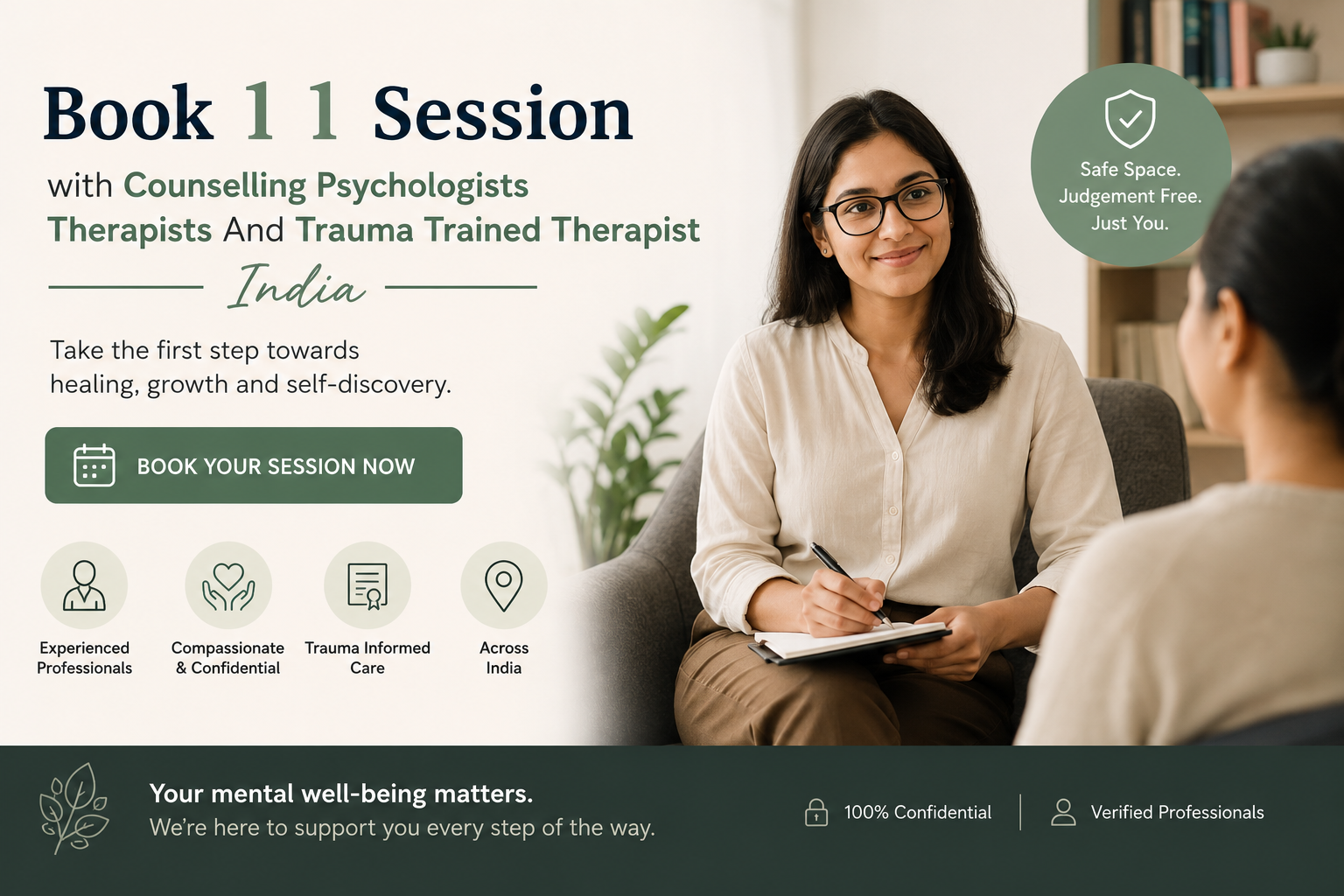
Mental health awareness in India has grown significantly over the past few years, encouraging more people to seek professional guidance for emotional well-being, relationship concerns, workplace stress, anxiety, grief, and trauma recovery. As individuals increasingly recognize the value of early intervention, the demand to book 1 1 session with counselling psychologists therapists has steadily increased.
At the same time, the need for a qualified trauma trained therapist India has become more apparent as people seek specialized support to process difficult life experiences in a safe, confidential, and structured environment. Personalized one-on-one counselling offers an opportunity to explore emotions, develop healthy coping strategies, and work toward long-term emotional resilience.
What Does It Mean to Book 1 1 Session with Counselling Psychologists Therapists?
Choosing to book 1 1 session with counselling psychologists therapists means scheduling an individual counselling appointment focused entirely on your personal concerns, goals, and emotional needs. Unlike group sessions, one-on-one therapy provides dedicated time with a qualified mental health professional who tailors the conversation to your unique circumstances.
Key Features of Individual Counselling
- Personalized therapeutic approach
- Confidential and judgment-free conversations
- Goal-oriented mental health support
- Evidence-based counselling techniques
- Flexible online and in-person appointments
- Ongoing emotional guidance based on individual progress
Who Can Benefit from Individual Counselling Sessions?
People seek therapy for many different reasons, and professional support can be valuable during both challenging periods and times of personal growth.
Common Reasons People Seek Counselling
- Anxiety and excessive worry
- Depression and low mood
- Relationship and family conflicts
- Workplace stress and burnout
- Academic pressure
- Grief and bereavement
- Low self-esteem
- Life transitions
- Emotional regulation difficulties
- Personal development and self-discovery
Understanding the Role of a Trauma Trained Therapist India
A trauma trained therapist India specializes in helping individuals who have experienced emotionally distressing or overwhelming events. Trauma-informed therapy recognizes that past experiences can influence thoughts, emotions, behaviors, and physical well-being.
Rather than focusing only on symptoms, trauma-trained professionals work collaboratively with clients to create a sense of safety, emotional regulation, and long-term healing.
Situations Where Trauma Therapy May Help
- Childhood trauma
- Domestic violence recovery
- Emotional abuse
- Physical abuse
- Sexual trauma
- Accident-related trauma
- Medical trauma
- Workplace harassment
- Loss of a loved one
- Natural disasters or crisis situations
Benefits of Booking Individual Therapy Sessions
Choosing to book 1 1 session with counselling psychologists therapists offers several advantages over generalized mental health resources.
Major Benefits
- Individualized attention
- Better understanding of personal challenges
- Safe emotional expression
- Professional coping strategies
- Improved communication skills
- Enhanced emotional resilience
- Increased self-awareness
- Long-term psychological growth
Qualities to Look for in a Trauma Trained Therapist India
Selecting the right therapist is an important part of the healing journey.
Important Factors to Consider
- Professional qualifications
- Experience with trauma-informed care
- Ethical and confidential practice
- Evidence-based therapeutic methods
- Strong listening and communication skills
- Cultural sensitivity
- Flexible appointment options
- Positive client feedback
Comparison Between General Counselling and Trauma-Informed Therapy
| Feature | General Counselling | Trauma Trained Therapist India |
| Primary Focus | Emotional well-being | Trauma recovery and healing |
| Therapy Approach | Broad counselling methods | Trauma-informed techniques |
| Client Needs | Everyday life challenges | Complex emotional experiences |
| Emotional Safety | High | Specialized emphasis |
| Treatment Goals | Personal growth | Recovery and resilience |
What Happens During the First Therapy Session?
Many people feel uncertain before attending their first counselling appointment. Understanding the process can help reduce anxiety.
Typical First Session Includes
- Introduction and rapport building
- Discussion of current concerns
- Personal history and background
- Identification of therapy goals
- Explanation of confidentiality
- Development of an initial support plan
The first session is primarily an opportunity for both the client and therapist to understand whether the therapeutic relationship feels comfortable and appropriate.
Common Therapy Approaches Used by Professionals
Qualified counselling psychologists and trauma specialists may use different evidence-based methods depending on individual needs.
Frequently Used Approaches
- Cognitive Behavioral Therapy (CBT)
- Acceptance and Commitment Therapy (ACT)
- Mindfulness-based interventions
- Trauma-informed counselling
- Emotion-focused therapy
- Solution-focused therapy
- Narrative therapy
- Strength-based counselling
How to Prepare Before Your Counselling Appointment
Preparing in advance can help you make the most of your therapy session.
Helpful Preparation Tips
- Think about your main concerns.
- Write down important questions.
- Be honest about your emotions.
- Set realistic expectations.
- Find a quiet space for online sessions.
- Keep an open mind throughout the process.
Signs It May Be Time to Seek Professional Support
Mental health challenges can affect anyone, regardless of age or background.
You May Benefit from Therapy If You Experience
- Persistent sadness
- Constant stress or anxiety
- Difficulty sleeping
- Emotional numbness
- Panic attacks
- Trouble maintaining relationships
- Reduced work or academic performance
- Feelings of overwhelm
- Difficulty processing past experiences
Seeking professional support early may help prevent emotional concerns from becoming more difficult over time.
Frequently Asked Questions (FAQs)
1. What does it mean to book 1 1 session with counselling psychologists therapists?
It means scheduling an individual therapy session focused entirely on your personal emotional and psychological needs.
2. Who should consider individual counselling?
Anyone experiencing emotional difficulties, stress, anxiety, relationship issues, or personal challenges may benefit.
3. What is a trauma trained therapist India?
A trauma trained therapist India is a mental health professional with specialized training in helping individuals recover from traumatic experiences using trauma-informed approaches.
4. Are online counselling sessions effective?
Yes. For many individuals, online therapy provides convenient and effective access to professional support.
5. How long does one therapy session usually last?
Most individual sessions last between 45 and 60 minutes.
6. Is counselling confidential?
Yes. Confidentiality is a fundamental ethical principle in professional counselling, subject to applicable legal and safety exceptions.
7. How many therapy sessions will I need?
The number of sessions depends on your goals, concerns, and progress, which you and your therapist can discuss together.
8. Can trauma therapy help years after the event?
Yes. Many people seek trauma-focused therapy long after a difficult experience and find it beneficial.
9. Do I need a diagnosis before seeing a therapist?
No. You can seek counselling even if you have not received a formal mental health diagnosis.
10. How do I choose the right therapist?
Consider the therapist’s qualifications, areas of expertise, experience, communication style, and whether you feel comfortable working with them.