
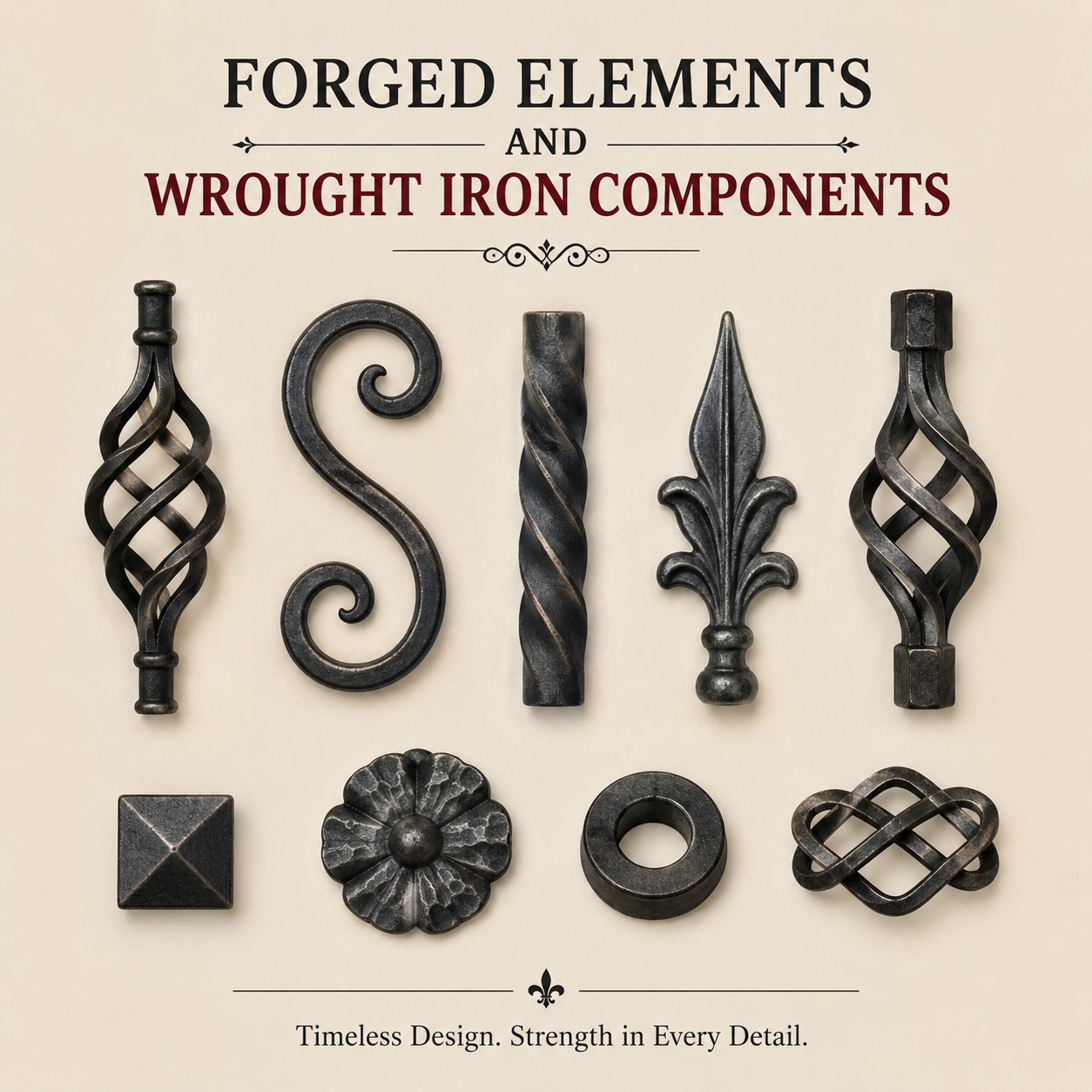
The demand for decorative and durable metal products has increased significantly in modern construction and interior design. Forged Elements and Wrought Iron Components are widely used in residential, commercial, and industrial projects because of their exceptional strength, aesthetic appeal, and long service life.
From elegant gates and stair railings to luxury furniture and architectural structures, these metal components add both beauty and functionality. Their ability to combine traditional craftsmanship with modern engineering makes them a preferred choice for architects, builders, and homeowners.
What Are Forged Elements?
Forged Elements are metal parts manufactured through the forging process, where metal is heated and shaped using pressure or hammering techniques. These elements are commonly used in decorative and structural applications.
Common forged products include:
- Scrolls
- Rosettes
- Spears
- Baskets
- Leaves and flowers
- Decorative collars
- Balusters
- Rings and finials
The forging process improves the metal’s grain structure, making the components stronger and more durable than cast alternatives.
Understanding Wrought Iron Components
Wrought Iron Components are decorative and functional iron parts used in fabrication and architectural projects. They are known for their:
- Excellent durability
- Attractive appearance
- Corrosion resistance
- High tensile strength
- Easy customization
These components are widely used in:
- Gates
- Railings
- Fencing systems
- Staircases
- Furniture manufacturing
- Garden décor
- Balcony designs
- Window grills
Why Are Forged Elements and Wrought Iron Components So Popular?
The popularity of these products comes from their ability to combine strength with artistic beauty.
Key Advantages
- Long lifespan
- Elegant appearance
- High load-bearing capacity
- Low maintenance requirements
- Resistance to weather conditions
- Customizable designs
- Suitable for traditional and modern architecture
Manufacturing Process of Forged Elements
The production of Forged Elements involves several stages.
Step 1: Material Selection
High-quality steel or iron is selected according to the intended application.
Step 2: Heating
The metal is heated to a specific temperature to make it malleable.
Step 3: Forging
The heated metal is shaped using:
- Press forging
- Hand forging
- Drop forging
- Machine forging
Step 4: Finishing
Surface treatment includes:
- Polishing
- Powder coating
- Galvanization
- Painting
Step 5: Quality Inspection
Each component is checked for:
- Strength
- Dimensions
- Surface finish
- Structural integrity
Types of Wrought Iron Components
The market offers numerous types of decorative and structural components.
| Component Type | Common Application | Main Benefit |
| Scrolls | Gates and Railings | Decorative appearance |
| Spears | Security Fencing | Enhanced protection |
| Rosettes | Furniture | Elegant design |
| Balusters | Staircases | Structural support |
| Leaves | Decorative Gates | Artistic appeal |
| Finials | Fences | Premium finishing |
Applications of Forged Elements and Wrought Iron Components
Residential Applications
- Main entrance gates
- Balcony railings
- Staircases
- Garden furniture
- Decorative grills
Commercial Applications
- Hotels
- Shopping centers
- Restaurants
- Office buildings
- Resorts
Industrial Applications
- Security fencing
- Machinery guards
- Industrial gates
- Structural frameworks
Benefits of Using Forged Elements
Superior Strength
The forging process aligns the metal grain structure, increasing durability and impact resistance.
Attractive Design Options
Manufacturers offer numerous decorative patterns that suit every architectural style.
Long-Term Value
Although the initial investment may be higher, these products require minimal maintenance and provide long-term savings.
Excellent Customization
Custom designs can be created according to project requirements.
Why Choose Wrought Iron Components for Modern Architecture?
Modern architects prefer Wrought Iron Components because they provide:
- Timeless elegance
- Enhanced security
- Design flexibility
- High durability
- Eco-friendly characteristics
Their versatility makes them suitable for both traditional and contemporary projects.
Maintenance Tips for Wrought Iron Components
To increase the lifespan of your iron products:
- Clean regularly.
- Inspect for rust.
- Apply protective coatings.
- Repaint when necessary.
- Avoid prolonged water exposure.
Proper maintenance ensures decades of reliable performance.
How to Select Quality Forged Elements
Before purchasing, consider:
- Material grade
- Surface finishing
- Manufacturing standards
- Supplier reputation
- Corrosion resistance
- Customization capabilities
- Warranty options
Choosing a reliable manufacturer ensures better product quality and long-term performance.
Future Trends in Forged Elements and Wrought Iron Components
The industry is evolving rapidly with modern manufacturing technologies.
Emerging trends include:
- Laser-cut decorative designs
- Sustainable metal processing
- Smart gate integration
- Customized architectural patterns
- Eco-friendly coatings
- Precision forging technologies
The growing demand for premium architectural products is expected to drive further innovation in this sector.
Frequently Asked Questions (FAQs)
1. What are Forged Elements?
They are metal components produced through a forging process for decorative and structural applications.
2. What are Wrought Iron Components used for?
They are commonly used in gates, railings, furniture, fences, and architectural projects.
3. Are forged components stronger than cast products?
Yes, forged products generally have superior strength and durability.
4. Can Wrought Iron Components be customized?
Yes, manufacturers offer various customized shapes and designs.
5. Do forged products rust?
Without protective coatings, iron can rust, but modern finishing methods provide excellent protection.
6. Are these components suitable for outdoor applications?
Yes, they are widely used outdoors due to their durability.
7. How long do Wrought Iron Components last?
With proper maintenance, they can last for several decades.
8. Are forged products environmentally friendly?
Yes, metal components are recyclable and sustainable.
9. Which industries use Forged Elements?
Construction, architecture, furniture, and industrial manufacturing industries use them extensively.
10. How can I maintain wrought iron products?
Regular cleaning, painting, and rust protection help maintain their appearance and performance.