
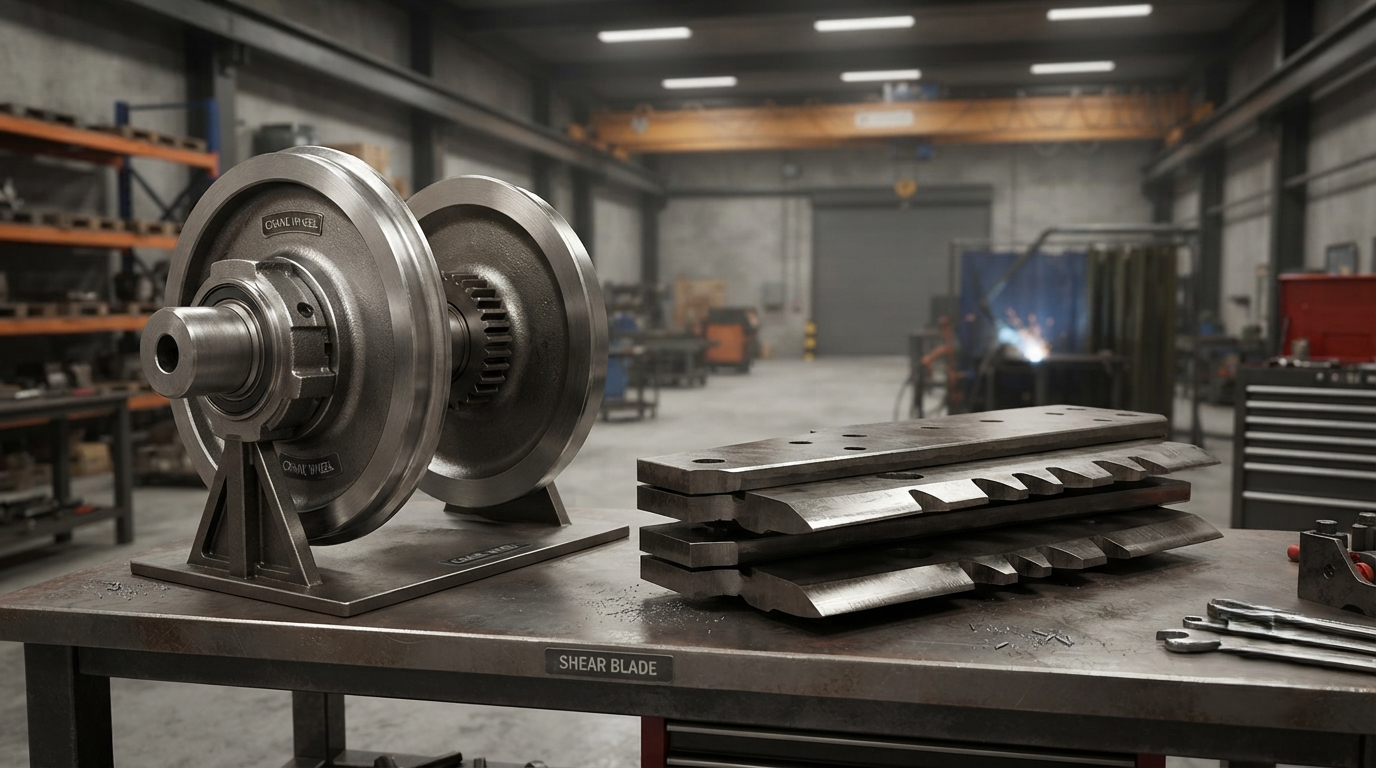
In heavy industry, performance often depends on the smallest parts doing the hardest jobs. The Crane Wheel keeps lifting systems moving safely and smoothly under extreme load, while the Shear Blade delivers clean, accurate cutting in metal processing operations. Both components are critical in factories, workshops, steel plants, fabrication units, and large-scale engineering systems.
Although they serve different functions, they share one important purpose: improving efficiency while reducing downtime. When these parts are made with the right material, proper heat treatment, and accurate machining, they help businesses achieve better output, longer service life, and lower maintenance costs.
What Makes a Crane Wheel Important
A Crane Wheel is designed to carry and move heavy loads on rails or tracks. It is commonly used in overhead cranes, gantry cranes, transfer carts, and other material handling systems. Because these machines operate under constant stress, the wheel must be strong, wear-resistant, and dimensionally precise.
A well-made crane wheel supports stability, reduces vibration, and helps equipment run with less friction. That means smoother motion, less energy loss, and a lower chance of mechanical failure.
Key Features of a High-Quality Crane Wheel
A durable crane wheel usually offers:
- High load-bearing capacity
- Strong resistance to wear and impact
- Accurate dimensional balance
- Stable performance under continuous operation
- Good hardness after heat treatment
- Better rail contact and smoother rolling
These features are especially important in industries where equipment runs for long hours and cannot afford frequent interruptions.
Common Uses of Crane Wheel
Crane wheels are widely used in:
- Steel mills
- Shipyards
- Construction yards
- Power plants
- Mining operations
- Warehousing systems
- Port handling equipment
- Heavy fabrication units
In each of these environments, the wheel must handle repeated motion, heavy loads, and difficult working conditions without losing reliability.
What a Shear Blade Does
A Shear Blade is a precision cutting tool used in shearing machines to cut metal sheets, plates, and strips. It is built to produce sharp, clean cuts with minimal burrs and low distortion. This makes it essential in metal processing, fabrication, recycling, and manufacturing industries.
Unlike general cutting tools, shear blades are made to withstand intense pressure and repeated impact. Their performance depends on material quality, edge retention, and heat treatment.
Main Characteristics of a Reliable Shear Blade
A strong shear blade should deliver:
- Excellent cutting accuracy
- Long edge life
- High hardness
- Strong wear resistance
- Stable performance under pressure
- Reduced blade replacement frequency
- Clean cutting results
These qualities are essential for maintaining productivity in high-volume production environments.
Where Shear Blades Are Used
Shear blades are commonly found in:
- Sheet metal industries
- Steel service centers
- Automotive production
- Aerospace fabrication
- Pipe and tube manufacturing
- Recycling plants
- Aluminum processing units
In all these applications, the blade must maintain sharpness and precision even after repeated use.
Materials Used for Crane Wheel and Shear Blade
Material selection has a major impact on performance. A crane wheel usually needs a strong structural metal such as forged steel, cast steel, or alloy steel. These materials offer toughness, impact resistance, and long service life.
A shear blade, on the other hand, is usually made from tool steels such as D2, H13, SKD11, or similar grades. These steels are chosen because they can hold a sharp edge and resist wear during continuous cutting.
Comparison of the Two Components
| Feature | Crane Wheel | Shear Blade |
| Main Function | Supports movement | Cuts metal |
| Working Stress | Rolling load | Cutting pressure |
| Common Material | Forged or alloy steel | Tool steel |
| Performance Goal | Smooth travel | Accurate cutting |
| Maintenance Focus | Alignment and wear | Sharpness and edge condition |
Why Quality Matters in Both Products
Poor-quality industrial components often cause more problems than they solve. A weak crane wheel can lead to uneven movement, rail damage, and unplanned shutdowns. A low-grade shear blade can create rough cuts, waste material, and slow production.
That is why manufacturers and buyers should focus on:
- Material grade
- Heat treatment quality
- Machining accuracy
- Surface hardness
- Load or cutting capacity
- Compatibility with the machine
Choosing the right product improves safety, reduces repair costs, and supports long-term plant efficiency.
Maintenance Tips for Better Performance
Routine maintenance can greatly extend the life of both components.
For Crane Wheel
- Check rail alignment regularly
- Inspect wheel wear and cracks
- Keep rotating parts properly lubricated
- Replace damaged wheels early
- Monitor vibration during operation
For Shear Blade
- Clean blades after use
- Sharpen before edge damage becomes severe
- Avoid overheating during operation
- Inspect for chips or cracks
- Store in a dry, protected location
Preventive maintenance is always more cost-effective than emergency repair.
Trends Improving Industrial Component Quality
Industrial manufacturing is becoming more precise and more data-driven. Today, crane wheels and shear blades are often produced using advanced CNC machining, modern heat treatment methods, and strict quality testing. In many plants, digital inspection systems and predictive maintenance tools are also being used to detect wear before failure occurs.
This shift toward precision manufacturing helps companies get longer service life, better consistency, and stronger performance from every component.
When to Replace These Components
Knowing when to replace industrial parts is just as important as choosing them correctly.
A crane wheel should be replaced when it shows excessive wear, surface cracking, or poor rolling performance. A shear blade should be replaced or re-sharpened when cutting quality drops, edges become chipped, or force requirements increase noticeably.
Replacing worn parts on time protects the rest of the machine and keeps production stable.
Frequently Asked Questions
What is a Crane Wheel?
A Crane Wheel is a heavy-duty wheel used in cranes and rail-mounted equipment to support movement under large loads.
What is a Shear Blade?
A Shear Blade is a cutting tool used in shearing machines to cut metal cleanly and accurately.
Which industries use Crane Wheel?
Industries such as steel, mining, shipping, construction, and logistics use crane wheels regularly.
Which industries use Shear Blade?
Shear blades are used in metal fabrication, recycling, automotive, aerospace, and sheet metal processing.
What material is best for a Crane Wheel?
Forged steel and alloy steel are commonly preferred because of their strength and durability.
What material is best for a Shear Blade?
Tool steels like D2, H13, and SKD11 are often used because they retain hardness and sharpness.
Why is heat treatment important?
Heat treatment improves hardness, wear resistance, and overall service life.
How do I know a Crane Wheel is worn out?
Signs include uneven movement, visible wear, noise, vibration, and reduced performance.
How do I know a Shear Blade needs replacement?
If cuts become rough, edges chip, or force increases, the blade may need sharpening or replacement.
Why should I buy from a trusted manufacturer?
A trusted manufacturer provides better material quality, accuracy, testing, and long-term reliability.
Read more – https://newsgrow.blogspot.com/2026/08/hydraulic-cylinder-and-tungsten-carbide.html
https://newsgrow.blogspot.com/2026/08/tungsten-carbide-rings-and-pinch-roller.html
https://newsgrow.blogspot.com/2026/08/crane-wheel-and-shear-blade-essential.html