
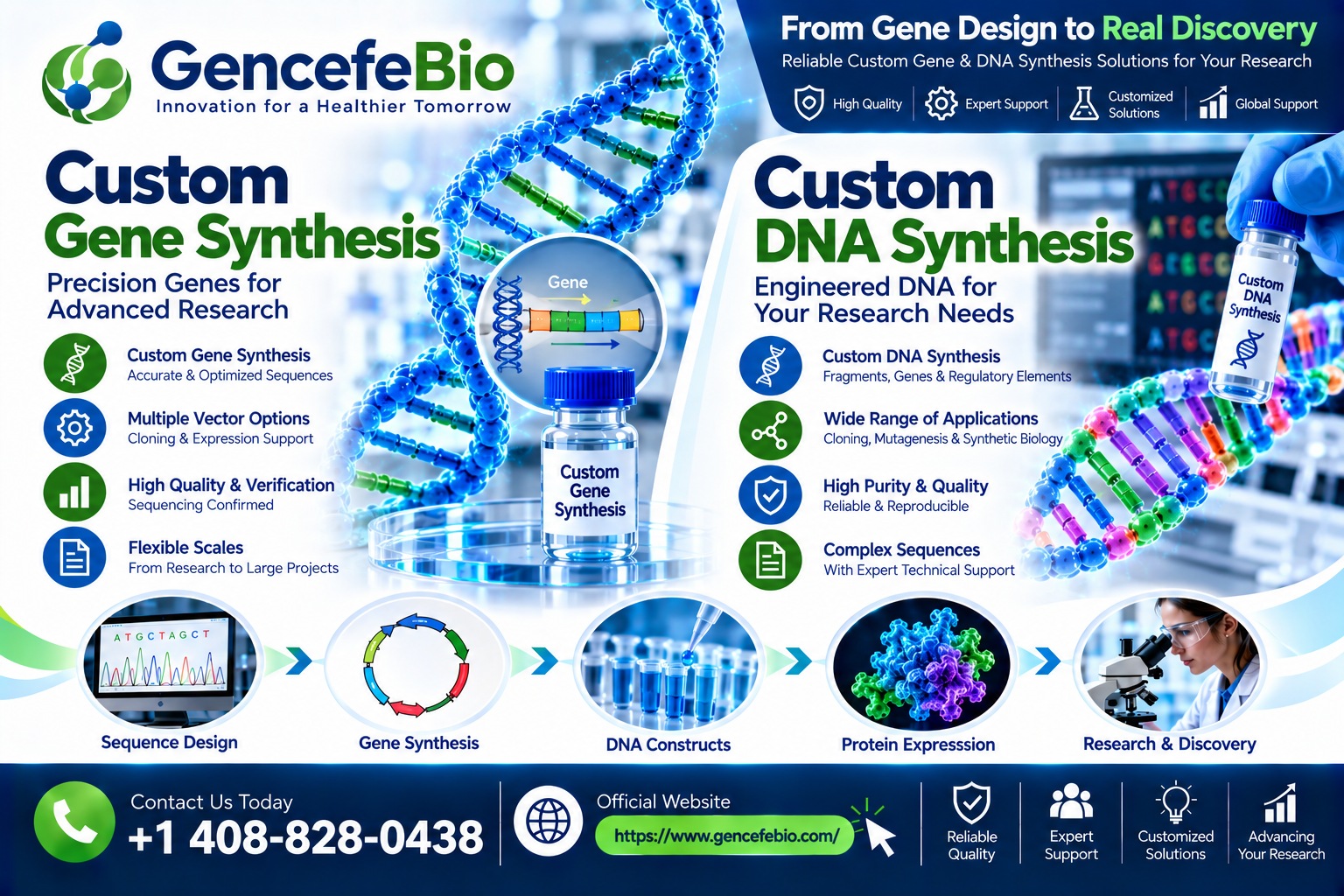
As molecular biology, synthetic biology, and pharmaceutical research become increasingly sophisticated, scientists are exploring reliable methods for obtaining precisely designed genetic materials. Custom gene synthesis enables researchers to create DNA sequences encoding specific proteins or biological functions, while custom DNA synthesis provides broader opportunities to manufacture designed nucleotide sequences for diverse scientific applications.
These technologies support research involving genetic engineering, recombinant protein development, molecular diagnostics, and experimental biotechnology.
For research laboratories and biotechnology companies, understanding synthesis capabilities, sequence verification, and quality requirements is essential for selecting appropriate molecular research solutions.
Custom Gene Synthesis: Supporting Modern Genetic Engineering
Custom gene synthesis is a laboratory service that produces designed DNA sequences according to specific genetic and experimental requirements.
Instead of obtaining every genetic sequence from natural biological samples, researchers can request synthetic versions of genes or selected genetic regions.
This flexibility supports studies involving protein function, molecular interactions, and engineered biological systems.
Major Applications
- Recombinant Protein Research: Preparing genes encoding proteins for suitable expression experiments.
- Synthetic Biology: Developing designed genetic components for research applications.
- Enzyme Research: Investigating variations in protein sequences and biological activity.
- Pharmaceutical Discovery: Supporting studies of genes associated with molecular targets.
- Vaccine Research: Preparing selected antigen-encoding sequences for experimental investigation.
- Academic Research: Examining gene regulation, molecular mechanisms, and protein function.
Understanding Custom DNA Synthesis and Its Applications
Custom DNA synthesis refers to the production of DNA molecules according to specified nucleotide sequences.
It encompasses short DNA oligonucleotides, longer DNA fragments, synthetic genes, and certain assembled genetic constructs.
The appropriate product depends on the intended research application and required sequence complexity.
Important applications include:
Molecular Diagnostics: Developing DNA components for research-stage detection assays.
Genetic Analysis: Preparing customized sequences for molecular investigations.
Synthetic Biology: Supporting the design of genetic elements and experimental constructs.
Protein Engineering: Producing DNA sequences associated with selected protein variants.
Molecular Cloning: Preparing compatible DNA fragments for laboratory research.
Gene Expression Studies: Supporting investigations into genetic regulation and protein production.
Unlike naturally isolated DNA, synthetic sequences can incorporate planned changes or selected structural features when technically feasible.
Custom Gene Synthesis vs. Custom DNA Synthesis
Although closely related, these services are not identical in scope.
| Feature | Custom Gene Synthesis | Custom DNA Synthesis |
| Primary focus | Designed gene sequences | Broad range of DNA sequences |
| Typical products | Synthetic genes and coding sequences | Oligonucleotides, fragments, genes |
| Common applications | Protein research, genetic engineering | Molecular biology, diagnostics, synthetic biology |
| Customization | Gene variants, sequence optimization | Sequence length, modifications, construct design |
| Quality requirements | Sequence accuracy and construct integrity | Identity, purity, sequence verification |
Custom gene synthesis is generally considered a specialized category within the broader field of DNA synthesis.
Researchers should select services according to their experimental objectives rather than assuming every DNA synthesis project requires a complete gene.
How Synthetic Gene Production Supports Research
Synthetic gene development involves several coordinated stages, from sequence planning to quality verification.
A typical service workflow includes:
- Research Specification: Defining the required DNA sequence and intended application.
- Sequence Assessment: Reviewing complexity, composition, and production feasibility.
- DNA Production: Manufacturing the specified genetic material using suitable synthesis technologies.
- Construct Assembly: Combining appropriate DNA fragments when required.
- Sequence Verification: Checking that the resulting DNA matches the intended design.
- Quality Documentation: Preparing relevant analytical information and product specifications.
Some projects require additional considerations involving sequence optimization, construct compatibility, or delivery format.
The final DNA product should meet the researcher’s defined acceptance criteria.
Why Sequence Accuracy Matters in DNA Synthesis
Genetic research often depends on precise nucleotide arrangements.
An unintended sequence change may alter a protein’s amino acid composition, disrupt regulatory elements, or influence experimental results.
Consequently, quality assurance plays an important role in custom DNA synthesis.
Researchers should consider sequence identity, DNA integrity, concentration, purity, and suitable verification methods.
For longer synthetic constructs, sequencing can help confirm that the final product matches its intended design.
Sequence Optimization and Customization Opportunities
Modern custom gene synthesis projects may involve sequence optimization for particular research objectives.
For example, synonymous codon changes can sometimes be considered when designing genes for specific expression systems.
However, codon optimization does not guarantee improved protein expression, because performance also depends on the host system, construct design, and biological context.
Depending on project requirements, customization may include:
- Designed coding sequences
- Selected nucleotide substitutions
- Customized DNA fragments
- Research-specific construct features
- Sequence optimization considerations
- Compatible cloning or delivery formats
Researchers should evaluate whether proposed modifications are appropriate for their intended biological studies.
Choosing a Reliable DNA Synthesis Service Provider
Selecting a suitable biotechnology supplier requires evaluating technical expertise and product documentation.
Important considerations include supported sequence lengths, customization capabilities, quality-control procedures, and available verification methods.
Researchers should also confirm delivery specifications, project communication practices, and handling requirements.
For complex projects, discussing feasibility and acceptance criteria before placing an order can help reduce unexpected difficulties.
Security, confidentiality, and responsible review of submitted genetic sequences are additional considerations for professional synthesis services.
Frequently Asked Questions (FAQs)
1. What is custom gene synthesis?
It is the production of designed gene sequences according to specific nucleotide requirements for biotechnology and molecular research.
2. What is custom DNA synthesis?
It is a service that manufactures specified DNA sequences, including oligonucleotides, DNA fragments, and synthetic genes.
3. What is the difference between gene synthesis and DNA synthesis?
Gene synthesis focuses on designed gene sequences, while DNA synthesis covers a broader range of nucleotide products.
4. Which industries use synthetic gene services?
Biotechnology, pharmaceutical research, molecular diagnostics, academic research, and synthetic biology use synthetic genetic materials.
5. Can synthetic genes support recombinant protein research?
Yes. Appropriately designed synthetic genes can provide coding sequences for compatible protein expression studies.
6. What is gene sequence optimization?
It involves evaluating or modifying a DNA sequence to meet selected experimental requirements without necessarily changing the encoded protein.
7. How is synthetic DNA quality verified?
Quality evaluation may include sequencing, concentration measurements, purity assessment, and other appropriate analytical methods.
8. Can custom DNA synthesis support molecular diagnostics?
Yes. Customized DNA sequences can support the development and investigation of research-stage molecular detection assays.
9. What factors affect custom gene synthesis costs?
Sequence length, complexity, assembly requirements, customization, verification methods, and production quantity can influence pricing.
10. How should researchers choose a gene synthesis supplier?
Researchers should assess technical capabilities, sequence verification procedures, product documentation, communication, and application-specific support.
Media Contact
Department: Biotechnology Research and Business Communications
Email: gene@gencefebio.com
Contact: +1 408-828-0438
Official Website: https://www.gencefebio.com/