
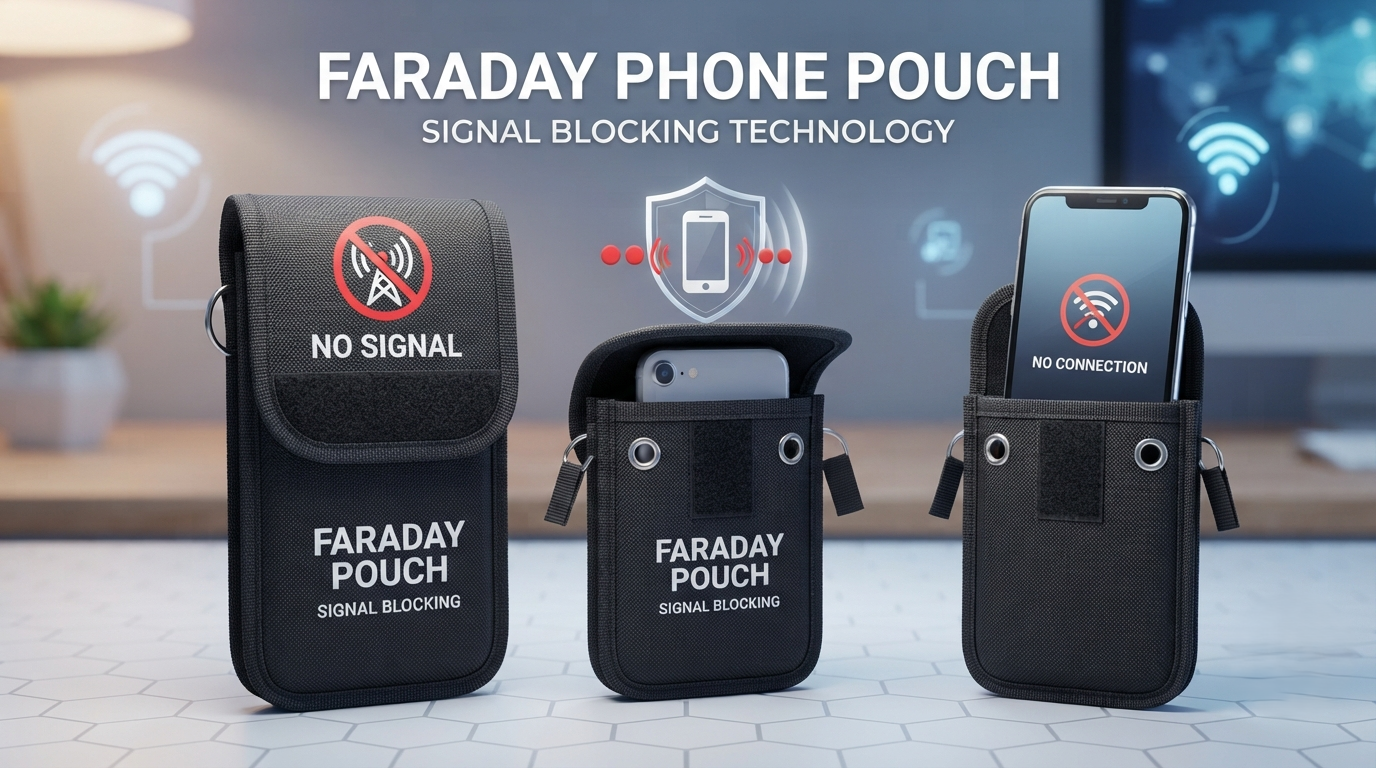
Smartphones make everyday life easier, but their constant connectivity can also create privacy, security, and distraction concerns. A faraday phone pouch offers a simple physical way to isolate a mobile device from wireless communication. Instead of changing multiple phone settings, the user places the device inside a specially constructed pouch designed to reduce or block supported radio-frequency signals.
A Signal Blocking Phone Pouch serves a similar purpose. Depending on its construction and tested shielding range, it may prevent a phone from communicating through cellular networks, Wi-Fi, Bluetooth, GPS-related radio signals, and other wireless technologies.
For individuals and organisations concerned about device connectivity, understanding how these products work—and their limitations—is essential before choosing one.
What Is a Faraday Phone Pouch?
A faraday phone pouch is a protective enclosure made with conductive shielding materials. Its design is based on the Faraday cage principle, in which conductive material reduces electromagnetic signals entering or leaving an enclosed space.
Unlike an ordinary fabric phone case, a Faraday pouch typically contains multiple layers. The outer layer provides physical protection, while conductive inner layers perform the signal-shielding function.
When the phone is correctly placed inside and the pouch is completely sealed, wireless communication can be significantly reduced or blocked.
Common applications include:
- Digital privacy and device isolation
- Secure meetings and workplaces
- Temporary reduction of wireless connectivity
- Digital-forensics procedures
- Corporate security environments
- Travel and personal privacy
- Limiting smartphone distractions
Performance, however, depends heavily on material quality, construction, closure design, frequency coverage, and correct usage.
How Does a Signal Blocking Phone Pouch Work?
A Signal Blocking Phone Pouch works by surrounding the device with conductive material that attenuates electromagnetic energy.
Smartphones communicate by transmitting and receiving radio-frequency signals. When a properly designed shielding pouch encloses the device, these signals encounter conductive layers that interfere with their ability to travel between the phone and external wireless networks.
The Importance of Complete Enclosure
Effective shielding requires more than simply using metallic material. Openings, weak seams, damaged conductive layers, and poorly designed closures can reduce performance.
That is why the closure is particularly important. A quality pouch should create a consistent shield around the enclosed device when properly secured.
Signals Commonly Targeted
Depending on the product specifications, a faraday phone pouch may be designed to address:
- Cellular communications
- Wi-Fi
- Bluetooth
- GPS/GNSS frequency ranges
- NFC
- RFID
- Other supported RF frequencies
Buyers should never assume every pouch blocks every wireless frequency. Manufacturer specifications and independent testing information should be reviewed wherever available.
Faraday Phone Pouch vs Ordinary Phone Case
Although both products hold a smartphone, their intended functions are very different.
| Feature | Faraday Phone Pouch | Standard Phone Case |
| Physical device protection | Often | Yes |
| RF shielding | Designed for it | Generally no |
| Cellular signal blocking | Depending on specifications | No |
| Wi-Fi/Bluetooth isolation | Depending on specifications | No |
| Privacy-focused design | Yes | Usually no |
| Everyday screen access | Limited while sealed | Yes |
A normal case primarily protects against scratches, impacts, and everyday wear. A Signal Blocking Phone Pouch focuses primarily on wireless isolation.
Why Are Faraday Phone Pouches Becoming Relevant?
Modern smartphones continuously interact with wireless infrastructure. Cellular towers, Wi-Fi networks, Bluetooth accessories, location technologies, and contactless systems create an environment where devices are almost constantly connected.
This has increased interest in physical signal-control solutions.
Privacy-Focused Device Isolation
People may use a faraday phone pouch when they want a straightforward method of temporarily separating their device from supported wireless networks.
Unlike software settings, physical shielding does not depend entirely on navigating operating-system menus.
Secure Business Environments
Businesses dealing with confidential information may establish policies restricting active connected devices during sensitive discussions.
A Signal Blocking Phone Pouch can form one component of a broader security policy alongside access controls, cybersecurity procedures, employee training, and physical security.
Digital Wellbeing
Not every application involves cybersecurity. Some users simply want uninterrupted periods for meetings, studying, family time, or focused work.
Placing a smartphone inside a shielding pouch creates a physical barrier between the user and incoming connectivity.
How to Choose the Right Signal Blocking Phone Pouch
Not all shielding products provide identical performance. Buyers should evaluate technical specifications rather than relying solely on marketing language.
Check Frequency Coverage
Determine which wireless technologies the manufacturer states the product is designed to block. Modern phones operate across numerous frequency bands, making broad and clearly documented coverage important.
Examine Construction Quality
Look for durable conductive layers, reinforced seams, and a reliable closure. Repeated opening, folding, and everyday handling can eventually affect shielding materials.
Select the Correct Size
The phone should fit completely inside the shielded compartment without preventing proper closure.
Look for Credible Testing
Where possible, choose products supported by clearly explained testing procedures or third-party test information. Statements such as “100% blocking” should be treated cautiously unless accompanied by meaningful technical evidence.
Practical Steps for Using a Faraday Phone Pouch
Using a pouch correctly is just as important as buying a suitable product.
- Place the entire phone inside the designated shielded compartment.
- Remove anything preventing the closure from sealing correctly.
- Secure the pouch according to the manufacturer’s instructions.
- Test the product under normal conditions.
- Periodically repeat testing as the pouch ages.
A simple practical check involves placing the phone inside, sealing it, and testing whether calls or supported wireless connections reach the device. More rigorous RF testing may be appropriate for professional security applications.
Advantages of a Signal Blocking Phone Pouch
A well-designed Signal Blocking Phone Pouch can offer several practical benefits.
It provides physical rather than purely software-based isolation, requires no battery, is portable, and can usually accommodate different smartphone brands.
For professional users, it may also become part of a repeatable device-management procedure.
However, users should remember that shielding does not replace cybersecurity. Strong passwords, encryption, software updates, multifactor authentication, secure networks, and responsible data practices remain important.
Common Mistakes to Avoid
One frequent mistake is assuming every pouch provides identical shielding. Frequency coverage and attenuation can differ considerably between products.
Other mistakes include:
- Leaving the closure partially open
- Placing the device in a non-shielded outer pocket
- Using an incorrectly sized pouch
- Continuing to use visibly damaged shielding
- Never testing the pouch after purchase
- Treating RF isolation as complete cybersecurity protection
Understanding these limitations helps users make more realistic purchasing decisions.
Frequently Asked Questions
1. What is a faraday phone pouch?
A faraday phone pouch is a conductive enclosure designed to reduce or block supported wireless signals travelling to and from an enclosed mobile device.
2. Does a Faraday pouch block phone calls?
A properly functioning pouch designed for the relevant cellular frequencies should prevent the enclosed phone from maintaining normal cellular communication while sealed.
3. Can it block Wi-Fi?
Many modern pouches are designed to shield common Wi-Fi frequencies, but users should confirm the manufacturer’s stated frequency coverage.
4. Does a Signal Blocking Phone Pouch block Bluetooth?
Products designed to cover Bluetooth frequencies can prevent normal Bluetooth communication when properly closed.
5. Can a Faraday pouch block GPS?
A suitable pouch may shield the radio signals a phone uses to receive satellite-navigation information. Exact performance depends on its design and coverage.
6. Will the phone work inside the pouch?
Offline functions may remain available, but wireless services covered by the shielding should become unavailable while the pouch is correctly sealed.
7. Does a Faraday pouch need electricity?
No. Passive shielding materials perform the isolation function without batteries or an external power supply.
8. How do I test a Signal Blocking Phone Pouch?
Seal the phone inside and test calls, Wi-Fi, Bluetooth, and other relevant connections. Professional applications may require more controlled RF testing.
9. Can Faraday pouches wear out?
Yes. Repeated folding, abrasion, damaged seams, or deterioration of conductive layers can potentially reduce shielding effectiveness.
10. Is a Faraday pouch enough for complete digital security?
No. It is a specialised physical security tool. It should complement, rather than replace, encryption, secure passwords, software updates, access controls, and other cybersecurity practices.