
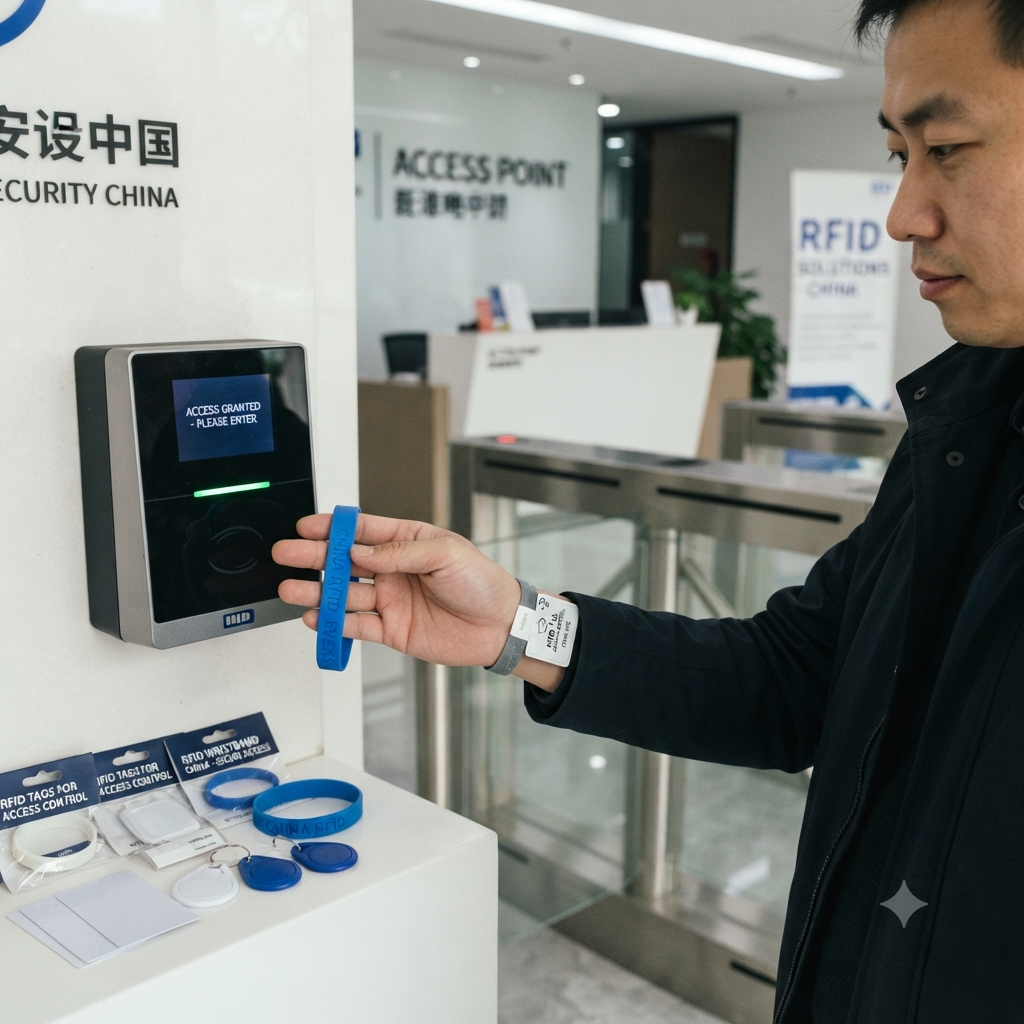
What if one small wristband could replace your event ticket, unlock a VIP lounge, open a locker, enable cashless payments, and even help organisers understand how visitors experience an event?
Sounds futuristic, right?
It’s already happening.
From massive music festivals and sports arenas to water parks, exhibitions, theme parks, and conferences, RFID wristbands are becoming a powerful part of the modern event experience. Instead of carrying paper tickets, wallets, or multiple access cards, visitors can simply wear one smart wristband and tap their way through the day.
But what makes this technology so useful?
Let’s take a closer look.
The Technology Behind the Tap
RFID means Radio Frequency Identification. The concept is surprisingly simple: information is transferred between a small RFID tag and a compatible reader using radio waves.
Inside a typical RFID wristband is a tiny chip connected to an antenna. When the wristband comes within the operating range of a reader, the two devices communicate wirelessly.
There is no need to insert a card.
There is usually no need to scan a visible barcode.
In many applications, there isn’t even a need to physically touch the reader.
The result is a fast, contactless interaction that can take place almost instantly.
For venues managing large crowds, RFID tags for access control can provide a faster and more streamlined alternative to traditional entry systems.
What Really Happens During an RFID Tap?
Imagine thousands of fans arriving at a music festival.
Instead of stopping at a ticket booth, each visitor walks toward an RFID-enabled entry point.
Here’s what happens:
Step 1: The reader sends out a radio signal.
Step 2: The RFID tag detects the signal.
Step 3: The tag responds with its unique identification information.
Step 4: The event’s backend system verifies the visitor’s permissions.
Step 5: The gate opens if access is approved.
All of this can happen within seconds.
The attendee experiences nothing more complicated than a quick tap.
Behind that simple action, however, multiple systems can work together to authenticate access and record the transaction.
Why RFID Is Beating the Traditional Barcode
Barcodes have been used for years to manage tickets and admissions. They’re inexpensive and familiar, but they have limitations.
A barcode scanner needs to visually read the code. If the barcode is damaged, dirty, badly positioned, or difficult to display, the scanning process can slow down.
RFID works differently.
The tag can often be read without direct visual contact, making it more practical for fast-moving environments.
Here’s a quick comparison:
| Factor | RFID Wristband | Barcode Wristband |
| Reading Method | Radio communication | Optical scanning |
| Line of Sight | Usually unnecessary | Necessary |
| Speed | Fast and suitable for high-volume access | Can be slower during peak periods |
| Durability | Can be protected inside durable materials | Can be damaged or become unreadable |
| Data Integration | Supports integration with digital systems | Primarily used for identification |
| User Convenience | Tap-and-go experience | Requires positioning for scanning |
| Security | Can support secure authentication systems | Easier to copy in some implementations |
| Applications | Access, payments, lockers, engagement | Primarily ticket validation |
For large events, even a few seconds saved per person can make a major difference.
When thousands of people arrive at once, faster processing means shorter queues and a better first impression.
What’s Hidden Inside the Wristband?
The wristband may look like an ordinary accessory, but it can contain an RFID inlay made up of a microchip and antenna.
Depending on the application, this technology can be embedded into:
- Silicone wristbands
- Fabric wristbands
- Plastic cards
- Event credentials
- Waterproof wearable products
The design can also be customised to match an event’s branding.
This is where specialised manufacturers and suppliers, including RFID wristband China providers, can play an important role by producing customised wearable solutions for different event requirements.
The technology can be designed for festivals, conferences, amusement parks, hospitality venues, and other environments where wearable identification is needed.
Not All RFID Tags Are the Same
RFID technology comes in different forms, and each type has a different purpose.
Passive RFID
Passive RFID tags don’t have an internal battery. They receive energy from the reader’s radio signal and use that energy to communicate.
Because they’re small and cost-effective, passive tags are commonly used for event tickets and access applications.
Active RFID
Active RFID tags contain their own battery and can transmit signals independently.
They are generally suitable for applications that require greater communication range or continuous data transmission.
Battery-Assisted Passive RFID
This type combines elements of both systems. It contains a battery but typically communicates with a reader when it enters the required operating range.
Choosing the right RFID solution depends on the specific application, required reading distance, environment, and budget.
Can One Wristband Do More Than Open a Gate?
Absolutely.
This is where RFID technology becomes particularly interesting.
A single wristband can potentially be connected to several services, allowing visitors to use it for:
- Event admission
- VIP access
- Hotel room entry
- Cashless payments
- Food and beverage purchases
- Locker access
- Coupons and discounts
- Loyalty programs
- Interactive experiences
Instead of managing multiple tickets and cards, visitors can use one wearable credential.
For event organisers, this creates an opportunity to build a more connected experience from the moment a visitor arrives until they leave.
What Data Can Event Organisers Learn?
RFID technology isn’t just about identifying visitors.
It can also provide valuable operational insights.
When readers are placed at different locations, organisers may be able to analyse information such as:
- Entry times
- Access activity
- Queue patterns
- Popular zones
- Attraction usage
- VIP area access
- Visitor movement between checkpoints
This information can help organisers understand what works and what doesn’t.
For example, if one attraction consistently experiences long queues while another receives little traffic, organisers can use those insights to improve layouts, staffing, and visitor flow.
The technology turns everyday event activity into useful operational intelligence.
Does an RFID Wristband Track Your Exact Location?
This is one of the biggest misconceptions surrounding RFID.
Most passive RFID wristbands are not GPS trackers. They don’t continuously transmit a person’s exact location across an entire venue.
Instead, an RFID system generally records interactions when a tag comes within range of a compatible reader.
For example, if a visitor taps their wristband at an entrance, locker, or restricted area, the system can record that interaction.
With enough readers installed throughout a venue, organisers may gain a broader understanding of visitor movement patterns.
This can be valuable for crowd management, security planning, and future event design.
The New Era of Contactless Events
Today’s audiences expect convenience.
They want to enter quickly.
They don’t want to repeatedly search for tickets.
They prefer simple payment options.
They want experiences that feel seamless.
RFID technology can help bring all these expectations together.
Instead of treating a ticket as a simple piece of paper or a digital barcode, organisers can transform it into a smart, wearable identity.
The wristband becomes a gateway to the entire event.
Security Meets Convenience
Security is another major reason why RFID is attracting attention.
Modern event organisers have to deal with counterfeit tickets, unauthorised access, overcrowding, and restricted areas.
RFID systems can help create controlled access environments by associating each wristband with specific permissions.
For example, one visitor might have general admission, while another may have access to VIP areas or backstage zones.
The system can validate those permissions automatically at designated access points.
This can make access management faster while reducing the burden on staff.
Why RFID Could Become the Standard for Future Events
The modern event is no longer just about what happens on stage.
It is about the complete visitor journey.
From registration to entry, from payments to entertainment, every interaction matters.
RFID offers a way to connect these experiences through one wearable device.
For organisers, RFID tags for access control can support efficient access management while helping create a smoother experience for visitors.
Meanwhile, custom RFID wristband China solutions can combine technology with event branding, giving organisers an opportunity to turn functional credentials into memorable event merchandise.
https://freeseobacklinks.online/how-rfid-technology-is-changing-the-way-we-enter-pay-and-interact/
https://blogstream.net/the-tap-that-is-changing-events-how-rfid-technology-is-making-life-easier/
https://newsgrow.blogspot.com/2026/07/rfid-labels-and-rfid-silicone.html
https://newsgrow.blogspot.com/2026/07/rfid-wristbands-are-changing-events.html