
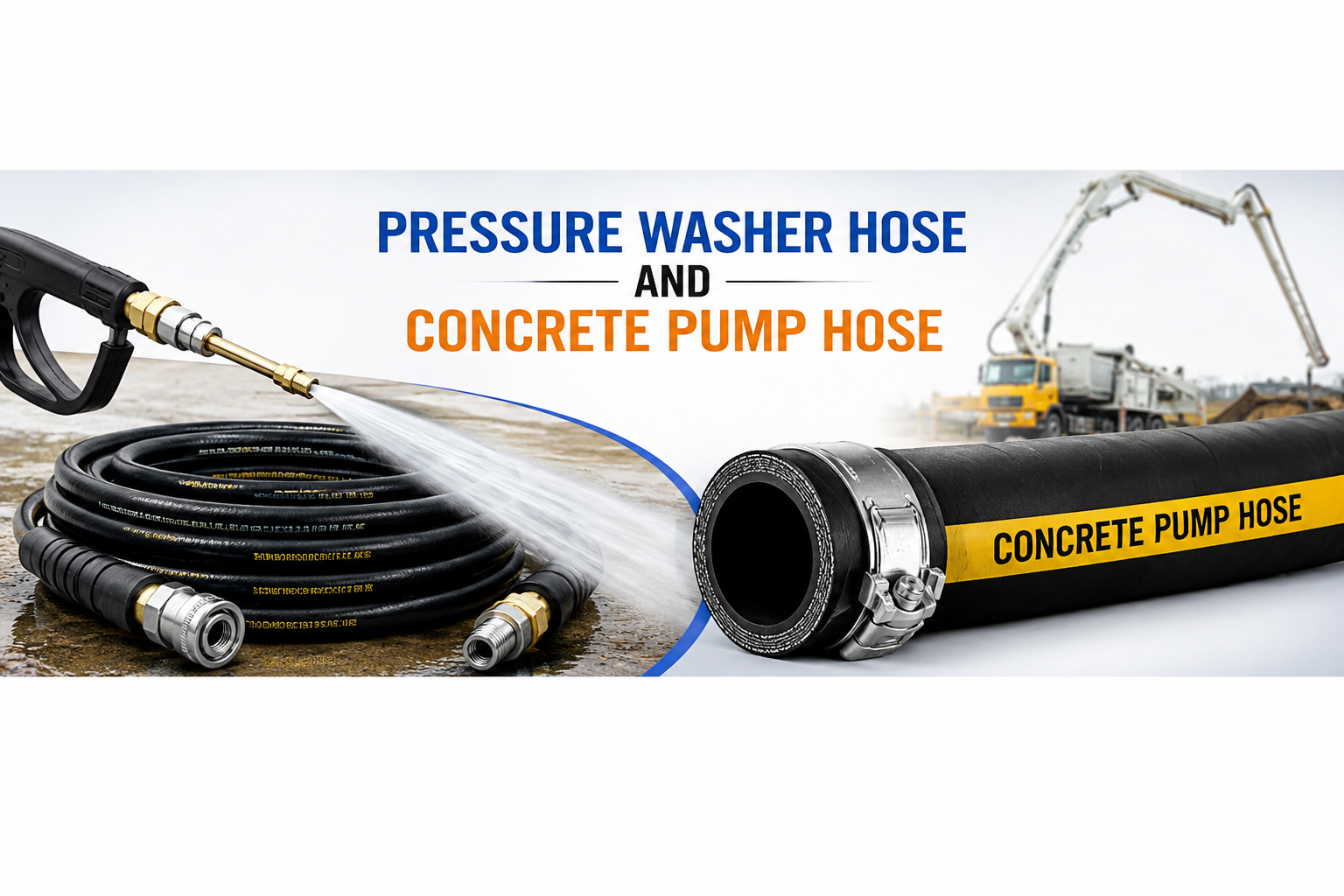
Industrial and commercial applications depend heavily on reliable hose systems for efficient operations. Two commonly used products in cleaning and construction industries are Pressure Washer Hose and Concrete Pump Hose. Although both are designed to handle demanding working conditions, they serve completely different purposes. Selecting the right hose ensures better performance, improved safety, reduced downtime, and longer equipment life.
A Pressure Washer Hose is specially engineered to transfer high-pressure water for cleaning applications, while a Concrete Pump Hose is designed to transport heavy concrete mixtures under extreme pressure during construction projects. Understanding their features, materials, applications, and differences helps businesses make the right investment decision.
Understanding Pressure Washer Hose
A Pressure Washer Hose is a high-performance flexible tube designed to withstand powerful water pressure generated by pressure cleaning machines. These hoses are commonly used in industrial cleaning, automotive washing, agriculture, manufacturing facilities, and commercial maintenance operations.
Unlike standard garden hoses, pressure washer hoses are manufactured with reinforced layers that provide excellent strength, flexibility, and resistance against abrasion.
Key Features of Pressure Washer Hose
A quality pressure washer hose offers several important advantages:
- High-pressure resistance for demanding cleaning operations
- Flexible construction for easy handling
- Resistance against weather conditions and chemicals
- Strong outer cover for abrasion protection
- Lightweight design for improved user convenience
- Long service life under regular industrial usage
Common Applications of Pressure Washer Hose
Pressure washer hoses are widely used across multiple industries, including:
- Vehicle cleaning and automotive workshops
- Industrial equipment cleaning
- Building and surface maintenance
- Agriculture and farming applications
- Food processing plant cleaning
- Marine and ship maintenance
- Commercial washing services
Construction and Material Used in Pressure Washer Hose
A pressure washer hose usually consists of multiple layers designed for durability and performance.
Inner Tube
The inner tube is responsible for carrying high-pressure water flow. It is generally made from materials that provide excellent resistance against water, detergents, and cleaning chemicals.
Reinforcement Layer
The reinforcement layer improves pressure handling capability. Common reinforcement materials include:
- Steel wire braiding
- Textile braiding
- Multiple fiber layers
Outer Cover
The outer cover protects the hose from:
- Abrasion
- Oil exposure
- Environmental damage
- Mechanical wear
Understanding Concrete Pump Hose
A Concrete Pump Hose is a heavy-duty industrial hose designed for transferring concrete, cement mixtures, and other construction materials through pumping systems.
Concrete transportation requires a hose that can handle extreme pressure, heavy materials, and continuous movement. Concrete pump hoses are built with strong reinforcement layers to maintain performance in challenging construction environments.
Important Characteristics of Concrete Pump Hose
A reliable concrete pump hose provides:
- High-pressure concrete delivery
- Superior abrasion resistance
- Strong reinforcement structure
- Flexibility during construction operations
- Resistance against harsh working conditions
- Safe and efficient concrete placement
Applications of Concrete Pump Hose
Concrete pump hoses are commonly used in:
- Residential construction projects
- Commercial buildings
- Bridges and highways
- Tunnel construction
- Infrastructure development
- Precast concrete industries
- Large-scale civil engineering projects
Materials Used in Concrete Pump Hose Manufacturing
Concrete pump hoses require special materials because concrete is highly abrasive.
Inner Rubber Layer
The inner layer is designed to resist damage caused by:
- Cement particles
- Sand
- Stones
- Continuous concrete flow
Steel Reinforcement
Heavy-duty steel reinforcement provides strength and allows the hose to operate under high pressure.
Protective Outer Layer
The outer cover protects against:
- Construction site damage
- Weather exposure
- External impact
Difference Between Pressure Washer Hose And Concrete Pump Hose
Although both products are industrial hoses, their designs and purposes are significantly different.
| Feature | Pressure Washer Hose | Concrete Pump Hose |
| Main Purpose | High-pressure water cleaning | Concrete transportation |
| Primary Material | Rubber, PVC, thermoplastic materials | Heavy-duty rubber with steel reinforcement |
| Working Medium | Water and cleaning solutions | Concrete mixtures |
| Pressure Handling | High water pressure | Extremely high material pressure |
| Flexibility | Lightweight and easy to move | Flexible but heavier construction |
| Abrasion Resistance | Moderate to high | Extremely high |
| Main Industries | Cleaning, automotive, agriculture | Construction and infrastructure |
| Internal Design | Designed for liquid flow | Designed for abrasive materials |
How To Select The Right Industrial Hose
Choosing between a pressure washer hose and concrete pump hose depends on several factors.
1. Identify The Application Requirement
First, determine the purpose of the hose:
- Cleaning operation requires a pressure washer hose
- Concrete transportation requires a concrete pump hose
Using the wrong hose can reduce efficiency and create safety risks.
2. Check Pressure Rating
Always select a hose according to the required working pressure. A hose with insufficient pressure capacity may fail during operation.
Important factors include:
- Maximum operating pressure
- Burst pressure rating
- Equipment specifications
3. Consider Material Compatibility
The hose material must match the transported material.
For example:
- Water-based applications require water-resistant materials
- Concrete applications require abrasion-resistant rubber construction
4. Evaluate Working Environment
Consider site conditions such as:
- Temperature changes
- Chemical exposure
- Mechanical movement
- Surface friction
Benefits Of Using High-Quality Pressure Washer Hose
Investing in a premium pressure washer hose provides several benefits:
- Improved cleaning efficiency
- Reduced replacement frequency
- Better pressure performance
- Increased operator safety
- Lower maintenance costs
- Reliable operation in demanding environments
Advantages Of Using Durable Concrete Pump Hose
A strong concrete pump hose helps construction companies achieve:
- Faster concrete placement
- Reduced project delays
- Better material flow
- Improved workplace safety
- Longer equipment lifespan
- Lower operational expenses
Maintenance Tips For Longer Hose Life
Proper maintenance improves hose performance and prevents unexpected failures.
Pressure Washer Hose Maintenance
Follow these practices:
- Avoid sharp bending and twisting.
- Store the hose properly after use.
- Remove chemical residue after cleaning.
- Inspect connectors regularly.
- Replace damaged sections immediately.
Concrete Pump Hose Maintenance
Recommended maintenance steps include:
- Clean remaining concrete after every use.
- Check for cracks and surface damage.
- Avoid unnecessary bending.
- Inspect reinforcement areas.
- Replace worn hoses before failure occurs.
Common Problems With Industrial Hoses
Even high-quality hoses require proper handling. Common issues include:
- Pressure leakage
- Surface cracking
- Connector damage
- Internal wear
- Reduced flexibility
- Bursting due to excessive pressure
Regular inspection helps identify problems early and prevents costly downtime.
Future Trends In Industrial Hose Technology
The industrial hose industry continues to improve with advanced manufacturing technologies. Modern hose solutions focus on:
- Lightweight designs
- Higher pressure capability
- Environment-friendly materials
- Improved abrasion resistance
- Longer operational life
- Better safety standards
Manufacturers are developing advanced rubber compounds and reinforcement technologies to meet the growing demands of construction, cleaning, and industrial sectors.
Frequently Asked Questions (FAQ)
1. What is a pressure washer hose used for?
A pressure washer hose is used to transfer high-pressure water from cleaning machines for applications such as vehicle washing, industrial cleaning, and surface maintenance.
2. What is a concrete pump hose?
A concrete pump hose is a heavy-duty hose designed for transporting concrete mixtures from pumping equipment to construction locations.
3. Can a pressure washer hose be used for concrete pumping?
No, a pressure washer hose is not designed to handle abrasive concrete materials or the extreme pressure required for concrete pumping.
4. What materials are used in pressure washer hoses?
Pressure washer hoses are commonly made from rubber, PVC, thermoplastic materials, and reinforced synthetic compounds.
5. Why is abrasion resistance important in concrete pump hoses?
Concrete contains sand, gravel, and cement particles that can wear down ordinary hoses quickly. Abrasion resistance improves durability and safety.
6. How long does a pressure washer hose last?
The lifespan depends on usage, pressure level, maintenance, and storage conditions. Proper care can significantly extend service life.
7. What pressure can a concrete pump hose handle?
Concrete pump hoses are manufactured for high-pressure applications, but exact pressure ratings depend on hose design, size, and manufacturer specifications.
8. How can I maintain a concrete pump hose?
Regular cleaning, inspection, proper storage, and avoiding excessive bending help maintain concrete pump hose performance.
9. What factors should I consider before buying an industrial hose?
Consider application type, pressure rating, material compatibility, working environment, size, and durability requirements.
10. Are industrial hoses available in different sizes?
Yes, pressure washer hoses and concrete pump hoses are available in different diameters, lengths, and pressure ratings based on application needs.