
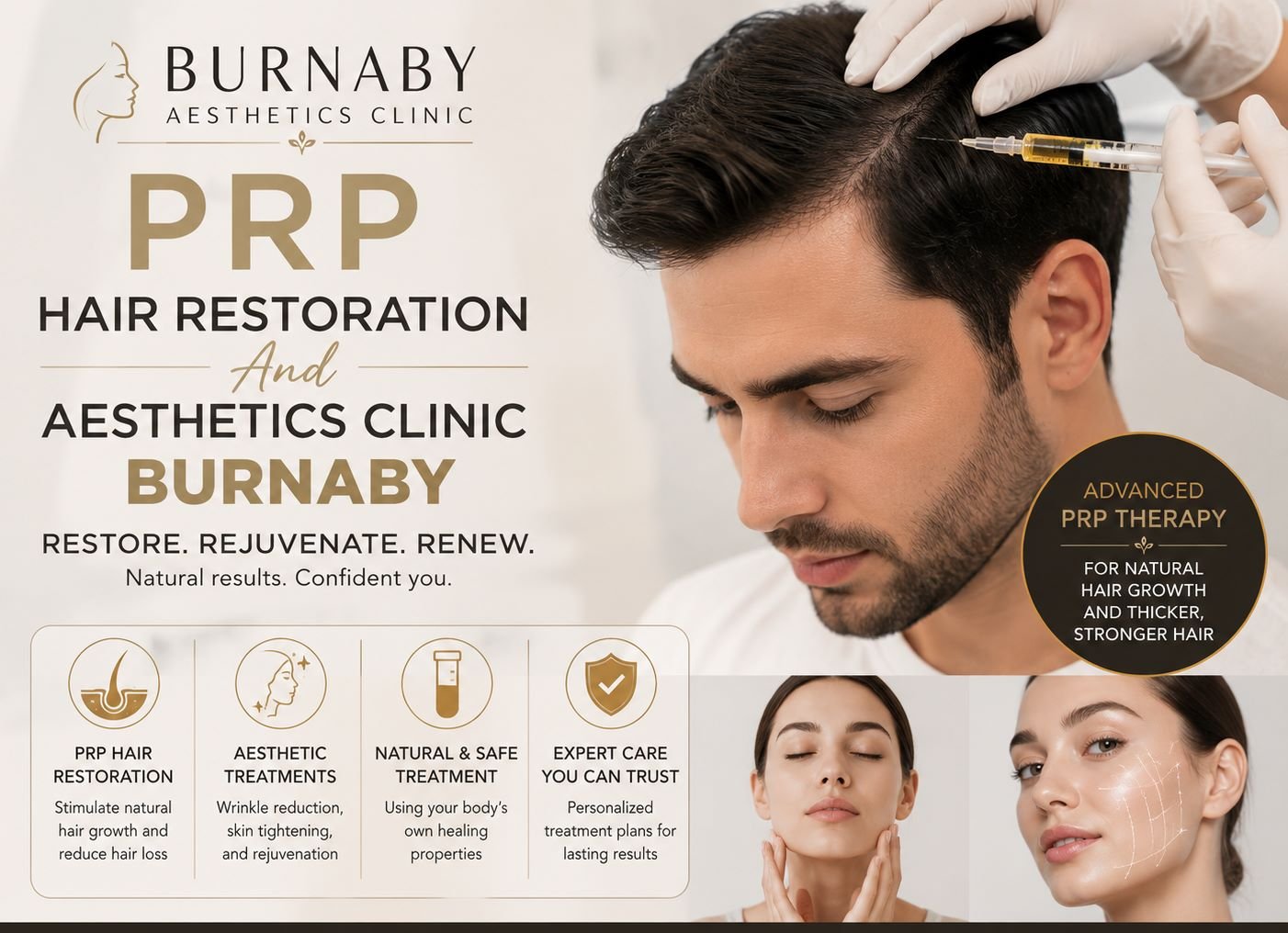
Hair thinning can affect confidence at almost any age. Genetics, hormonal changes, stress, ageing, nutritional factors, and certain lifestyle habits may all influence how quickly hair becomes thinner or less dense. For people who want to explore a non-surgical option, PRP hair restoration has become an increasingly discussed treatment in aesthetic and hair-care clinics.
Platelet-rich plasma therapy uses components obtained from a person’s own blood and is designed to support the scalp environment around existing hair follicles. For anyone considering treatment at an Aesthetics Clinic Burnaby, understanding how PRP works, who may benefit, what treatment involves, and what realistic results look like can make the decision much easier.
What Is PRP Hair Restoration?
PRP hair restoration is a minimally invasive procedure that uses platelet-rich plasma prepared from a small blood sample taken from the patient.
The blood is processed in a centrifuge to separate plasma containing a higher concentration of platelets. This prepared plasma is then carefully injected into selected areas of the scalp.
Platelets naturally contain proteins and growth factors involved in tissue repair processes. In hair restoration treatments, PRP is generally used with the goal of supporting weakened follicles and improving the environment in which existing hair grows.
PRP should not be viewed as an instant cure for every form of hair loss. Results can vary substantially depending on the cause and severity of thinning.
Why People Consider PRP for Thinning Hair
Many individuals choose PRP because it does not involve hair transplantation or major surgery.
Common reasons for considering the procedure include:
- Gradual thinning around the crown
- Reduced hair density
- Early-stage pattern hair loss
- Weak or miniaturising existing follicles
- Preference for a non-surgical treatment
- Interest in combining PRP with a broader hair-care plan
A professional consultation is important because conditions such as scarring alopecia, nutritional deficiencies, thyroid disorders, or other medical problems may require a different approach.
How the PRP Treatment Process Works
The PRP procedure is usually completed through several straightforward stages.
Step 1: Consultation and Scalp Assessment
A qualified practitioner first reviews the patient’s concerns, medical history, pattern of hair loss, and treatment expectations.
Step 2: Blood Collection
A small quantity of blood is drawn, typically from the arm, using standard clinical procedures.
Step 3: Plasma Preparation
The sample is placed inside a centrifuge. Spinning separates different blood components so platelet-rich plasma can be collected for treatment.
Step 4: Scalp Application
The prepared PRP is injected into targeted scalp areas using fine needles. Treatment time varies depending on the size of the area being addressed.
Potential Benefits of PRP Hair Restoration
PRP has gained attention because it provides an alternative between topical hair products and surgical transplantation.
Potential advantages may include:
- Minimally invasive treatment
- No surgical incisions
- Uses material prepared from the patient’s own blood
- Relatively limited downtime for many patients
- Can complement other hair-loss strategies
- Treatment can be personalised to specific scalp areas
Individual response is important. Some people may notice improvements in thickness or shedding, while others may experience limited changes.
PRP Hair Restoration vs Hair Transplantation
| Feature | PRP Hair Restoration | Hair Transplant |
| Procedure | Injections | Surgical follicle transplantation |
| Incisions | Generally no | Yes |
| Downtime | Usually limited | Longer recovery |
| Existing follicles required | Yes | Donor follicles required |
| Results | Gradual and variable | Gradual transplanted hair growth |
| Treatment sessions | Often multiple | Usually procedure-based |
| Best suited for | Selected cases of thinning | More advanced suitable cases |
Neither option is universally better. The appropriate choice depends on follicle health, hair-loss progression, expectations, budget, and clinical assessment.
Choosing an Aesthetics Clinic Burnaby Patients Can Trust
Selecting the right provider is just as important as understanding the treatment.
A reputable Aesthetics Clinic Burnaby should focus on proper assessment rather than immediately recommending injections to every person experiencing hair loss.
Check Practitioner Qualifications
Ask who will assess your scalp and perform the procedure. Training, clinical experience, hygiene practices, and knowledge of hair-loss conditions should all be considered.
Look for Individualised Treatment Planning
Hair loss differs significantly between patients. A responsible provider should examine the pattern and progression of thinning before suggesting a treatment schedule.
Ask About Equipment and Hygiene
Blood collection, PRP preparation, and injections require appropriate sterile procedures. Ask how equipment is handled and whether single-use supplies are used where appropriate.
Discuss Realistic Expectations
Avoid clinics promising guaranteed hair regrowth. A trustworthy professional should explain possible benefits as well as limitations.
Who May Be a Suitable Candidate?
PRP may be considered for adults experiencing certain types of early or moderate hair thinning where follicles remain active.
Suitability may depend on:
- Cause of hair loss
- Condition of the scalp
- Degree of follicle miniaturisation
- General health
- Current medications
- Previous hair treatments
- Patient expectations
People with certain blood disorders, scalp conditions, infections, or other medical concerns may not be suitable candidates. A qualified healthcare professional should determine eligibility.
What to Expect After Treatment
Some patients return to normal activities shortly after treatment. Temporary scalp tenderness, redness, swelling, or pinpoint bleeding may occur around injection sites.
Results Take Time
Hair follows a natural growth cycle, so changes cannot normally be judged immediately after treatment. Providers may recommend several sessions followed by maintenance appointments depending on individual response.
Patients should follow their practitioner’s aftercare instructions carefully and report unusual or persistent symptoms.
Frequently Asked Questions About PRP Hair Restoration
1. Is PRP hair restoration a surgical procedure?
No. PRP is generally considered a minimally invasive injectable treatment rather than hair transplant surgery.
2. Does PRP permanently cure hair loss?
No treatment can guarantee permanent correction of every type of hair loss. Outcomes depend on the underlying cause and individual response.
3. How many PRP sessions are required?
Treatment schedules vary. Some practitioners recommend an initial series followed by periodic maintenance sessions.
4. When can results become noticeable?
Changes generally occur gradually because hair growth happens in cycles. Your practitioner can provide expectations based on your individual condition.
5. Can PRP create completely new follicles?
PRP is primarily intended to support existing follicles. It should not be marketed as a reliable method for creating new follicles in completely bald areas.
6. Is PRP suitable for women?
Both men and women may be evaluated for PRP depending on the cause and stage of their hair thinning.
7. Is there downtime after treatment?
Downtime is often limited, although temporary tenderness, redness, or swelling may occur.
8. Can PRP be combined with other hair treatments?
In suitable patients, professionals may incorporate PRP into a broader treatment strategy. Any combination should be discussed with a qualified practitioner.
9. Is PRP hair restoration painful?
Patients may experience mild discomfort during scalp injections. Clinics may use techniques intended to make the procedure more comfortable.
10. How do I choose an aesthetics clinic in Burnaby?
Review practitioner qualifications, consultation standards, treatment transparency, hygiene protocols, patient communication, and realistic explanations of outcomes.