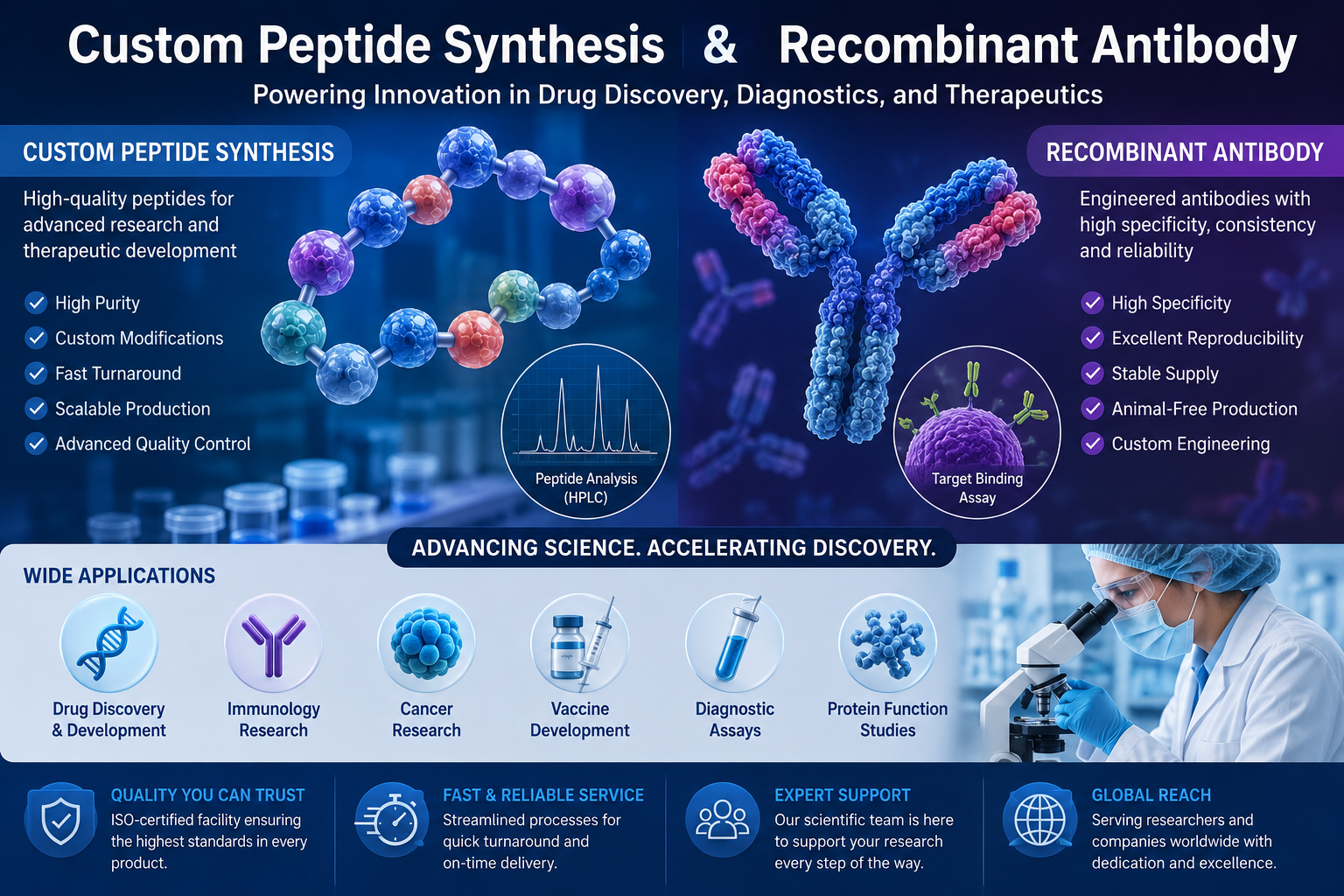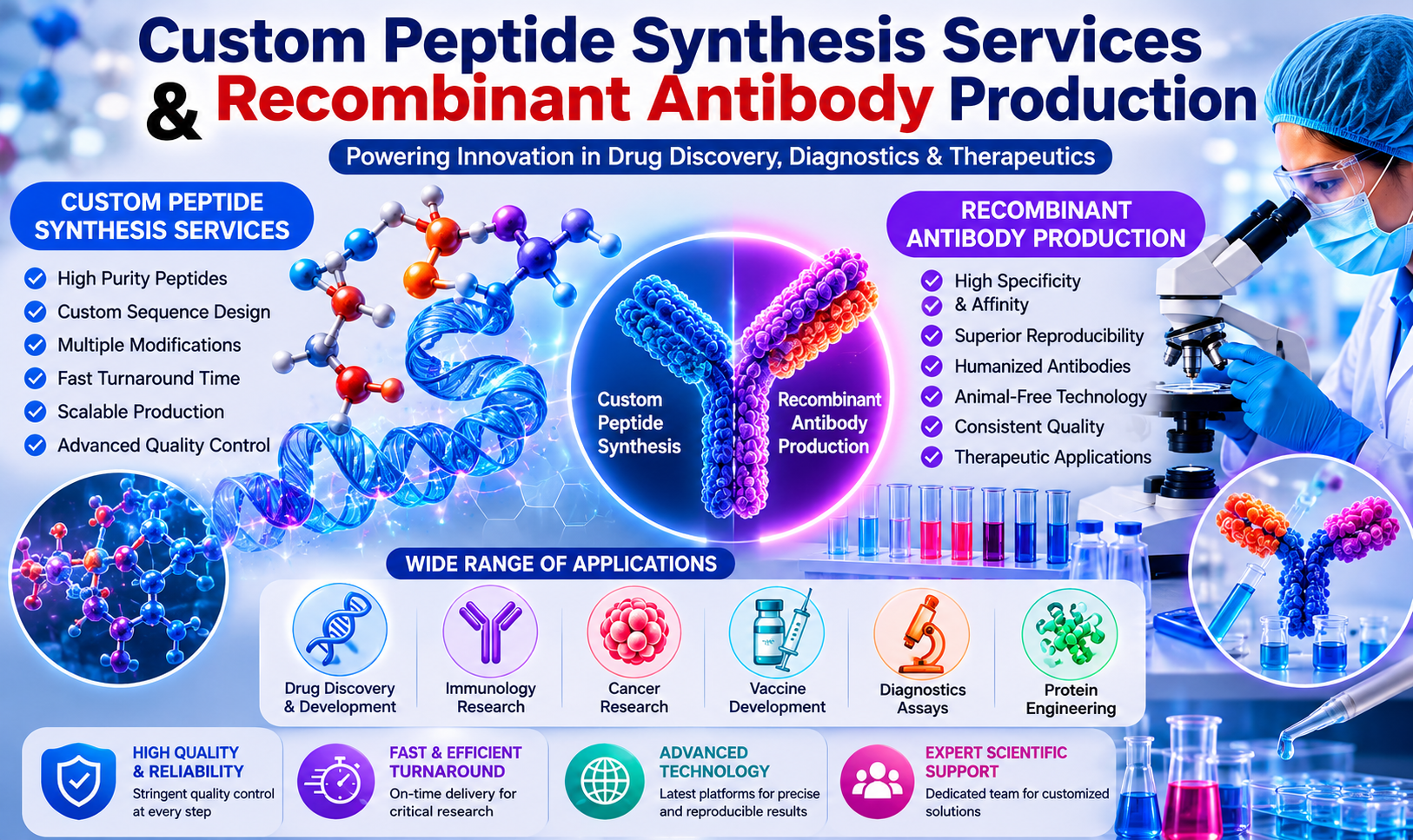
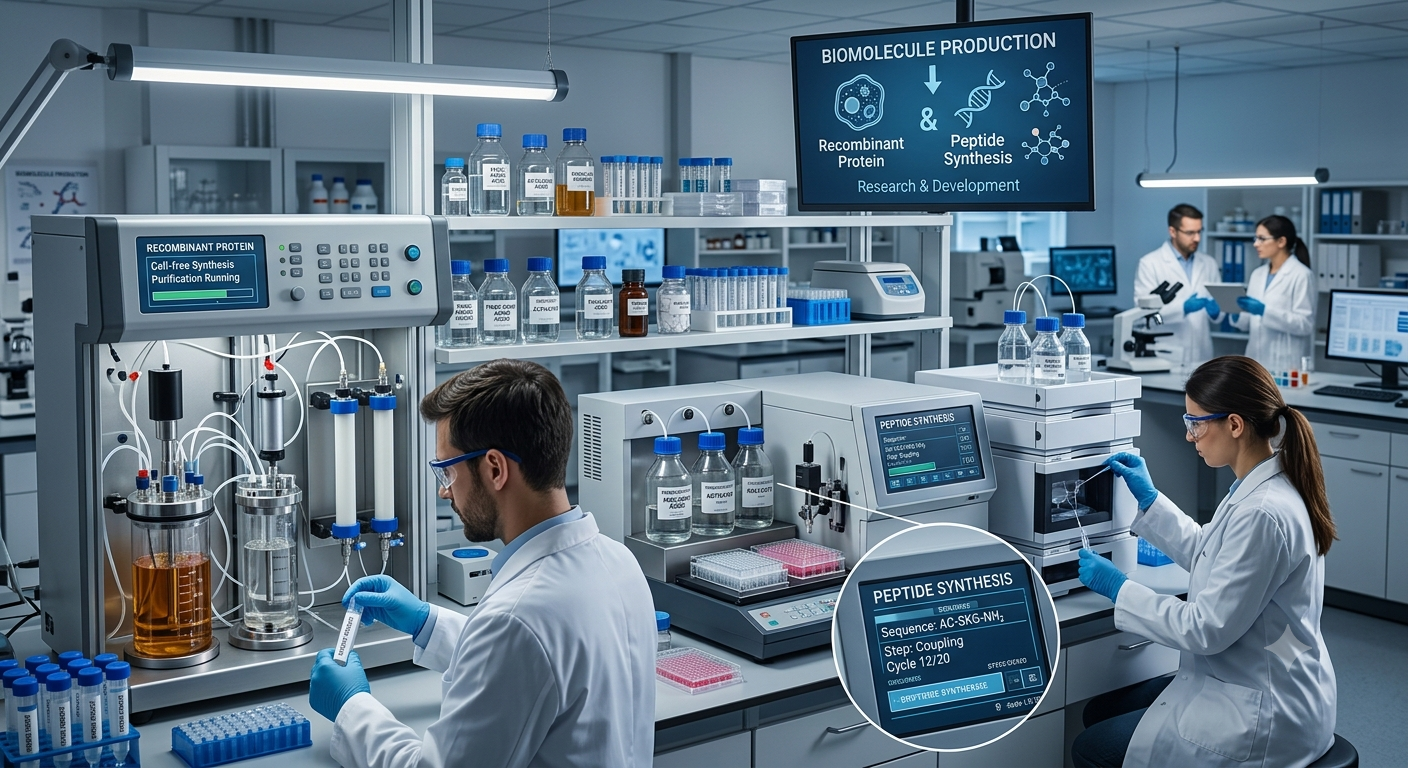
The biotechnology and pharmaceutical sectors are experiencing rapid growth as researchers, healthcare organizations, and life science companies increase their investment in advanced biomolecular technologies. Among the most influential developments are recombinant protein production and peptide synthesis, two essential technologies supporting drug discovery, vaccine development, diagnostic research, and precision medicine.
With the expansion of biotechnology research, personalized healthcare, and biologics manufacturing, scientists are increasingly relying on high-quality recombinant proteins and custom peptides to develop innovative therapies and improve disease understanding. Industry experts believe these technologies will continue to shape the future of biomedical research and pharmaceutical innovation.
Understanding Recombinant Protein Technology
Recombinant protein refers to proteins produced through recombinant DNA technology, where a target gene is inserted into a host organism such as bacteria, yeast, insect cells, or mammalian cells. The host then expresses the desired protein, allowing researchers to obtain highly purified proteins for scientific and medical applications.
Modern recombinant protein production enables laboratories to manufacture proteins with exceptional consistency, purity, and biological activity, making them indispensable in biotechnology and healthcare.
Major Applications of Recombinant Protein
- Drug discovery and development
- Vaccine production
- Diagnostic assay development
- Cell biology research
- Immunology studies
- Cancer research
- Protein structure analysis
- Therapeutic biologics manufacturing
The Growing Importance of Peptide Synthesis
Peptide synthesis is the process of chemically creating short chains of amino acids that mimic naturally occurring peptides. Advances in automated synthesis technologies now allow researchers to produce highly customized peptides with remarkable precision.
Synthetic peptides are widely used in biomedical research, vaccine design, molecular diagnostics, targeted drug development, and antibody production.
Common Uses of Peptide Synthesis
- Custom research peptides
- Vaccine candidate development
- Antibody generation
- Biomarker discovery
- Drug screening programs
- Protein interaction studies
- Diagnostic reagent manufacturing
Why Recombinant Protein and Peptide Synthesis Are Transforming Biotechnology
The combination of recombinant protein technology and peptide synthesis provides scientists with reliable molecular tools for studying complex biological systems and developing innovative therapeutic solutions.
These technologies support faster research timelines, improved experimental reproducibility, and enhanced product quality across multiple scientific disciplines.
Key Benefits
- High product purity
- Excellent batch consistency
- Scalable manufacturing
- Faster research and development
- Improved therapeutic targeting
- Reliable experimental outcomes
- Support for personalized medicine
Industries Benefiting from Recombinant Protein and Peptide Synthesis
The impact of these technologies extends across numerous industries.
Major Industry Applications
- Pharmaceutical companies
- Biotechnology organizations
- Academic research institutions
- Clinical diagnostic laboratories
- Contract research organizations (CROs)
- Vaccine manufacturers
- Agricultural biotechnology
- Veterinary medicine
- Environmental biotechnology
Recombinant Protein vs Peptide Synthesis
| Feature | Recombinant Protein | Peptide Synthesis |
| Production Method | Recombinant DNA technology | Chemical synthesis |
| Molecule Size | Large proteins | Short amino acid chains |
| Complexity | High | Moderate |
| Primary Applications | Therapeutics, vaccines, diagnostics | Research, antibodies, drug discovery |
| Manufacturing Platform | Living cells | Automated chemical synthesis |
| Customization | High | Very high |
Modern Technologies Driving Scientific Progress
Continuous innovation has significantly improved both recombinant protein production and peptide synthesis capabilities.
Recent Technological Advances
- Automated peptide synthesizers
- High-yield expression systems
- Advanced purification techniques
- AI-assisted protein engineering
- High-throughput screening platforms
- Precision analytical characterization
- Enhanced quality control systems
Factors to Consider When Choosing a Service Provider
Selecting an experienced laboratory or manufacturing partner is essential for obtaining reliable research materials.
Important Selection Criteria
- Proven scientific expertise
- Quality assurance procedures
- Regulatory compliance
- Custom production capabilities
- Fast project turnaround
- Advanced analytical equipment
- Technical consultation support
Emerging Trends in Recombinant Protein and Peptide Synthesis
Life science organizations continue investing in innovative technologies to improve research efficiency and therapeutic development.
Current Industry Trends
- Personalized biologic therapies
- Artificial intelligence in protein engineering
- Sustainable biomanufacturing practices
- Automation in peptide production
- High-throughput protein screening
- Precision medicine research
- Expansion of custom protein services
Advantages for Biomedical Research
Researchers increasingly depend on recombinant protein and peptide synthesis because these technologies accelerate scientific discovery and improve experimental reliability.
Research Benefits
- Enhanced reproducibility
- Faster biomarker identification
- Improved vaccine development
- Efficient therapeutic screening
- Better understanding of disease mechanisms
- Support for translational medicine
Frequently Asked Questions (FAQs)
1. What is recombinant protein?
A recombinant protein is a protein produced using recombinant DNA technology in specially engineered host cells.
2. What is peptide synthesis?
Peptide synthesis is the chemical production of short amino acid chains for research, diagnostics, and therapeutic applications.
3. Why are recombinant proteins important?
They play a vital role in drug development, vaccine research, diagnostics, and biological studies.
4. Where are synthetic peptides used?
Synthetic peptides are commonly used in antibody production, vaccine research, molecular biology, and pharmaceutical development.
5. Which industries use recombinant protein technology?
Pharmaceutical, biotechnology, academic, diagnostic, and healthcare industries extensively use recombinant proteins.
6. What are the advantages of peptide synthesis?
It offers precise customization, high purity, rapid production, and excellent reproducibility.
7. Can recombinant proteins be customized?
Yes. Proteins can be engineered to meet specific research and therapeutic requirements.
8. How does peptide synthesis support drug discovery?
It enables researchers to study biological pathways, identify drug targets, and evaluate therapeutic candidates.
9. What quality standards are followed during production?
Leading laboratories implement rigorous quality control, purification, and analytical testing procedures to ensure product consistency.
10. What is the future of recombinant protein and peptide synthesis?
Growing investment in biotechnology, personalized medicine, and advanced therapeutics is expected to further expand the applications of both technologies worldwide.