
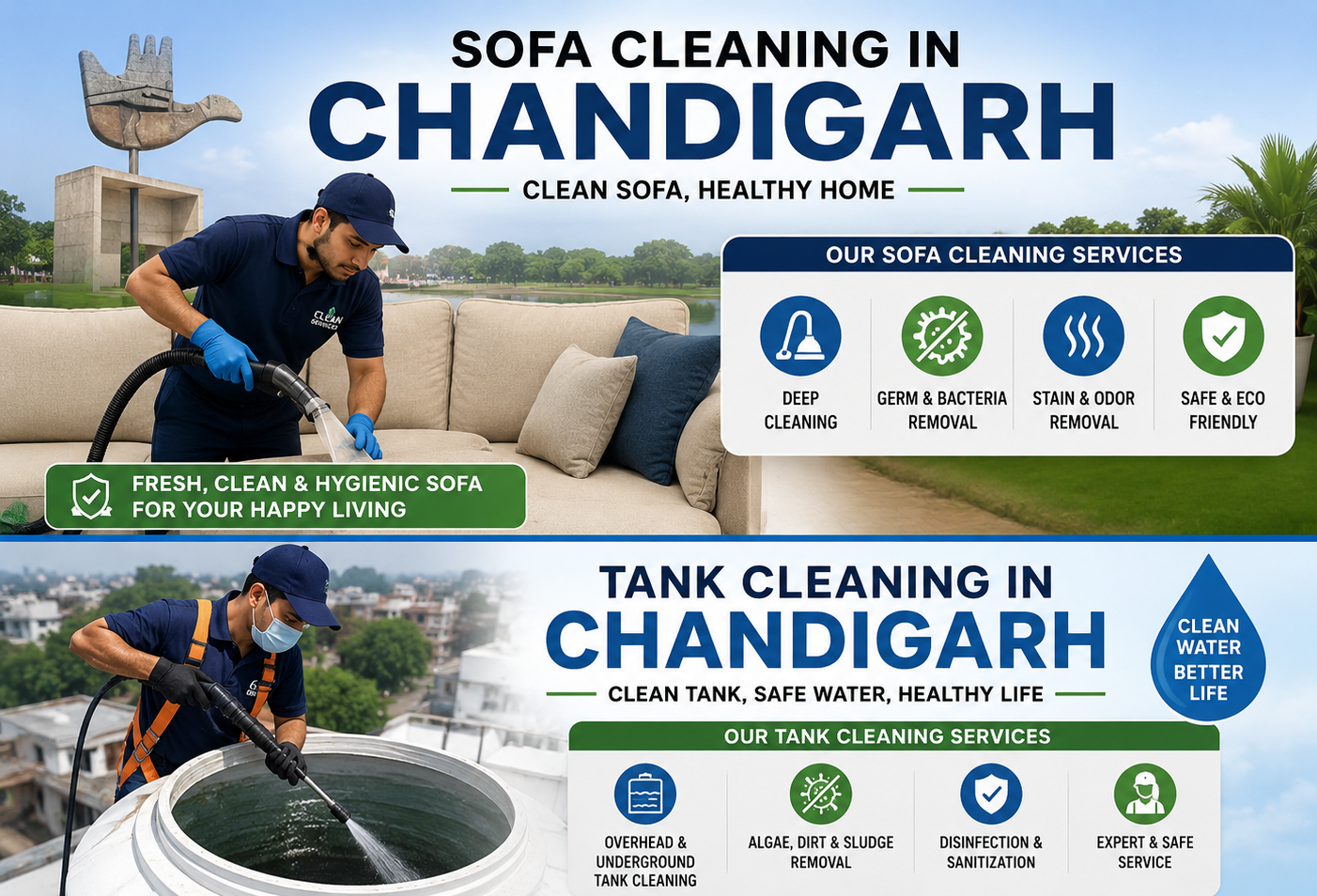
Maintaining a clean home involves much more than sweeping floors and wiping surfaces. Furniture and water-storage systems also require periodic attention because they can accumulate dirt that is not always visible. A sofa may gradually collect dust, food particles, body oils, stains, and odours, while a water tank can develop sediment, algae-like deposits, and sludge over time. This makes professional sofa cleaning in Chandigarh and tank cleaning in Chandigarh valuable services for maintaining a cleaner residential or commercial environment.
Why Deep Cleaning Should Not Be Ignored
Routine household cleaning generally deals with visible dirt. However, upholstery, cushions, and water tanks contain areas that are difficult to clean effectively without specialized equipment.
A sofa’s fabric can trap microscopic dust and debris between its fibres. Similarly, deposits can settle at the bottom and corners of a water tank. Ignoring these areas for long periods can affect cleanliness and comfort.
Deep cleaning helps address these hidden contaminants through a systematic process rather than relying only on surface-level cleaning.
Sofa Cleaning in Chandigarh: What Does the Service Include?
Professional sofa cleaning in Chandigarh is designed to refresh upholstery while minimizing the possibility of fabric damage. The exact procedure depends on the material, construction, stains, and overall condition of the furniture.
A professional technician may begin by examining:
- Upholstery material
- Colour and fabric condition
- Stubborn stains
- Cushion construction
- Previous cleaning treatments
- Areas with excessive dust or odour
After inspection, the cleaning process can include vacuuming, spot treatment, shampooing, extraction, and drying.
Why Sofa Fabric Requires Specialized Treatment
Different upholstery materials respond differently to moisture and cleaning solutions. A method that works for synthetic fabric may not be appropriate for delicate upholstery.
For this reason, professional cleaners should select products according to the material rather than applying the same chemical treatment to every sofa.
Important Sofa-Care Practices
Homeowners can extend the cleanliness of their furniture by following simple habits:
- Vacuum sofas regularly.
- Clean spills as soon as possible.
- Avoid excessive water during DIY cleaning.
- Keep sofas away from prolonged moisture.
- Schedule professional deep cleaning when dirt becomes embedded.
Professional cleaning is particularly useful for sofas exposed to heavy daily use, children, pets, food spills, or dusty surroundings.
Major Advantages of Professional Sofa Cleaning
A properly performed service can provide several practical benefits.
Better appearance: Dirt and surface stains can make upholstery look old and neglected. Deep cleaning can refresh its appearance.
Odour reduction: Food residues, moisture, and accumulated organic matter can contribute to unpleasant smells.
Improved maintenance: Removing accumulated debris helps maintain the furniture rather than allowing contamination to build up indefinitely.
Convenience: Professional equipment can make the cleaning process considerably more efficient than manual scrubbing.
However, no professional can guarantee removal of every stain. Old stains, permanent discolouration, fabric damage, and chemical reactions may not be completely reversible.
Tank Cleaning in Chandigarh: Why Water Storage Needs Attention
Water tanks are often overlooked because they remain out of sight. Yet the inside of a tank can gradually collect dust, sediment, rust particles, slime, and other deposits.
Professional tank cleaning in Chandigarh addresses these accumulated materials through controlled draining, physical cleaning, rinsing, and appropriate sanitization.
The service is particularly relevant for:
- Residential overhead tanks
- Underground water tanks
- Apartment buildings
- Commercial properties
- Offices
- Schools and institutions
- Restaurants and other establishments
How Professional Tank Cleaning Works
A proper tank-cleaning procedure should be organized rather than rushed.
Step 1: Inspection
The technician evaluates the tank’s size, material, access point, water condition, and visible deposits.
Step 2: Draining
Stored water is removed safely before internal cleaning begins.
Step 3: Sludge and Debris Removal
Sediment and accumulated material are physically removed from the tank.
Step 4: Internal Scrubbing
Walls, floors, corners, and difficult-to-reach areas are cleaned using appropriate tools.
Step 5: Rinsing
The tank is thoroughly rinsed to remove loosened debris and cleaning residues.
Step 6: Sanitization
Where appropriate, a suitable disinfecting process is performed according to the tank and water-use requirements.
Step 7: Final Inspection
The tank is checked before being returned to normal operation.
How Often Should a Water Tank Be Cleaned?
There is no single frequency that applies to every property. Factors such as water quality, tank design, surrounding environment, usage, and sediment accumulation influence maintenance requirements.
A tank should be inspected periodically, particularly if users notice:
- Unusual smell
- Visible particles
- Discolouration
- Excessive sediment
- Slime or deposits
- Changes in water quality
Regular maintenance is preferable to waiting until a serious problem becomes obvious.
Comparing Sofa and Tank Cleaning Services
| Feature | Sofa Cleaning | Tank Cleaning |
| Primary target | Upholstery and cushions | Internal tank surfaces |
| Main problem | Dust, stains, odours | Sediment, sludge and deposits |
| Typical equipment | Vacuum and extraction equipment | Pumps, brushes and cleaning equipment |
| Important consideration | Fabric compatibility | Water-storage safety |
| Final requirement | Proper drying | Thorough rinsing and suitable sanitization |
| Recommended approach | Material-specific | Tank-specific |
How to Select the Right Cleaning Company
Price should not be the only factor when selecting a service provider. A professional company should provide clear information about its process and limitations.
Consider These Factors
- Experience with the required service
- Cleaning equipment
- Product and chemical transparency
- Customer reviews
- Service coverage
- Pricing clarity
- Technician professionalism
- Drying or rinsing procedures
- Response to customer questions
For sofa cleaning, specifically ask whether the company has experience with your upholstery type. For tank cleaning, ask what is included in the quoted service and whether the tank will be thoroughly rinsed after treatment.
DIY Cleaning or Professional Cleaning?
DIY maintenance is useful between professional visits, but it has limitations.
| DIY Cleaning | Professional Cleaning |
| Suitable for routine maintenance | Suitable for deeper cleaning |
| Basic household equipment | Specialized equipment |
| Lower immediate cost | Higher service cost |
| Greater risk of incorrect treatment | Trained cleaning process |
| Limited reach | Better access to difficult areas |
The best approach is often a combination: perform regular basic maintenance at home and arrange professional cleaning when deeper treatment is necessary.
Frequently Asked Questions
Is professional sofa cleaning safe for all fabrics?
No. Cleaning techniques should be selected according to the upholstery material and manufacturer’s care recommendations.
Can old sofa stains be completely removed?
Not always. Results depend on the stain, fabric, age, and previous treatments.
Does sofa cleaning remove bad smells?
Deep cleaning can reduce odours caused by accumulated dirt and residues, although persistent smells may have another underlying source.
How long does a sofa take to dry?
Drying time depends on the cleaning method, fabric, ventilation, humidity, and amount of moisture used.
Can I clean my sofa with household detergent?
It is generally better to avoid unsuitable detergents because they may leave residue, cause colour changes, or damage delicate materials.
Why does a water tank require cleaning?
Sediment, dust, sludge, and deposits can accumulate inside storage tanks and compromise overall storage hygiene.
Can every water tank be cleaned using the same method?
No. Tank material, capacity, design, accessibility, and contamination determine the appropriate procedure.
What signs indicate that a tank needs attention?
Unusual smell, visible sediment, discoloration, slime, or changes in stored-water appearance are useful warning signs.
Is tank sanitization the same as tank cleaning?
No. Cleaning primarily removes physical dirt and deposits, while sanitization is a separate process intended to reduce microorganisms.
Should I choose a cleaning company only because it offers a low price?
No. Compare process quality, equipment, experience, reviews, safety practices, and service scope before making a decision.
https://newsgrow.blogspot.com/2026/08/tank-cleaning-services-in-chandigarh.html
https://bhoomijanatural.info/chandigarh-households-turn-to-deep-cleaning-for-water-tanks-and-sofas/
https://newsgrow.blogspot.com/2026/08/carpet-cleaning-service-in-chandigarh.html
https://shopnets.com/a-cleaner-chandigarh-home-starts-where-everyday-cleaning-stops/
https://newsgrow.blogspot.com/2026/08/sofa-cleaning-in-chandigarh-and-tank.html