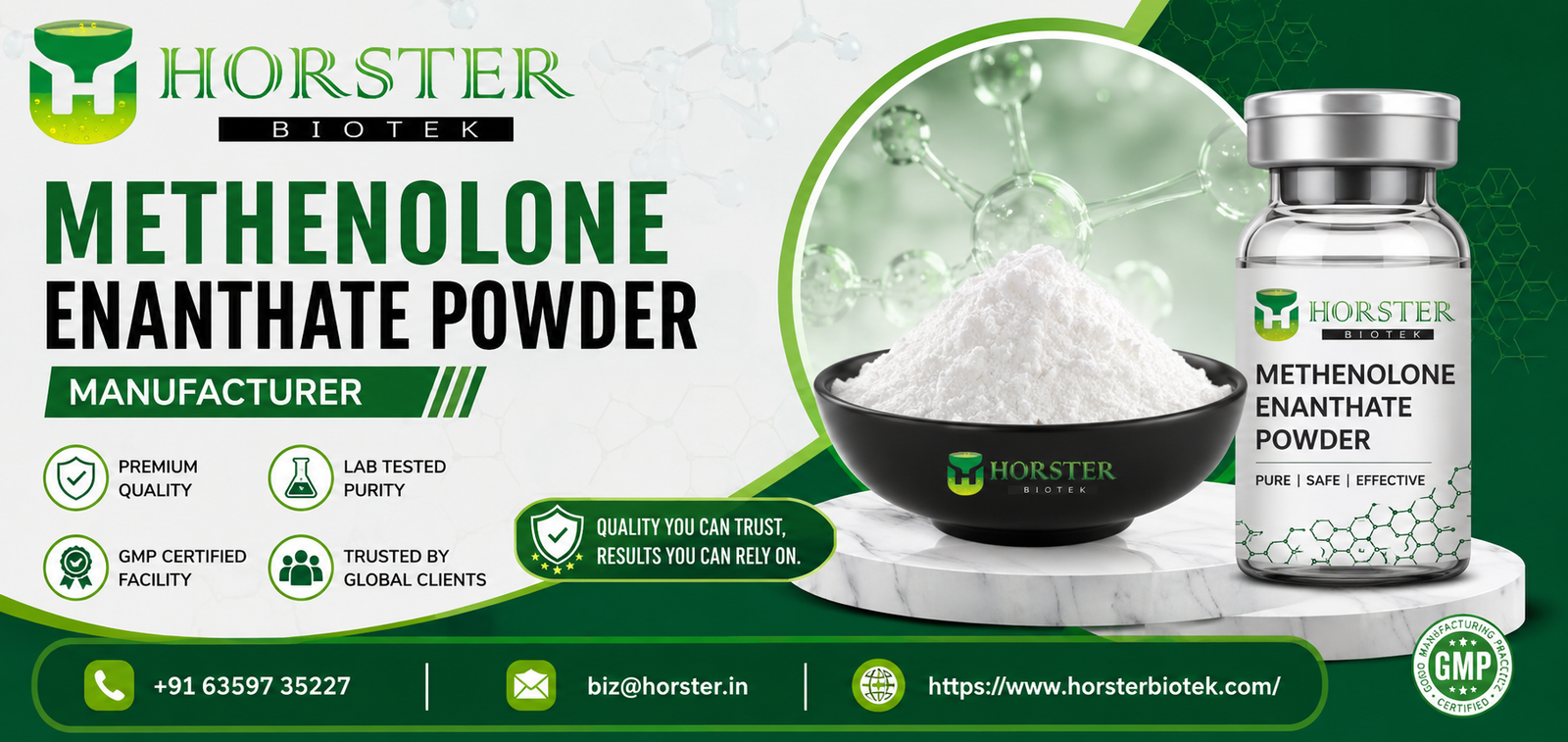
The pharmaceutical industry depends on reliable active pharmaceutical ingredients (APIs), consistent manufacturing practices, and strong quality-control systems. For organizations researching specialized compounds, selecting a qualified Methenolone Enanthate Powder Manufacturer requires careful consideration of analytical testing, documentation, regulatory compliance, traceability, and manufacturing standards rather than price alone.
Understanding Methenolone Enanthate
Methenolone enanthate is an esterified form of methenolone belonging to the anabolic-androgenic steroid category. Its pharmaceutical history makes quality assessment particularly important when organizations are involved in legitimate research or regulated pharmaceutical activities.
When evaluating any specialized API, organizations should understand the material’s identity, specifications, purity profile, storage requirements, and applicable legal controls. These factors help establish whether a material is suitable for its intended regulated purpose.
Important Quality Parameters
A structured quality assessment may include:
- Chemical identity and characterization
- Assay and purity
- Related substances
- Residual solvents
- Moisture content
- Batch consistency
- Stability considerations
- Appropriate storage conditions
- Complete quality documentation
Why Manufacturer Quality Matters
A pharmaceutical API manufacturer plays an important role in maintaining consistency throughout the supply chain. Quality should be supported by documented procedures, qualified personnel, controlled production environments, validated processes where applicable, and appropriate laboratory testing.
Good Manufacturing Practices
Good Manufacturing Practice (GMP) principles provide a framework for controlling pharmaceutical production and quality operations. A robust quality system can cover raw-material management, equipment qualification, production controls, laboratory testing, packaging, documentation, and deviation management.
Key Areas to Review
When conducting supplier due diligence, organizations can review:
- Quality-management procedures
- Manufacturing controls
- Analytical testing capabilities
- Batch documentation
- Certificate of Analysis procedures
- Traceability systems
- Storage and handling controls
- Regulatory documentation
The Role of Analytical Testing
Analytical testing provides objective information about an API’s characteristics. Depending on the applicable specification, testing can be used to verify identity, assay, purity, impurities, residual solvents, and other relevant quality attributes.
A batch-specific Certificate of Analysis (CoA) is particularly useful because it connects reported analytical results with a defined production batch. Organizations should review whether the stated specifications and testing methods are appropriate for their intended application.
Documentation and Traceability
Documentation is a central element of pharmaceutical quality assurance. Proper records allow organizations to establish where a material originated, how it was tested, and which batch it belongs to.
Useful documentation may include:
- Certificate of Analysis
- Product specifications
- Safety Data Sheet
- Batch identification
- Quality-control records
- Storage information
- Applicable regulatory documentation
Traceability also supports investigations when quality deviations or unexpected results occur.
Regulatory Considerations
Anabolic-androgenic steroid compounds can be subject to different regulatory requirements depending on the country and intended use. Regulations may apply to manufacturing, research, importation, exportation, possession, storage, and distribution.
Before handling a regulated pharmaceutical substance, organizations should:
- Identify relevant national regulations.
- Confirm whether the intended activity is permitted.
- Obtain required authorizations or licenses.
- Maintain appropriate records.
- Follow applicable storage and transportation requirements.
- Consult qualified regulatory professionals when necessary.
Comparing API Manufacturer Selection Factors
| FactorImportance | |
| Quality management | Supports controlled operations |
| Analytical testing | Helps verify material characteristics |
| Batch documentation | Provides traceability |
| Regulatory compliance | Supports lawful operations |
| Storage controls | Helps maintain material integrity |
| Consistency | Supports predictable quality |
| Technical documentation | Helps with due diligence |
Cost can be considered as part of a commercial evaluation, but it should not replace quality and compliance assessments.
Building a Responsible Pharmaceutical Supply Chain
A reliable pharmaceutical supply chain depends on transparency and responsible quality management. Organizations should evaluate potential manufacturing partners using documented evidence rather than unsupported claims.
A thorough supplier-review process can include reviewing available quality documentation, confirming applicable certifications, examining analytical procedures, assessing traceability, and ensuring that the proposed activity complies with local regulations.
Frequently Asked Questions
1. What is methenolone enanthate?
Methenolone enanthate is an esterified form of methenolone associated with the anabolic-androgenic steroid category.
2. What is an API manufacturer?
An API manufacturer produces active pharmaceutical ingredients using controlled manufacturing and quality-assurance processes.
3. Why is API purity important?
Purity is an important quality attribute because unwanted substances can affect the consistency and suitability of an ingredient for its intended application.
4. What is a Certificate of Analysis?
A Certificate of Analysis documents analytical results for a specific production batch against defined quality specifications.
5. Why is batch traceability important?
Traceability allows organizations to connect materials with specific production and testing records, supporting quality investigations and supply-chain control.
6. What does GMP mean?
GMP stands for Good Manufacturing Practice. It refers to principles and controls designed to support consistent pharmaceutical manufacturing and quality.
7. Is methenolone enanthate regulated?
Its regulatory status varies by jurisdiction. Organizations should verify current laws before conducting activities involving the compound.
8. What documents should organizations review?
Depending on the circumstances, relevant documents can include a CoA, product specification, Safety Data Sheet, batch information, and applicable regulatory documentation.
9. Is price the most important supplier-selection factor?
No. Quality, compliance, testing, documentation, traceability, and reliability should be evaluated alongside commercial considerations.
10. Why is analytical testing necessary?
Testing helps establish whether a material meets predetermined identity, purity, assay, and other applicable specifications.
Contact — +91 63597 35227
Email ID — biz@horster.in
Website — https://www.horsterbiotek.com/