
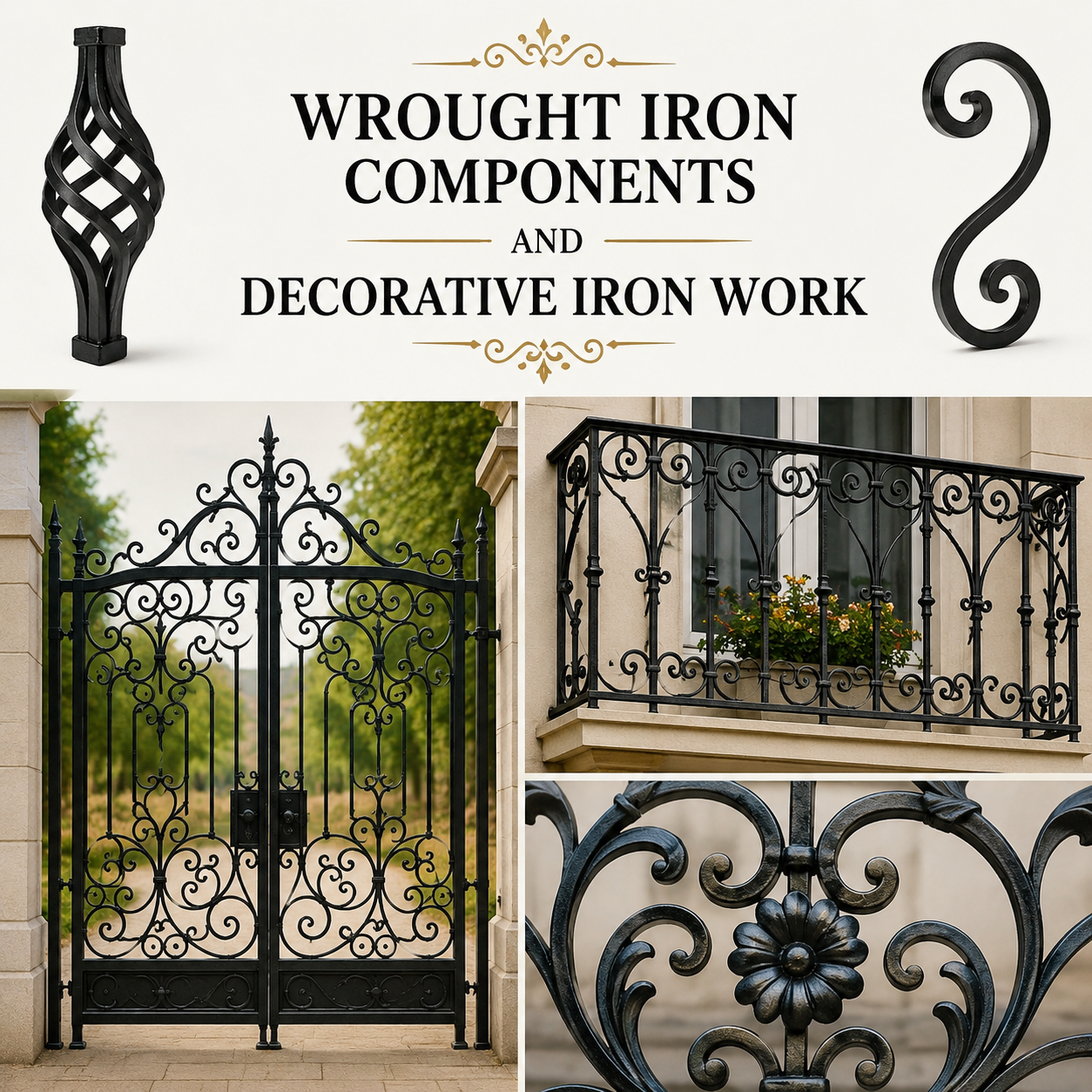
Wrought Iron Components and Decorative Iron Work have been an integral part of architecture and interior design for centuries. From elegant gates and balconies to intricate railings and furniture, wrought iron products combine strength, beauty, and durability. Modern homeowners, architects, and commercial property developers continue to choose wrought iron because of its timeless appearance and long-lasting performance.
The demand for customized ironwork is growing rapidly as people seek unique designs that add character and value to their properties. Whether used in residential, commercial, or industrial projects, wrought iron elements provide a perfect blend of functionality and artistic appeal.
Understanding Wrought Iron Components
Wrought Iron Components are individual iron parts and accessories used to create decorative and structural iron products. These components are manufactured in various designs, sizes, and finishes to suit different architectural requirements.
Common wrought iron components include:
- Iron scrolls
- Rosettes
- Spearheads
- Balusters
- Forged leaves
- Rings and collars
- Decorative panels
- Finials
- Basket designs
- Handrail accessories
These components can be assembled to create customized gates, staircases, fences, and furniture.
What is Decorative Iron Work?
Decorative Iron Work refers to artistic and ornamental iron structures designed to enhance the beauty of a building or space. Skilled craftsmen shape iron into intricate patterns, creating products that are both functional and visually appealing.
Examples of decorative iron work include:
- Main entrance gates
- Balcony railings
- Stair railings
- Window grills
- Garden furniture
- Wall decorations
- Pergolas
- Security doors
- Interior partitions
- Decorative lighting fixtures
Decorative iron work adds sophistication and a luxurious appearance to any property.
Why Wrought Iron Components Are Popular
The popularity of Wrought Iron Components is increasing due to several advantages.
Exceptional Strength
Wrought iron is highly durable and can withstand heavy loads and harsh weather conditions.
Timeless Beauty
Its classic and elegant appearance never goes out of style.
Custom Design Flexibility
Iron can be shaped into almost any design, making it suitable for traditional and modern architecture.
Long Service Life
Properly maintained wrought iron products can last for decades.
Increased Property Value
Beautiful decorative iron installations enhance the aesthetic and market value of a property.
Major Applications of Decorative Iron Work
Decorative Iron Work is widely used across various industries and properties.
Residential Applications
- Main gates
- Balcony railings
- Staircases
- Garden fencing
- Decorative furniture
Commercial Applications
- Hotel entrances
- Shopping malls
- Office partitions
- Restaurants and cafes
- Security barriers
Industrial Applications
- Factory gates
- Heavy-duty fencing
- Safety railings
- Warehouse partitions
Popular Types of Wrought Iron Components
| Component Type | Application | Benefits |
| Scrolls | Gates and Railings | Elegant appearance |
| Rosettes | Decorative panels | Artistic detailing |
| Spearheads | Fencing | Added security |
| Balusters | Staircases | Structural support |
| Leaves and Flowers | Furniture and Gates | Decorative enhancement |
| Rings and Collars | Railings | Improved aesthetics |
Advantages of Decorative Iron Work
Durability
Iron structures remain strong for many years with minimal maintenance.
Design Versatility
Custom patterns and designs can be easily created.
Security
Decorative iron doors and gates provide excellent protection.
Eco-Friendly
Iron can be recycled and reused, making it environmentally sustainable.
Low Maintenance
Routine cleaning and protective coatings are sufficient to maintain its appearance.
Manufacturing Process of Wrought Iron Components
The production of Wrought Iron Components involves several important stages:
- Design and planning
- Material selection
- Cutting and shaping
- Forging and welding
- Surface finishing
- Powder coating or painting
- Quality inspection
- Installation
Modern manufacturing techniques ensure precision and consistency while preserving traditional craftsmanship.
Latest Trends in Decorative Iron Work
The industry is continuously evolving with innovative designs and technologies.
Minimalist Iron Designs
Simple geometric patterns are becoming increasingly popular.
Laser-Cut Decorative Panels
Advanced cutting technology allows intricate and precise designs.
Mixed Material Designs
Iron is combined with:
- Glass
- Wood
- Stainless steel
- Stone
Smart Security Gates
Automated wrought iron gates with remote access systems are in high demand.
How to Choose Quality Wrought Iron Components
Consider the following factors before purchasing:
Material Quality
Choose high-grade iron for better durability.
Surface Finish
Look for anti-rust coatings and premium finishes.
Design Compatibility
Ensure the components complement your property’s architecture.
Manufacturer Experience
Select experienced manufacturers with proven expertise.
Customization Options
Choose suppliers that offer tailor-made solutions.
Maintenance Tips for Decorative Iron Work
Proper maintenance extends the life of decorative iron products.
Cleaning
- Use mild soap and water.
- Remove dust regularly.
Rust Prevention
- Apply protective coatings.
- Repair damaged paint immediately.
Inspection
- Check weld joints periodically.
- Tighten loose fittings.
Repainting
Repaint every few years to maintain appearance and prevent corrosion.
Comparison Between Wrought Iron and Other Materials
| Feature | Wrought Iron | Aluminum | Stainless Steel |
| Strength | Excellent | Moderate | High |
| Decorative Appeal | Excellent | Good | Modern |
| Durability | Very High | High | Very High |
| Customization | Excellent | Moderate | Moderate |
| Cost | Medium | Medium | High |
Why Businesses Prefer Decorative Iron Work
Businesses invest in Decorative Iron Work because it offers:
- Enhanced brand image
- Superior security
- Long-term durability
- Custom architectural appeal
- Increased property value
- Premium customer experience
Hotels, restaurants, and commercial buildings often use decorative iron installations to create a luxurious and memorable appearance.
Frequently Asked Questions (FAQs)
1. What are Wrought Iron Components?
They are individual iron parts used to manufacture decorative and structural iron products.
2. What is Decorative Iron Work?
It is ornamental iron fabrication used to enhance the beauty and functionality of buildings.
3. Are wrought iron products durable?
Yes, they can last for several decades with proper maintenance.
4. Can decorative iron work be customized?
Yes, customized designs can be created according to specific requirements.
5. Is wrought iron suitable for outdoor use?
Yes, protective coatings make it ideal for outdoor applications.
6. Does decorative iron work require regular maintenance?
Only basic cleaning and occasional repainting are generally required.
7. Are wrought iron gates secure?
Yes, they provide excellent strength and security.
8. Can wrought iron increase property value?
Yes, premium ironwork significantly improves aesthetic appeal and property value.
9. Is wrought iron environmentally friendly?
Yes, iron is recyclable and sustainable.
10. Which industries use decorative iron work?
Residential, commercial, hospitality, and industrial sectors widely use decorative iron products.