
Introduction
Reliable internet connectivity has become essential for modern businesses, remote workers, industrial operations, and smart devices. As digital technology continues to advance, traditional broadband connections may not always be available or suitable for every location. A 5G modem with Ethernet port offers a practical solution by combining high-speed cellular connectivity with the stability of a wired network.
This technology allows users to access 5G mobile networks and connect computers, industrial equipment, security systems, and other Ethernet-enabled devices. It is particularly useful for businesses that require dependable communication, flexible installation, and fast data transmission without relying entirely on fixed-line internet infrastructure.
What Is a 5G Modem with an Ethernet Port?
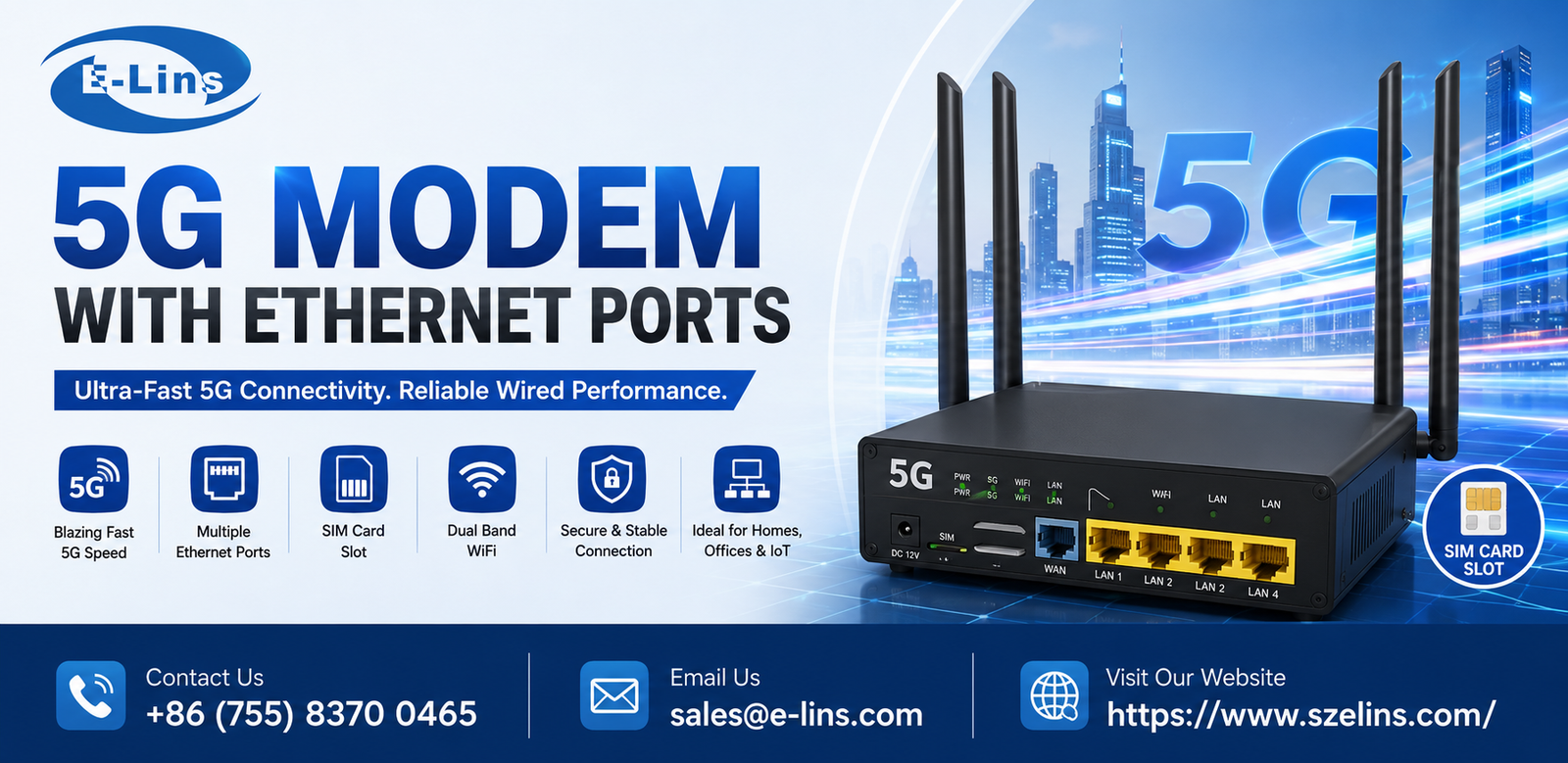
A 5G modem with an Ethernet port is a networking device that connects to a compatible 5G cellular network and provides internet access through a wired Ethernet connection. Depending on the device design, it may also support Wi-Fi, multiple Ethernet ports, external antennas, and advanced network management features.
Unlike a conventional modem that depends on a fixed broadband connection, a 5G modem uses a compatible SIM card and a supported mobile network to establish internet connectivity. The Ethernet interface allows users to connect devices directly, helping create a reliable network for applications that benefit from wired communication.
These devices are suitable for offices, retail locations, warehouses, remote facilities, temporary work sites, and industrial environments where flexible internet access is important.
Key Benefits of Using a 5G Modem with Ethernet Port
1. High-Speed Internet Connectivity
One of the main advantages of a 5G modem is its ability to deliver high-speed internet when supported by local network coverage, spectrum availability, and carrier performance. Businesses can use this connectivity for cloud applications, video conferencing, large file transfers, remote monitoring, and other data-intensive activities.
Actual performance depends on several factors, including signal strength, network congestion, the modem’s technical specifications, and the mobile operator’s service.
2. Stable Wired Network Connections
Ethernet connectivity provides a direct connection between the modem and compatible devices. Compared with Wi-Fi, a wired connection can reduce wireless interference and deliver more consistent performance for stationary equipment.
This is especially valuable for desktop computers, network switches, point-of-sale terminals, IP cameras, and industrial controllers that require dependable communication.
3. Flexible Installation Without Fixed Broadband
Installing traditional broadband may be difficult in rural areas, construction sites, temporary offices, and remote industrial locations. A 5G modem provides an alternative wherever compatible cellular coverage is available.
Users can establish an internet connection without waiting for a fixed-line installation, making this solution suitable for temporary projects, mobile operations, and backup connectivity.
4. Support for Business and Industrial Applications
Modern organizations depend on connected equipment to maintain productivity and monitor operations. A 5G modem with Ethernet can support applications such as machine-to-machine communication, remote equipment management, smart building systems, and industrial automation.
For demanding environments, businesses should consider devices with suitable temperature ratings, secure management features, reliable power options, and appropriate certifications.
5. A Practical Backup Internet Solution
Network interruptions can affect customer service, business communications, and daily operations. A 5G modem can serve as a secondary internet connection when integrated with a suitable router or network failover system.
When the primary broadband connection fails, compatible network equipment can switch traffic to the cellular connection. Automatic failover depends on the configuration and capabilities of the connected networking equipment.
How to Choose the Right 5G Modem
Selecting the right device requires more than comparing advertised speeds. Businesses should evaluate their network requirements, installation environment, and future connectivity needs.
Consider the following factors:
- 5G network compatibility: Confirm support for the frequency bands used by your mobile operator.
- Ethernet speed: Choose a suitable port specification, such as Gigabit Ethernet, based on connected devices and expected throughput.
- SIM card support: Verify SIM compatibility, carrier requirements, and supported network configurations.
- External antenna options: Antenna connectors and compatible antennas may help improve reception in locations with weak cellular signals.
- Security features: Look for firmware updates, access controls, encryption support, and other relevant security capabilities.
- Environmental suitability: Industrial installations may require rugged construction and an extended operating temperature range.
- Network management: Remote administration, monitoring, and diagnostic tools can simplify ongoing maintenance.
- Backup capabilities: Check whether the device supports the failover and recovery functions required by your network.
Carefully evaluating these specifications helps organizations choose a modem that fits their operational needs rather than relying on speed claims alone.
Where Can a 5G Modem with Ethernet Port Be Used?
Offices and Commercial Buildings
Businesses can connect computers, printers, payment terminals, and other network-enabled equipment while using cellular connectivity as a primary or backup internet source.
Industrial Automation
Factories and industrial facilities can use cellular networking to connect compatible controllers, monitoring devices, and remote equipment. For critical industrial applications, network latency, security, environmental ratings, and connection reliability should be evaluated before deployment.
Transportation and Remote Operations
Transport systems, field service teams, and remote monitoring installations can benefit from cellular connectivity where fixed broadband is unavailable or impractical. The suitability of a particular modem depends on power availability, signal coverage, and environmental conditions.
Retail and Smart Security
Retail stores can use wired connectivity for payment systems, inventory equipment, and compatible security devices. A cellular connection may also help maintain operations at temporary outlets or locations undergoing network upgrades.
Why Choosing the Right Manufacturer Matters
The quality of a networking device can influence its performance, compatibility, and long-term maintenance requirements. When evaluating suppliers, businesses should review product specifications, network band support, hardware reliability, firmware management, technical documentation, and after-sales assistance.
SzeLins provides networking solutions for businesses and connectivity applications that require flexible cellular communication. When comparing available devices, buyers should confirm that the selected model meets their specific requirements for 5G compatibility, Ethernet connectivity, installation conditions, and network management.
A well-matched device can help organizations build a connectivity solution that supports current operations while allowing room for future expansion.
