
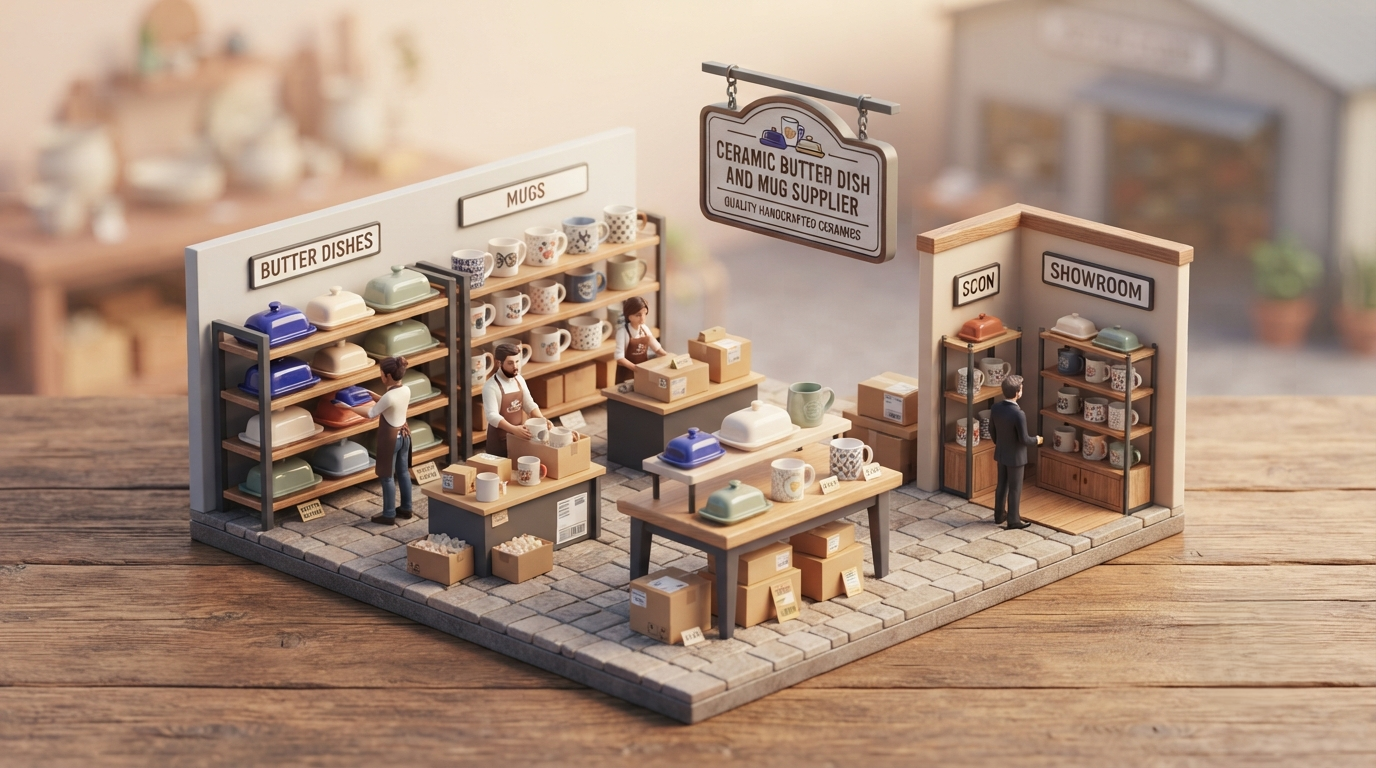
Today, consumers, restaurants, cafés, hotels, gift companies, and home décor retailers look for products that combine durability, attractive design, hygiene, and everyday convenience. Two products receiving consistent attention are the Ceramic Butter Dish and professionally manufactured ceramic mugs.
A well-designed Ceramic Butter Dish keeps butter protected while adding elegance to breakfast tables and kitchen counters. Similarly, choosing an experienced Ceramic Mug Supplier helps businesses obtain dependable drinkware in suitable shapes, capacities, finishes, and customized designs.
Understanding materials, manufacturing quality, glazing, usability, and supplier capabilities can help buyers make smarter purchasing decisions.
Why Ceramic Tableware Remains Popular
Ceramic products continue to be preferred because they provide an excellent balance between visual appeal and practical performance. Properly fired ceramic creates a strong surface suitable for regular household and commercial use.
Modern ceramic tableware is available in minimalist, traditional, handcrafted, contemporary, luxury, and customized styles.
Important advantages include:
- Smooth and attractive glazed surfaces
- Excellent heat resistance
- Easy cleaning and maintenance
- Good durability for everyday use
- Wide variety of shapes and finishes
- Suitable for homes and hospitality businesses
- Excellent customization opportunities
- Premium presentation for gifting
Ceramic also creates a warm, sophisticated appearance that plastic and lightweight alternatives often cannot provide.
What Makes a Ceramic Butter Dish Useful?
A Ceramic Butter Dish is designed to store and serve butter conveniently while protecting it from dust, odors, and unnecessary exposure.
Most designs include a ceramic base with a matching lid. The covered structure creates a neat presentation while keeping butter conveniently accessible during meals.
Important Design Features
A quality butter dish should provide enough internal space for commonly available butter blocks. Its lid should fit comfortably without touching or damaging the butter.
Look for features such as:
- Strong ceramic construction
- Smooth glazed interior
- Comfortable lid handle
- Stable base
- Raised edges
- Easy-to-clean surface
- Food-contact-safe finishing
A thoughtfully designed Ceramic Butter Dish can therefore become both a storage accessory and a decorative tableware piece.
Decorative Value
Ceramic butter dishes can feature solid colors, floral patterns, embossed surfaces, printed designs, hand-painted details, or elegant matte finishes. This allows retailers and hospitality brands to select products matching different interior themes.
Why Businesses Need a Reliable Ceramic Mug Supplier
Mugs are among the most frequently used ceramic products worldwide. They are used for coffee, tea, hot chocolate, office beverages, promotional merchandise, hospitality service, and gifting.
Working with a professional Ceramic Mug Supplier can help businesses maintain consistent quality across larger orders.
A capable supplier should understand:
- Clay and ceramic composition
- Firing temperature requirements
- Glazing techniques
- Printing and decoration
- Packaging standards
- Quality inspection
- Bulk production requirements
Reliable manufacturing becomes particularly important when companies require hundreds or thousands of visually consistent pieces.
Important Qualities of Ceramic Mugs
Consumers usually judge mugs by appearance first, but technical construction is equally important.
A high-quality ceramic mug should feel balanced when held and provide adequate handle space. The drinking rim should be smooth, comfortable, and properly glazed.
Buyers should examine:
- Wall thickness
- Handle attachment
- Base stability
- Glaze consistency
- Surface smoothness
- Print quality
- Capacity accuracy
- Resistance to normal heat exposure
An experienced Ceramic Mug Supplier normally performs inspections before products are packed for shipment.
Ceramic Butter Dish vs Ceramic Mug
| Feature | Ceramic Butter Dish | Ceramic Mug |
| Primary Purpose | Butter storage and serving | Beverage serving |
| Typical Structure | Base and protective lid | Cup with handle |
| Common Use | Dining and kitchen | Home, café and office |
| Customization | Colors, patterns, embossing | Logos, prints and colors |
| Gift Potential | High | Very high |
| Commercial Demand | Homeware and hospitality | Retail, corporate and hospitality |
Both categories offer excellent opportunities for tableware retailers and private-label brands.
Customization Opportunities for Ceramic Products
Customization can transform ordinary tableware into distinctive branded products.
A manufacturer may provide options such as:
- Logo printing
- Custom colors
- Decal decoration
- Personalized artwork
- Embossed branding
- Special packaging
- Custom capacities
- Unique shapes
For corporate merchandise, customized mugs remain especially popular because branding remains visible during repeated daily use.
Similarly, customized butter dishes can become attractive products for kitchenware brands, wedding gifts, festive collections, and premium home décor ranges.
How to Select the Right Ceramic Supplier
Choosing a supplier should involve more than comparing prices.
Check Product Quality
Request samples before placing significant bulk orders. Examine glaze finish, dimensions, color accuracy, weight, and overall construction.
Review Manufacturing Capability
A dependable Ceramic Mug Supplier should clearly explain available production capacity, customization possibilities, minimum order quantities, and expected manufacturing processes.
Examine Packaging
Ceramic products require protective packaging because careless transportation can cause chips or breakage.
Ask About Quality Control
Professional manufacturers usually check products for visible defects, uneven glazing, cracks, unstable bases, incorrect dimensions, and printing problems.
Consistent inspection reduces rejection rates when products reach distributors or retailers.
Care and Maintenance Tips
Proper maintenance can extend the appearance and usability of ceramic products.
Wash tableware using mild dishwashing detergent and a soft sponge. Avoid aggressive abrasive cleaners that may gradually damage decorative surfaces.
For a Ceramic Butter Dish, remove leftover butter before thorough washing and dry the dish completely before reuse.
Ceramic mugs should also be cleaned regularly to prevent beverage staining, particularly after coffee or strong tea.
Always follow manufacturer instructions regarding dishwasher and microwave suitability because decorative techniques and ceramic compositions can differ.
Frequently Asked Questions
1. What is a Ceramic Butter Dish?
A Ceramic Butter Dish is a covered tableware container designed for storing, protecting, and conveniently serving butter.
2. Why choose ceramic instead of plastic?
Ceramic offers a premium appearance, solid construction, smooth surfaces, and excellent table presentation.
3. Are ceramic butter dishes easy to clean?
Yes. Glazed ceramic surfaces are generally easy to clean using warm water and mild detergent.
4. What should I check before buying ceramic mugs?
Check glaze quality, handle strength, rim smoothness, capacity, printing quality, and overall balance.
5. Can ceramic mugs carry company logos?
Yes. A professional Ceramic Mug Supplier may offer logo printing, decals, customized colors, and other branding options.
6. Are ceramic mugs suitable for corporate gifting?
Yes. Their practical daily use and customization possibilities make ceramic mugs popular corporate gifts.
7. Can butter dishes be customized?
Yes. Manufacturers may provide customized colors, patterns, artwork, embossing, and packaging depending on order quantity.
8. What sizes are ceramic mugs available in?
Sizes vary widely, from smaller espresso-style mugs to larger coffee and beverage mugs.
9. Why are samples important before bulk ordering?
Samples allow buyers to evaluate dimensions, color, glazing, printing, weight, and manufacturing quality before approving production.
10. How should ceramic products be packaged?
They should use protective separators, cushioning materials, suitable cartons, and secure outer packaging to minimize transportation damage.