The biotechnology industry is witnessing rapid advancements as researchers, pharmaceutical companies, and academic institutions increasingly rely on DNA oligo synthesis and plasmid synthesis for cutting-edge scientific applications. From gene editing and molecular diagnostics to vaccine development and synthetic biology, these technologies have become essential tools in modern research and healthcare.
The growing need for precision medicine, personalized therapeutics, and advanced genetic engineering has accelerated investments in high-quality synthesis services. As laboratories strive for greater accuracy and faster turnaround times, both DNA oligo synthesis and plasmid synthesis continue to play a central role in supporting innovation across the global life sciences sector.
Understanding DNA Oligo Synthesis
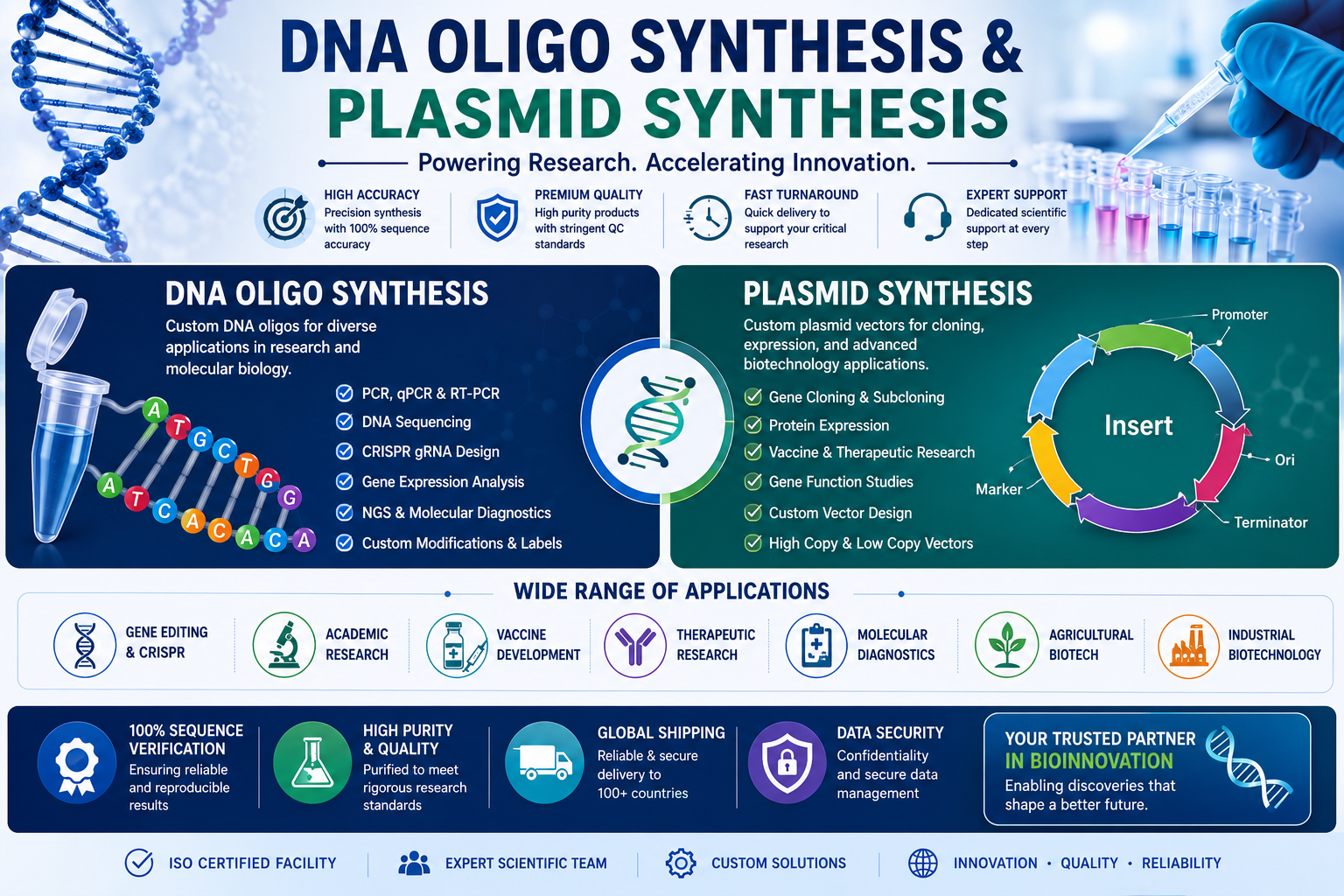
DNA oligo synthesis is the laboratory process of chemically producing short DNA sequences known as oligonucleotides. These synthetic DNA fragments are designed to meet specific research requirements and are widely used in molecular biology, genomics, diagnostics, and pharmaceutical development.
Scientists can customize oligonucleotides based on sequence length, purity level, and chemical modifications, making them valuable tools for a broad range of laboratory applications.
Common Applications
- Polymerase Chain Reaction (PCR)
- DNA sequencing
- Gene editing research
- CRISPR experiments
- Molecular diagnostics
- Synthetic biology
- Academic research
- Drug discovery
What Is Plasmid Synthesis?
Plasmid synthesis involves designing and constructing circular DNA molecules that can carry specific genetic information into cells. These plasmids serve as vectors for gene expression, cloning, protein production, and therapeutic research.
Modern plasmid synthesis technologies enable researchers to create customized genetic constructs with greater speed, accuracy, and flexibility than traditional cloning methods.
Major Uses
- Gene cloning
- Recombinant protein production
- Vaccine research
- Cell and gene therapy
- Functional genomics
- Synthetic biology
- Biomedical research
Why These Technologies Are Gaining Global Attention
Recent advances in biotechnology have significantly increased the demand for both DNA oligo synthesis and plasmid synthesis services.
Key Growth Factors
- Expansion of genomic research
- Rising investment in biotechnology
- Growing adoption of gene editing technologies
- Increased vaccine and therapeutic development
- Demand for personalized medicine
- Faster laboratory workflows
- Improved automation in DNA manufacturing
Advantages of DNA Oligo Synthesis
Researchers choose DNA oligo synthesis because it provides reliable and highly customizable DNA sequences for numerous scientific applications.
Major Benefits
- High sequence accuracy
- Rapid production timelines
- Custom sequence design
- Multiple purification options
- Support for advanced molecular techniques
- Excellent reproducibility
- Cost-effective for research laboratories
Benefits of Plasmid Synthesis
Customized plasmid synthesis has become an indispensable service for biotechnology organizations seeking efficient gene delivery systems.
Key Advantages
- Ready-to-use genetic constructs
- Reduced laboratory cloning time
- High-quality vector preparation
- Flexible gene insertion options
- Supports complex genetic engineering projects
- Suitable for research and clinical development
DNA Oligo Synthesis vs Plasmid Synthesis
| Feature | DNA Oligo Synthesis | Plasmid Synthesis |
| Product | Short DNA fragments | Circular DNA vectors |
| Typical Length | Short sequences | Larger DNA constructs |
| Primary Use | PCR, sequencing, diagnostics | Gene cloning and expression |
| Customization | High | Very High |
| Research Applications | Molecular biology | Biotechnology and therapeutics |
| Complexity | Moderate | Advanced |
Industries Benefiting from These Technologies
The adoption of DNA oligo synthesis and plasmid synthesis extends across multiple sectors.
Major Industries
- Biotechnology
- Pharmaceutical manufacturing
- Academic research
- Clinical diagnostics
- Agricultural biotechnology
- Veterinary medicine
- Environmental genomics
- Synthetic biology companies
Latest Innovations in DNA and Plasmid Development
Technological advancements continue improving the efficiency and reliability of synthesis services.
Emerging Trends
- Automated DNA synthesis platforms
- AI-assisted genetic design
- High-throughput oligonucleotide production
- Error-reduction technologies
- Next-generation plasmid engineering
- Faster sequence verification methods
- Sustainable laboratory manufacturing practices
Factors to Consider When Selecting a Synthesis Provider
Choosing the right laboratory partner is essential for successful research outcomes.
Important Selection Criteria
- Sequence accuracy
- Quality control procedures
- Custom modification capabilities
- Turnaround time
- Scientific support
- Manufacturing capacity
- Regulatory compliance
- Competitive pricing
Future Outlook for DNA Oligo Synthesis and Plasmid Synthesis
As biotechnology continues to evolve, demand for high-quality synthetic DNA products is expected to grow rapidly. Researchers are increasingly focusing on personalized medicine, advanced diagnostics, gene therapy, and synthetic biology, all of which depend on reliable DNA oligo synthesis and plasmid synthesis technologies.
Continuous improvements in automation, artificial intelligence, and precision manufacturing are expected to further enhance production speed while reducing costs and improving overall research efficiency.
Frequently Asked Questions (FAQs)
1. What is DNA oligo synthesis?
It is the chemical production of short, customized DNA sequences used in molecular biology and genetic research.
2. What is plasmid synthesis?
Plasmid synthesis is the process of creating customized circular DNA molecules used for gene cloning, expression, and therapeutic research.
3. Why is DNA oligo synthesis important?
It supports PCR, sequencing, diagnostics, CRISPR research, and many other molecular biology applications.
4. Where is plasmid synthesis commonly used?
It is widely used in biotechnology, pharmaceutical research, vaccine development, and gene therapy.
5. Can customized DNA sequences be ordered?
Yes. Researchers can request specific DNA sequences, modifications, and purification levels.
6. What industries use these services?
Biotechnology, pharmaceuticals, universities, hospitals, agricultural research, and diagnostic laboratories.
7. Are synthetic plasmids suitable for gene editing research?
Yes. They are commonly used as vectors in gene editing and molecular biology experiments.
8. How long does synthesis usually take?
Production time varies depending on sequence complexity and project specifications.
9. What quality checks are performed?
Most providers perform sequence verification, purity analysis, and quality control testing before delivery.
10. Why are DNA oligo synthesis and plasmid synthesis becoming more popular?
Growing demand for precision medicine, genomic research, biotechnology innovation, and advanced therapeutic development continues to drive their adoption worldwide.