
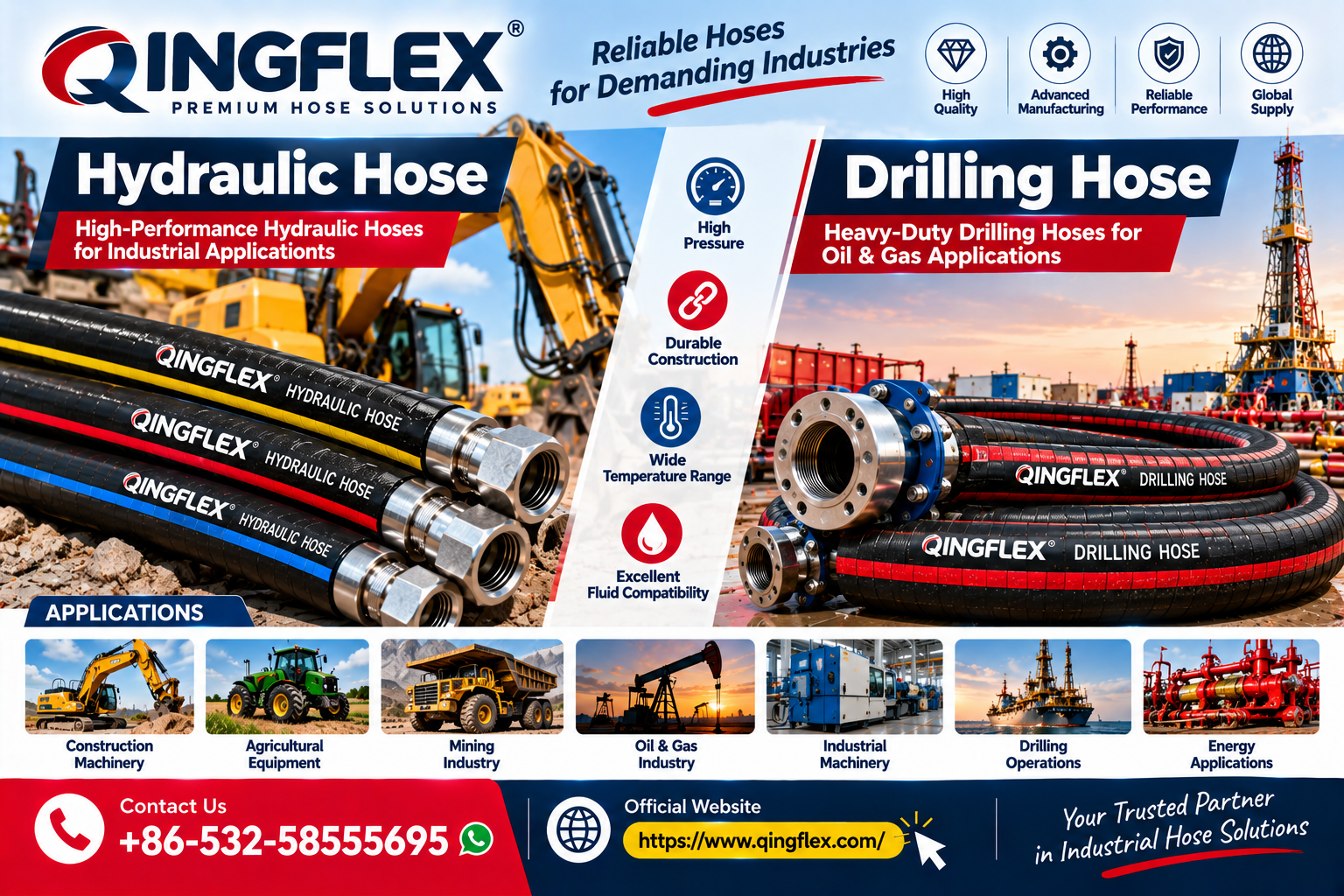
Industrial equipment used in construction, mining, agriculture, manufacturing, oilfield, and drilling operations depends heavily on flexible hose systems that can perform under pressure, movement, heat, abrasion, and demanding working conditions. Among the most important products in these environments are the Hydraulic Hose and drilling hose, each designed for different applications but sharing the same need for strength, consistency, and correct specification.
A hydraulic hose is typically used to carry pressurised hydraulic fluid between pumps, valves, cylinders, motors, and other components. A drilling hose, by contrast, is designed for specialized oilfield and drilling-related fluid-transfer applications. Selecting the correct hose can support safer operations, better equipment performance, and reduced downtime.
What Is a Hydraulic Hose?
A Hydraulic Hose is a flexible reinforced hose used in hydraulic systems to transfer fluid under pressure.
It is widely used in:
- Excavators
- Loaders
- Tractors
- Mining equipment
- Factory machinery
- Material-handling systems
- Hydraulic tools
- Mobile equipment
Hydraulic systems rely on fluid pressure to transmit power, so the hose becomes a critical connection between moving or fixed components.
How Hydraulic Hose Is Constructed
A typical Hydraulic Hose includes three main layers.
Inner Tube
The inner tube carries the hydraulic fluid and should be compatible with the media used in the system.
Reinforcement
Reinforcement gives the hose pressure strength. Depending on the design, this may include textile reinforcement, steel-wire braid, or spiral steel wire.
Outer Cover
The outer cover protects the hose from abrasion, weather, oils, dirt, and external damage.
The combination of these layers determines how suitable the hose is for a specific application.
Why Working Pressure Matters
Working pressure is one of the most important factors when selecting a Hydraulic Hose.
Buyers should distinguish between:
- Working pressure
- Test pressure
- Burst pressure
- Pressure spikes
- Impulse conditions
Burst pressure should not be treated as the normal operating pressure.
The hose should always be rated appropriately for the intended system.
Importance of Flexibility and Bend Radius
Hydraulic hoses often need to move as machinery operates.
If a hose is routed too tightly or twisted during installation, internal stress can increase.
Important installation factors include:
- Minimum bend radius
- Hose length
- Routing
- Clamp position
- Movement
- Twisting
Correct installation can help extend service life and reduce premature wear.
What Is a Drilling Hose?
A drilling hose is a heavy-duty flexible hose designed for specific drilling and oilfield applications.
Depending on its design and intended service, it may be used for transferring drilling fluids or providing flexible connections around drilling equipment.
Common environments include:
- Drilling rigs
- Mud circulation systems
- Oilfield equipment
- Flexible high-pressure connections
- Drilling service operations
Because drilling environments can be demanding, hose selection should be based on detailed technical requirements.
Why Drilling Hose Design Is Important
A drilling hose may be exposed to:
- High pressure
- Repeated movement
- Vibration
- Abrasion
- Weather exposure
- Demanding media
- Heavy field use
For this reason, suitable hose design may include strong reinforcement, abrasion-resistant covers, secure end fittings, flexible construction, and appropriate temperature capability.
“In drilling operations, flexibility and strength must work together because the hose may need to absorb movement while continuing to contain pressurised fluid.”
Hydraulic Hose vs Drilling Hose
Although both products are reinforced flexible hoses, they generally serve different systems.
| Feature | Hydraulic Hose | Drilling Hose |
| Main use | Hydraulic equipment | Drilling and oilfield systems |
| Typical media | Hydraulic fluids | Application-specific drilling fluids |
| Key priority | Pressure and flexible routing | Pressure, movement, field durability |
| Typical environment | Machinery and mobile equipment | Rigs and oilfield sites |
| Important factors | Bend radius, fittings, fluid compatibility | Pressure, vibration, media, end connections |
Users should never assume that one hose can replace the other without technical verification.
Fluid Compatibility Is Essential
The inner tube material must be compatible with the fluid being transferred.
Poor compatibility can cause:
- Swelling
- Softening
- Hardening
- Cracking
- Internal deterioration
- Reduced service life
This principle applies to both Hydraulic Hose and drilling hose selection.
Accurate information about the media should always be provided to the supplier.
Temperature Can Affect Performance
Temperature is another critical factor.
Hoses may be exposed to:
- Hot hydraulic fluid
- Engine heat
- Cold environments
- High ambient temperatures
- Outdoor weather conditions
Operating outside the recommended range can affect hose flexibility and material performance.
Temperature should therefore be considered during product selection.
Why Fittings Matter
A hose is only one part of the assembly.
Fittings, couplings, and end connections must also be compatible.
Important considerations include:
- Thread type
- Crimp dimensions
- Connection style
- Sealing method
- Assembly length
- Fitting material
For a drilling hose, secure end connections are especially important because the hose may be part of a demanding oilfield fluid-transfer system.
Abrasion Resistance and External Protection
Industrial hoses are frequently exposed to rough surfaces.
They may rub against:
- Machinery
- Steel structures
- Concrete
- Ground surfaces
- Other equipment
A durable outer cover can help protect internal reinforcement.
Additional sleeves or routing protection may also be useful in high-contact areas.
Quality Control in Hose Production
Consistent production is important for industrial reliability.
Quality checks may include:
- Raw-material inspection
- Tube dimensions
- Reinforcement placement
- Cover quality
- Pressure testing
- Fitting inspection
- Assembly consistency
Buyers should review available technical specifications before placing large orders.
Inspection and Preventive Maintenance
Regular inspection can help identify hose damage before failure occurs.
Warning signs may include:
- Cracks
- Cuts
- Bulges
- Abrasion
- Exposed reinforcement
- Leaking fittings
- Damaged couplings
- Permanent kinks
A damaged Hydraulic Hose or drilling hose should be evaluated before continued use.
Preventive replacement can often reduce unexpected downtime.
Choosing the Right Hose Supplier
A capable supplier should ask detailed questions about the application.
Buyers should be prepared to provide:
- Working pressure
- Hose diameter
- Fluid type
- Temperature
- Length
- Fittings
- Movement requirements
- Operating environment
For drilling applications, connection type and field conditions may require even more detailed discussion.
Frequently Asked Questions
What is a Hydraulic Hose?
A Hydraulic Hose is a reinforced flexible hose designed to transfer hydraulic fluid under pressure in machinery and equipment.
What is a drilling hose?
A drilling hose is a heavy-duty flexible hose used in specified drilling and oilfield fluid-transfer applications.
Where are hydraulic hoses used?
They are commonly used in construction machinery, agricultural equipment, mining systems, industrial machines, and hydraulic tools.
Where are drilling hoses used?
They may be used around drilling rigs, mud systems, oilfield equipment, and flexible high-pressure connections.
Are hydraulic hoses and drilling hoses the same?
No. They are designed for different applications and can have different pressure, media, reinforcement, and connection requirements.
Why is reinforcement important?
Reinforcement provides the strength needed to contain pressurised media.
Why is bend radius important?
Excessive bending can damage the hose and reduce its service life.
How important is temperature rating?
Very important. Temperature can affect the inner tube, reinforcement, cover, and overall hose performance.
How often should hoses be inspected?
Inspection frequency depends on operating conditions, but routine checks should be part of preventive maintenance.
What information should buyers provide when ordering?
Pressure, media, temperature, size, length, fittings, movement, and operating environment should all be specified.
Media Contact
Sales & Media Enquiries
Contact: +86-532-58555695
Official Website: https://www.qingflex.com/