
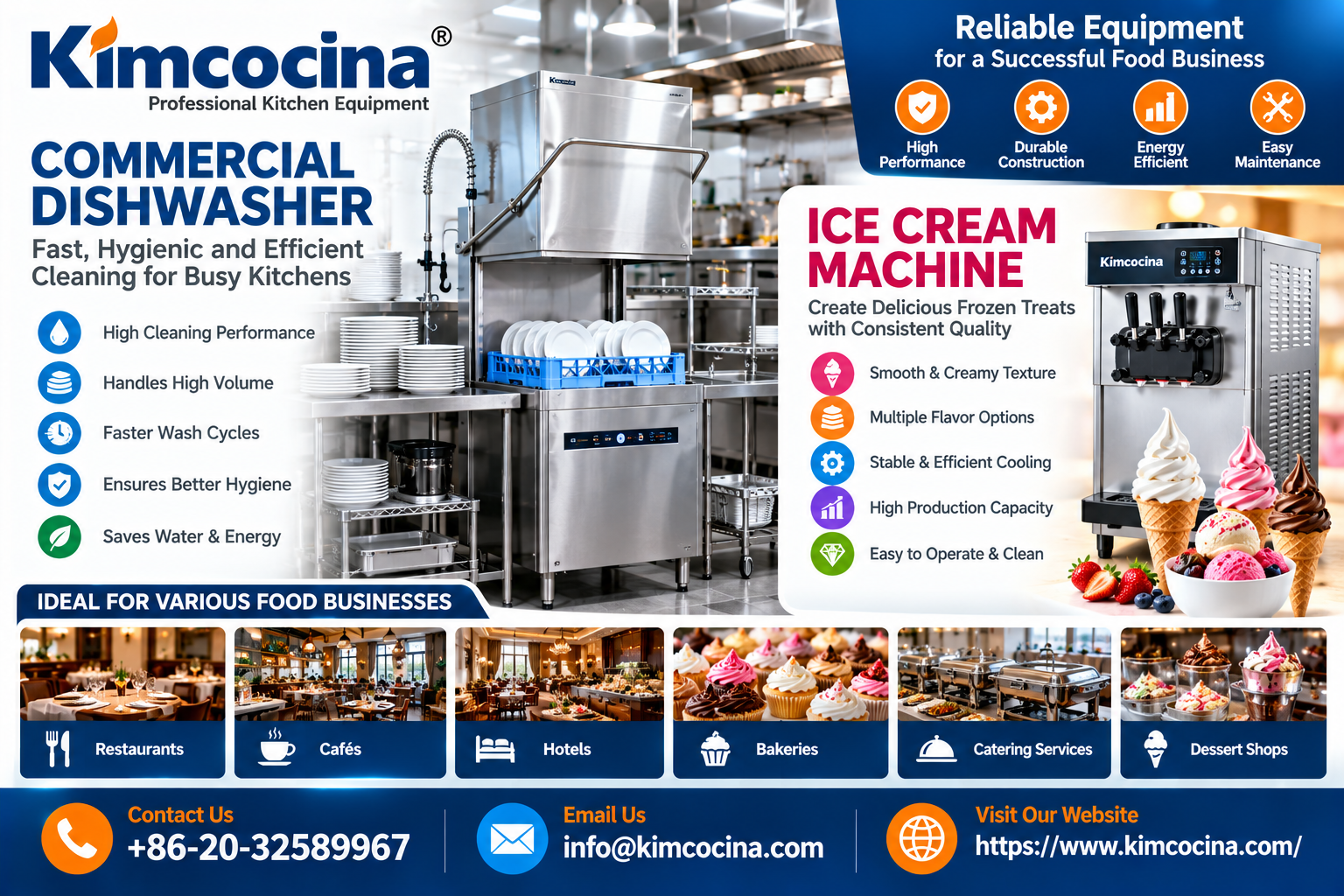
As restaurants, hotels, cafés, dessert parlors, bakeries, and catering businesses expand their menus, attention is shifting toward an often-overlooked question: can back-of-house operations keep pace with new product demand?
A growing dessert menu can increase customer choice, but it can also introduce additional utensils, preparation containers, serving items, and cleaning tasks. This is why equipment such as a Commercial Dishwasher and an ice cream machine should be considered within the same operational strategy. One supports efficient warewashing, while the other can open opportunities for dedicated frozen-dessert production.
For foodservice operators, the emerging priority is not simply buying more equipment. It is creating a balanced system where production, hygiene, staffing, cleaning, and customer service grow together.
Dessert Menus Are Becoming More Strategic
Dessert is no longer treated purely as an optional final course.
Many businesses now use desserts to create additional customer occasions, from afternoon treats and family dining to takeaway orders and dedicated dessert promotions.
An ice cream machine can become part of this strategy by providing a specialized production point for suitable frozen desserts.
Before introducing such equipment, however, operators should define the role dessert will play within the business.
Will frozen desserts complement an existing restaurant menu? Will they become a dedicated takeaway category? Will they be offered seasonally, or throughout the year?
Answers to these questions can influence equipment capacity, workstation size, staffing, storage, and cleaning requirements.
Commercial Dishwasher Helps Keep the Operational Cycle Moving
Every additional menu category creates work behind the scenes.
Preparation utensils, serving dishes, containers, trays, and other washable items eventually reach the cleaning area. During busy periods, the speed at which clean items return to circulation can affect the wider kitchen.
A Commercial Dishwasher can therefore be viewed as part of the production cycle rather than simply a utility positioned at the back of the kitchen.
Operators should examine the volume and type of items that need washing during peak periods.
If the cleaning station cannot keep pace, employees may run short of necessary items even when cooking and dessert-production equipment still has available capacity.
Ice Cream Machine Planning Begins With the Workstation
Adding an ice cream machine without designing the surrounding workstation can create unnecessary movement.
Employees may need ingredients, serving containers, toppings, utensils, storage, cleaning materials, and access to order information.
These resources should be positioned logically where appropriate.
The objective is to create a smooth sequence from product preparation to serving rather than requiring employees to repeatedly cross the kitchen.
For customer-facing dessert counters, visual presentation can also matter. The workstation should appear organized while still giving employees practical access to everything required for daily operation.
Warewashing Should Be Separated From Food Production
Good kitchen design creates logical routes for both clean and used items.
Used dishes and utensils should move toward the Commercial Dishwasher without unnecessarily crossing food-preparation areas. Once cleaned, items should have an organized route toward appropriate storage or reuse.
This separation becomes increasingly valuable as the menu grows.
A dessert station and main kitchen may generate different types of washable items, but both ultimately depend on an efficient cleaning workflow.
Peak Demand Can Expose Hidden Capacity Problems
Average sales figures can be misleading when choosing equipment.
A restaurant may serve a moderate number of customers throughout the day but experience intense demand for two hours during dinner. A dessert business may see most frozen-dessert orders during evenings or weekends.
An ice cream machine should therefore be evaluated against realistic peak demand rather than average daily orders alone.
The same applies to a Commercial Dishwasher.
Operators can estimate how many washable items accumulate during the busiest service period and determine whether the cleaning workflow can process them at an appropriate rate.
Planning around peak demand helps identify potential bottlenecks before they become everyday operational problems.
Cleaning Procedures Need to Be Built Into the Schedule
Cleaning should not depend on employees finding spare time.
Businesses using an ice cream machine should establish procedures based on the manufacturer’s instructions and applicable food-handling requirements. Relevant product-contact components require appropriate attention as part of normal operations.
A Commercial Dishwasher also needs routine care even though its purpose is cleaning.
Depending on the equipment design, applicable filters, wash areas, surfaces, and other components may require regular attention.
Businesses can assign responsibilities by shift so employees know what must be completed during opening, operation, and closing.
Utility Planning Can Prevent Installation Delays
Commercial equipment may have specific electrical, water, drainage, ventilation, space, or other installation requirements depending on the individual model.
These requirements should be checked before purchasing.
For a Commercial Dishwasher, water supply and drainage can be particularly important considerations alongside electrical requirements and equipment dimensions.
An ice cream machine will have its own operating and installation specifications.
Reviewing technical documentation before finalizing the kitchen layout can reduce the need for unexpected modifications later.
Staff Training Connects Hygiene With Productivity
Employees should understand more than the basic controls of commercial equipment.
Training can include correct operation, startup and shutdown routines, cleaning, routine inspection, and what to do when equipment does not operate as expected.
For an ice cream machine, consistent procedures can help the dessert team follow an established production and cleaning routine.
Employees working around the Commercial Dishwasher should understand the correct loading workflow, handling of clean and used items, and routine care specified for the equipment.
Cross-training may also help managers respond more effectively to staffing changes.
Preventive Maintenance Protects Menu Availability
Equipment downtime can have consequences beyond the machine itself.
If dessert-production equipment becomes unavailable, a business may temporarily lose a profitable menu category. If warewashing equipment stops operating during peak service, multiple areas of the kitchen can be affected.
Preventive maintenance can help operators take a planned approach to equipment reliability.
Following manufacturer-recommended servicing, documenting recurring issues, and responding promptly to unusual performance can reduce the risk of preventable interruptions.
Frequently Asked Questions
What is a Commercial Dishwasher?
A Commercial Dishwasher is professional warewashing equipment designed to clean suitable dishes, utensils, and foodservice items in commercial hospitality environments.
What is an ice cream machine?
An ice cream machine is equipment designed to produce or dispense frozen dessert products, depending on the particular machine configuration.
Which businesses may need commercial dishwashing equipment?
Restaurants, hotels, cafés, bakeries, catering operations, canteens, and other businesses handling significant quantities of washable foodservice items may use it.
Where can commercial ice cream equipment be used?
It may be suitable for dessert shops, restaurants, cafés, hotels, entertainment venues, takeaway concepts, and other appropriate foodservice businesses.
How should dishwasher capacity be chosen?
Consider peak-period washing volume, item types, available space, utilities, staffing, and the overall cleaning workflow.
Why is workstation planning important for an ice cream machine?
Good workstation planning can improve access to ingredients, serving materials, utensils, storage, and cleaning resources.
Should commercial equipment be cleaned every day?
Cleaning frequency depends on the equipment and application. Operators should follow manufacturer instructions and applicable hygiene procedures.
Why should peak demand influence equipment selection?
Peak periods represent the highest operational workload and can expose capacity limitations that daily averages may hide.
Does a Commercial Dishwasher need maintenance?
Yes. Routine inspection, cleaning, and servicing according to manufacturer guidance can support dependable operation.
What should buyers check before ordering new kitchen equipment?
They should review capacity, dimensions, utilities, installation requirements, intended use, cleaning procedures, maintenance, workflow, staffing needs, and available technical support.
Media Contact
Commercial Foodservice Equipment Enquiries
Phone: +86-20-32589967
Email: info@kimcocina.com
Official Website: kimcocina.com
