
Quality assurance is becoming a bigger priority in sheet-metal manufacturing as customers demand components that fit correctly, assemble efficiently, and remain consistent across repeat orders. Fabricators are therefore paying closer attention to what happens between receiving a drawing and approving a finished component.
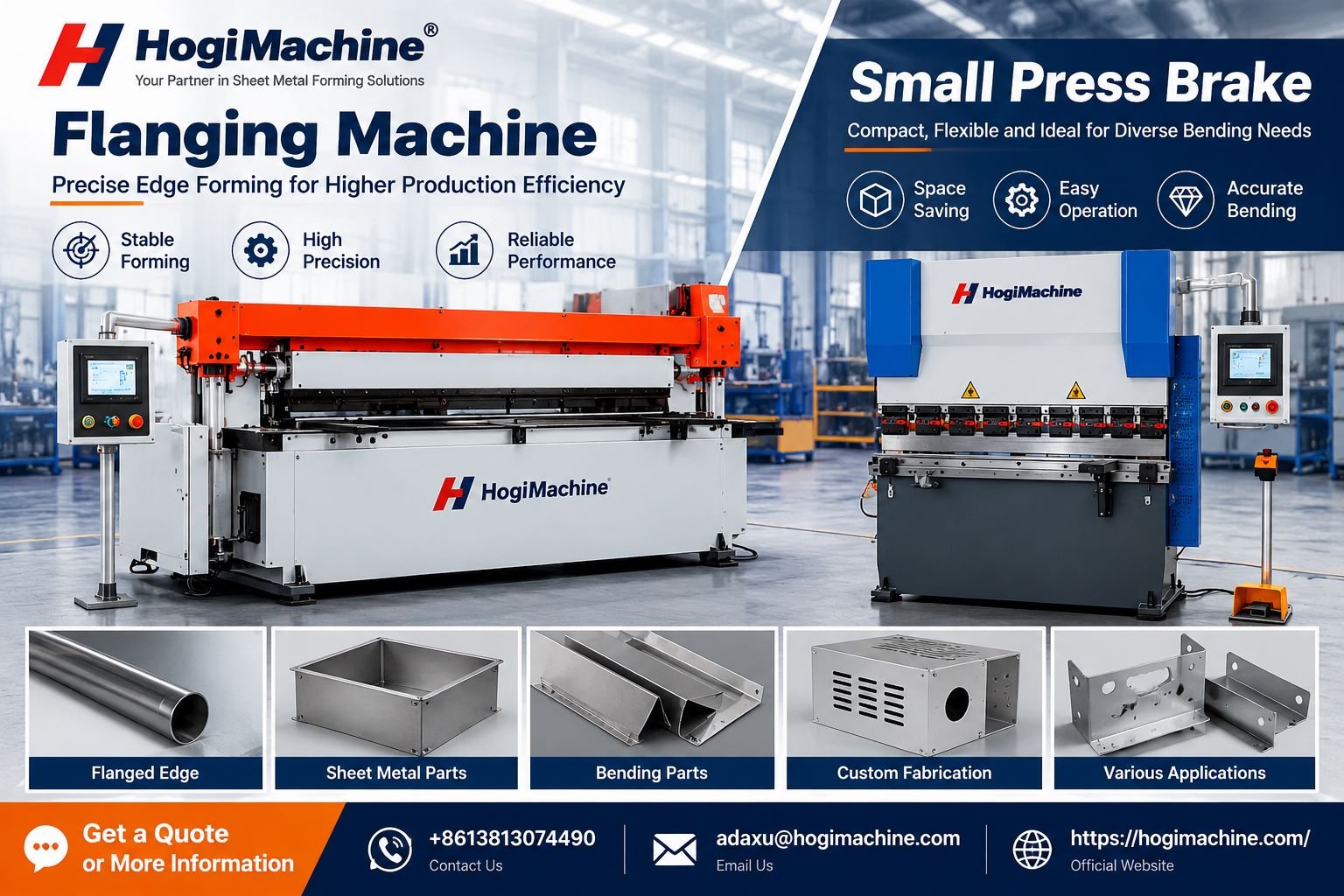
This shift is creating a stronger role for the Flanging machine in controlled edge-forming applications and the small press brake in flexible bending operations. The focus is moving beyond basic machine output toward process control, inspection planning, traceability, tooling condition, and repeatable manufacturing.
Quality Control Begins With the Drawing
Before metal reaches a forming machine, production teams need to understand exactly what the component requires.
Drawing revision, material specification, thickness, dimensions, flange geometry, bend positions, and functional requirements should all be confirmed before manufacturing begins.
This preparation is especially important when a Flanging machine is used to create an edge that will later interact with another component.
An incorrectly interpreted flange may still look acceptable by itself but cause problems during welding, fastening, fitting, or final assembly.
Clear production information helps prevent such issues from moving downstream.
Material Identification Can Prevent Costly Mistakes
Different materials can behave differently during forming.
Even when two sheets have similar dimensions, variations in material properties can influence bending and flanging results.
Manufacturers therefore benefit from maintaining reliable material identification from storage through production.
For custom jobs, this can include linking material information with the relevant work order or production batch.
Good traceability helps operators confirm that the intended material is being processed and can also simplify investigation if a quality issue is discovered later.
Flanging Machine Setup Influences Repeatability
Repeatable components depend on repeatable preparation.
When a Flanging machine is configured for a recurring part, manufacturers can document relevant setup information rather than relying exclusively on operator experience.
The exact information retained will depend on the equipment and production process, but the objective remains the same: create a reliable reference for future orders.
This becomes particularly valuable when several operators use the same equipment or when an order returns months after the previous production run.
Small Press Brake Supports Controlled Low-Volume Bending
Low-volume manufacturing presents a unique quality challenge.
With a large batch, manufacturers may have more opportunity to stabilize a process over many components. In a small batch, an error on only a few parts can represent a significant percentage of the order.
A small press brake can provide a dedicated bending route for suitable low-volume components.
Before continuing with the complete order, the first produced component can be inspected against defined requirements.
If adjustments are necessary, they can be made before additional material is processed.
Measurement Should Match the Component Function
Inspection does not necessarily mean measuring every feature in the same way.
Manufacturers should identify which dimensions have the greatest influence on fit, assembly, or performance.
A flange that locates another component may require particular attention to its final position or geometry.
Similarly, a bent bracket may have dimensions that directly determine whether it aligns with mounting points.
Inspection planning around functional requirements helps manufacturers concentrate quality-control effort where it matters most.
Nonconforming Parts Should Provide Useful Information
Quality problems are undesirable, but they can also reveal weaknesses in a manufacturing process.
If a component fails inspection, simply correcting that individual part may not address the underlying reason.
Manufacturers can investigate whether the problem originated from material, tooling, setup, drawing interpretation, process sequence, handling, or another factor.
When recurring Flanging machine work is documented, historical records can make these investigations easier.
Corrective actions can then be incorporated into future production instructions where appropriate.
Small Press Brake Jobs Benefit From Revision Control
Engineering changes are common in custom manufacturing.
A customer may change a hole location, overall dimension, bend angle, or other component feature.
If an outdated drawing remains in production, the workshop may manufacture parts that no longer meet the customer’s current requirements.
This is why revision control is important.
Before a small press brake job is started, operators should have access to the approved production information for that order.
Removing obsolete instructions from active production areas can also reduce confusion.
Tooling Condition Is Part of Quality Assurance
A correct setup can still produce undesirable results if tooling is in poor condition.
Tooling should therefore be included in routine production checks.
Damage, wear, contamination, or improper storage can influence forming quality depending on the operation.
Manufacturers can establish suitable inspection and maintenance practices based on tooling type, workload, and equipment guidance.
This applies to both flanging and press brake operations.
Traceability Adds Value to Repeat Manufacturing
Repeat orders are commercially important for many fabrication businesses.
A customer returning for another batch generally expects the new components to correspond with previously accepted production.
Traceability can support that expectation.
Work orders can connect production information with material, drawing revision, inspection status, and other relevant records.
If a customer later asks about a specific batch, organized documentation provides a clearer manufacturing history.
For factories serving multiple customers and product variations, this becomes increasingly valuable.
Final Inspection Should Confirm Production Readiness
Inspection throughout manufacturing helps identify issues early, but final verification still has an important role.
Before components move to packaging, assembly, or another downstream operation, manufacturers can confirm that defined requirements have been completed.
The level of inspection should be appropriate for the component and application.
A structured release process helps prevent incomplete or nonconforming work from progressing unintentionally.
Frequently Asked Questions
What does a Flanging machine do?
A Flanging machine forms a flange, lip, or edge on a metal component according to its design and manufacturing requirements.
Where are flanged components commonly used?
Flanged features can be found in panels, fabricated assemblies, housings, enclosures, machinery components, and many other sheet-metal products.
What is a small press brake designed for?
A small press brake is designed to bend suitable compact sheet-metal components within its rated working dimensions and forming capacity.
Why is first-piece inspection important?
It allows manufacturers to check the initial component before processing the complete production batch.
Can a compact press brake handle repeat production?
Yes, when the component, material, tooling, workload, and forming requirements are appropriate for the machine.
Why does material identification matter?
Using the correct material helps ensure the manufacturing process corresponds with the intended component specification.
What is production traceability?
Production traceability is the ability to connect manufactured components with relevant information such as work orders, materials, drawing revisions, and inspection records.
Why should tooling be inspected?
Tooling condition can influence forming quality, setup consistency, and finished-component geometry.
How does revision control help fabrication?
It helps prevent operators from manufacturing components according to obsolete drawings or instructions.
What should manufacturers consider when choosing forming equipment?
They should evaluate component dimensions, materials, thicknesses, forming requirements, tooling, required capacity, production volume, available space, maintenance needs, and technical support.
Media Contact
Sheet Metal Machinery Enquiries
Phone: +86 138 1307 4490
Email: adaxu@hogimachine.com
Official Website: hogimachine.com
