
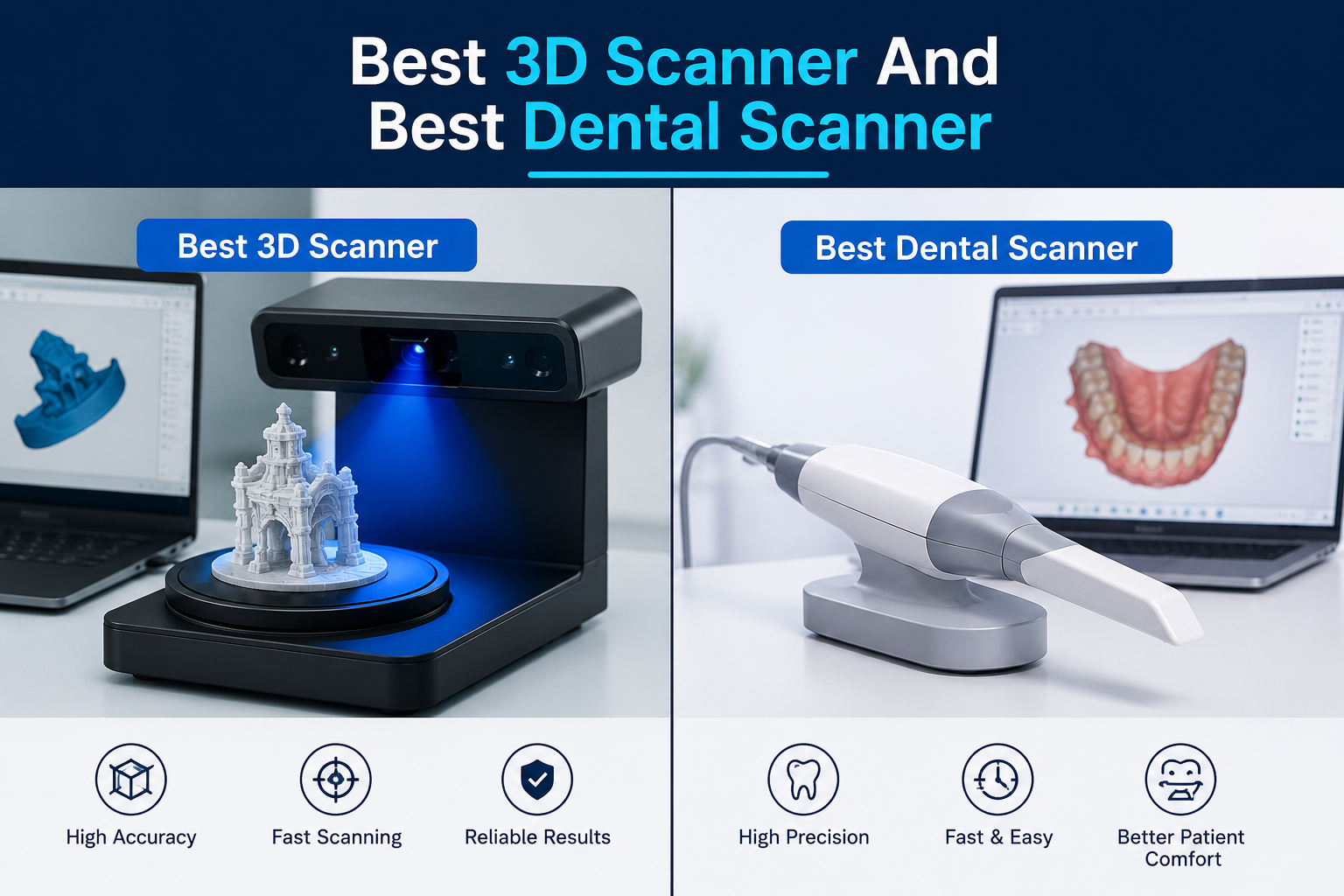
Digital dentistry has evolved rapidly over the last few years, and choosing the Best 3D Scanner or the Best Dental Scanner is no longer a simple decision. Manufacturers continue to introduce lighter hardware, faster scanning technology, AI-powered software, and wireless connectivity, giving dental professionals more choices than ever before.
Years ago, digital impression systems were often criticized for slow performance, bulky designs, and inconsistent accuracy. Today, the market has transformed dramatically. Modern scanners deliver exceptional precision, intuitive workflows, and seamless integration with CAD/CAM systems, helping practices improve efficiency and patient satisfaction.
This guide explains what makes the Best 3D Scanner and Best Dental Scanner, compares the latest technologies, and highlights the features every dental practice should consider before making an investment.
Why Every Modern Practice Needs the Best 3D Scanner
Digital impressions have become the preferred alternative to conventional impression materials. A high-quality Best 3D Scanner enables dentists to capture accurate intraoral images within seconds while minimizing patient discomfort.
Key advantages include:
- Faster digital workflows
- Improved scanning accuracy
- Better patient experience
- Seamless laboratory communication
- Reduced material waste
- Enhanced treatment planning
- Easy integration with digital dentistry software
As restorative, orthodontic, and implant treatments become increasingly digital, investing in the right scanner is becoming a necessity rather than a luxury.
What Defines the Best Dental Scanner?
Selecting the Best Dental Scanner involves much more than comparing prices. Modern dental clinics should evaluate several essential factors before purchasing a scanner.
Scanning Accuracy
Accuracy remains the most important consideration. The best scanners produce highly detailed digital impressions suitable for crowns, bridges, veneers, implants, and full-arch restorations.
Speed
Today’s premium scanners can complete full-arch scans in under 30 seconds, significantly improving chairside efficiency.
Ergonomic Design
Lightweight scanners reduce operator fatigue during long clinical sessions. Comfortable handling also improves scanning consistency.
AI-Powered Software
Artificial intelligence automatically removes unwanted soft tissue, corrects scan data, and guides operators throughout the scanning process.
Open System Compatibility
The Best 3D Scanner should support common file formats such as STL, OBJ, and PLY, allowing compatibility with most CAD/CAM software and dental laboratories.
Features to Look for in the Best 3D Scanner
Modern scanners continue introducing innovative features that improve daily clinical workflows.
Important features include:
- Wireless connectivity
- USB-C support
- Large scanning field of view
- AI-assisted scanning
- Automatic bite registration
- Cloud-based case management
- Autoclavable scanning tips
- Realistic color imaging
- Fast image processing
- Subscription-free software
These capabilities improve efficiency while reducing workflow interruptions.
Best Dental Scanner Applications
The Best Dental Scanner supports a wide range of dental procedures.
Common applications include:
- Digital impressions
- Crown and bridge fabrication
- Veneer planning
- Orthodontic treatment
- Implant restoration
- Full-arch rehabilitation
- Smile design
- Occlusal analysis
- Digital patient records
- Laboratory communication
Its versatility makes digital scanning valuable across nearly every dental specialty.
Wired vs Wireless Dental Scanners
| Feature | Wired Scanner | Wireless Scanner |
| Mobility | Moderate | Excellent |
| Battery Required | No | Yes |
| Weight | Usually lighter | Slightly heavier |
| Cable Management | Required | Not required |
| Clinical Flexibility | High | Very High |
| Charging Needed | No | Yes |
Wireless scanners provide greater flexibility, while wired models often offer uninterrupted operation without battery concerns.
Benefits of Investing in the Best Dental Scanner
Practices upgrading to the Best Dental Scanner often experience measurable improvements in productivity and patient care.
Major benefits include:
- Faster appointments
- Increased clinical efficiency
- Better restorative accuracy
- Reduced remakes
- Higher patient acceptance
- Simplified laboratory workflows
- Digital treatment documentation
- Enhanced communication with patients
These improvements contribute to stronger practice growth and better clinical outcomes.
Choosing the Right Best 3D Scanner
Before purchasing a scanner, consider the following:
- Clinical workload
- Implant case volume
- Software compatibility
- Budget
- Warranty coverage
- Technical support
- Future software upgrades
- Training availability
Selecting a scanner that aligns with your practice’s long-term goals ensures greater return on investment.
Future Trends in Best Dental Scanner Technology
Digital dentistry continues advancing at an impressive pace.
Emerging innovations include:
- Artificial intelligence diagnostics
- Real-time treatment simulation
- Cloud collaboration
- Improved full-arch scanning
- Enhanced implant workflows
- Smaller and lighter hardware
- Faster processing speeds
- Integration with facial scanners and 3D printers
These developments will continue making digital dentistry more accurate, predictable, and accessible.