
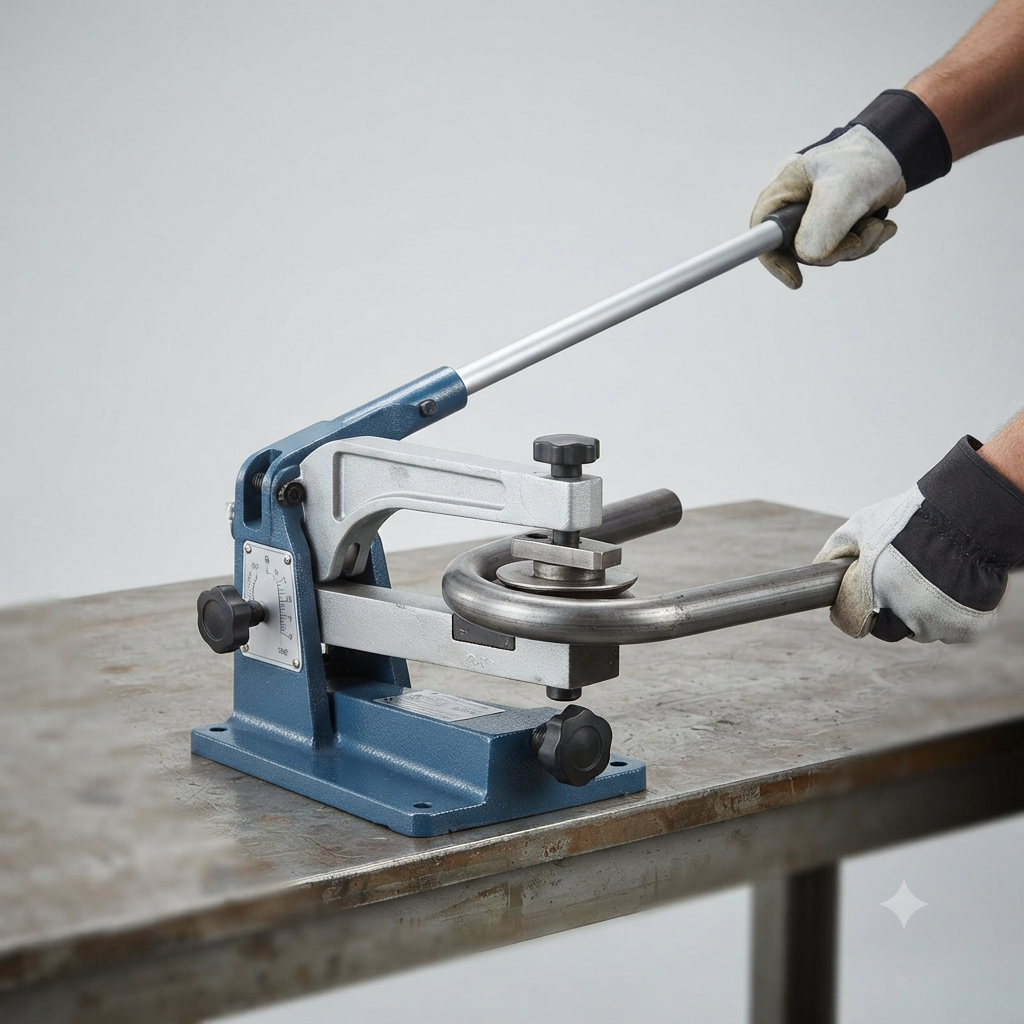
A pipe clamp bending machine is a specialized industrial machine used to bend metal pipes and tubes accurately while holding the workpiece firmly with a clamping mechanism. These machines are widely used in industries such as automotive, furniture manufacturing, construction, HVAC, shipbuilding, and metal fabrication. The clamp prevents the pipe from slipping or deforming during bending, ensuring smooth curves and consistent results.
How a Pipe Clamp Bending Machine Works
The machine uses a clamp die, bend die, and pressure die to control the pipe during the bending process.
Main Working Steps
- Clamping: The pipe is locked securely in position.
- Rotation: The bend die rotates around a fixed radius.
- Pressure Application: The pressure die supports the pipe wall.
- Release: The clamp opens after the desired angle is achieved.
This controlled process minimizes wrinkles, flattening, and material stress.
Types of Pipe Clamp Bending Machines
| Type | Best For | Automation |
| Manual | Small workshops | Low |
| Hydraulic | Medium production | Semi |
| NC (Numerical Control) | Repeatable jobs | High |
| CNC | Complex bends | Fully automatic |
Manual Machines
Suitable for low-volume work and simple bends.
Hydraulic Machines
Use hydraulic cylinders for greater bending force and reduced operator effort.
CNC Pipe Clamp Bending Machines
Offer programmable bend angles, multiple bend sequences, and high production efficiency.
Key Components
Clamp Die
Holds the pipe firmly during bending.
Bend Die
Determines the bending radius and shape.
Pressure Die
Supports the pipe and prevents wall collapse.
Mandrel (Optional)
Inserted inside the pipe for thin-wall applications to avoid wrinkling.
Advantages of Using a Pipe Clamp Bending Machine
- High bending accuracy
- Reduced material wastage
- Better surface finish
- Consistent repeatability
- Faster production cycles
- Lower labor costs
These benefits make the machine ideal for both custom fabrication and mass production.
Applications
Pipe clamp bending machines are used for:
- Automotive exhaust systems
- Roll cages and chassis components
- Stainless steel railings
- Furniture frames
- HVAC piping
- Agricultural equipment
- Industrial pipelines
Choosing the Right Machine
Important Factors
Pipe Size
Check the minimum and maximum pipe diameter the machine can handle.
Material Type
Different dies are required for mild steel, stainless steel, aluminum, and copper.
Wall Thickness
Thin-wall pipes may require a mandrel attachment.
Production Volume
- Low volume: Manual or hydraulic
- Medium volume: NC hydraulic
- High volume: CNC automatic
Maintenance Tips
To keep the machine operating efficiently:
- Lubricate moving parts regularly.
- Inspect clamp and pressure dies for wear.
- Check hydraulic oil levels.
- Calibrate bend angles periodically.
- Keep the machine clean and free from metal chips.
Proper maintenance extends machine life and maintains bending accuracy.
Frequently Asked Questions (FAQs)
1. What is a pipe clamp bending machine used for?
It is used to bend metal pipes and tubes precisely without damaging the material.
2. Can it bend stainless steel pipes?
Yes, with the correct dies and sufficient bending force.
3. What is the difference between hydraulic and CNC models?
Hydraulic machines require more manual setup, while CNC machines are fully programmable and automatic.
4. Why is a clamp important?
The clamp prevents pipe slippage and ensures accurate bends.
5. What is a mandrel used for?
A mandrel supports the inside of the pipe to prevent wrinkling and collapse.
6. What industries use these machines?
Automotive, construction, HVAC, furniture, and industrial manufacturing.
7. How accurate are CNC pipe benders?
Most CNC machines achieve accuracy within ±0.1° to ±0.5°.
8. Can thin-wall pipes be bent safely?
Yes, especially when using a mandrel and proper pressure settings.
9. How often should the machine be serviced?
Basic inspection should be done daily, with full servicing every few months depending on usage.
10. Is operator training necessary?
Yes, proper training improves safety and reduces costly bending errors.