
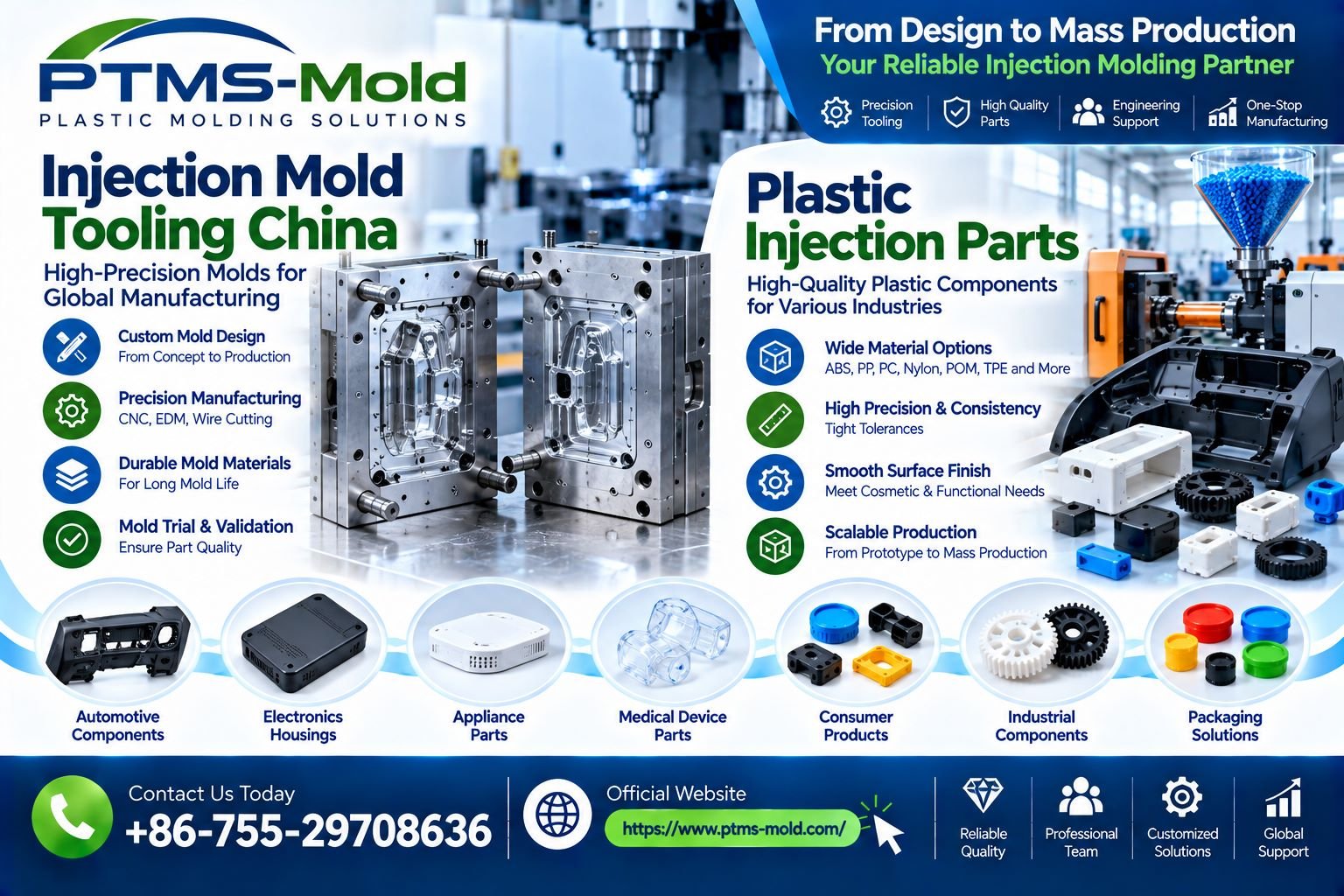
Injection molding procurement is undergoing a noticeable change. Global companies are no longer selecting tooling partners solely on mold-making capability or initial quotations. Supplier responsiveness, production capacity, backup planning, component consistency, delivery coordination, and repeat-order support are becoming equally important.
This broader sourcing strategy is bringing renewed attention to Injection Mold Tooling China as buyers look for manufacturers capable of supporting both custom mold development and ongoing production. For companies purchasing Plastic Injection Parts, the conversation is increasingly about building a dependable supply program rather than completing a single manufacturing order.
Supplier Selection Is Becoming a Business-Critical Decision
Custom injection molds are closely connected to the products they manufacture. Once tooling has been developed, validated, and approved, changing suppliers can require additional time and technical coordination.
This makes supplier selection particularly important.
When evaluating Injection Mold Tooling China, buyers increasingly examine engineering responsiveness, project management, molding capacity, quality systems, communication procedures, and support for repeat orders.
The objective is to understand whether the supplier can remain dependable after the initial mold has been completed.
A Clear RFQ Can Improve the Entire Project
Successful sourcing often begins with the request for quotation.
Incomplete information can lead to inaccurate assumptions about mold construction, production volume, resin, surface requirements, and inspection needs.
A well-prepared RFQ should normally communicate the core technical and commercial requirements of the project.
Relevant information may include:
- 3D CAD files and technical drawings
- Required plastic material
- Estimated annual quantities
- Critical tolerances
- Cosmetic requirements
- Expected mold configuration
- Secondary operations
- Packaging expectations
- Delivery destination
Providing better information at the quotation stage can reduce revisions later in the project.
Injection Mold Tooling China Is More Than Mold Machining
The manufacture of an injection mold involves several connected engineering and production stages.
After reviewing the component, engineers determine how the mold can be constructed and how the part will be formed and released.
The tool may then require CNC machining, EDM, grinding, fitting, polishing, assembly, and other operations depending on its complexity.
However, machining accuracy alone does not guarantee successful production.
A useful Injection Mold Tooling China program should also consider how easily the mold can be sampled, adjusted, maintained, and used for future manufacturing.
Production Capacity Matters After Tool Approval
Buyers sometimes focus heavily on mold construction while paying less attention to what happens after approval.
If the supplier will also manufacture Plastic Injection Parts, production capacity becomes an important consideration.
Machine availability, component size, required molding conditions, order quantity, inspection needs, and other active production programs can influence lead times.
For repeat orders, customers may benefit from discussing forecasts rather than waiting until inventory becomes critical.
Better visibility can help manufacturers plan production more effectively.
Material Procurement Can Influence Lead Times
Injection molding depends on having the correct polymer available when production is scheduled.
Standard materials may be relatively straightforward to source, while specialized grades, colors, reinforced polymers, or project-specific formulations may require additional planning.
Customers should therefore define the required resin as precisely as practical.
When Plastic Injection Parts must use an approved material grade, substitutions should not be assumed without appropriate customer evaluation.
Clear material requirements help protect both production consistency and purchasing expectations.
Quality Planning Should Happen Before Mass Production
Waiting until a large batch is completed before defining inspection requirements can create avoidable problems.
Quality planning should begin during product and tooling development.
Customers can identify critical dimensions, functional features, visible surfaces, assembly points, and other important requirements.
The manufacturer can then determine suitable inspection methods.
This makes quality control more focused and gives both sides a common basis for evaluating production.
For repeat manufacturing, approved samples may also provide a useful reference where appropriate.
Plastic Injection Parts Need Consistent Lot-to-Lot Performance
An acceptable first production order is only the beginning of a long-term supply program.
Customers ordering Plastic Injection Parts repeatedly expect future batches to remain consistent with approved requirements.
This requires control over product data, material selection, tooling condition, production methods, and inspection.
If significant changes are required, communication becomes important.
For example, a material change or tooling modification could potentially affect component dimensions, appearance, or performance and may therefore require evaluation before implementation.
Capacity Planning Can Reduce Emergency Purchasing
Unexpected demand can create pressure throughout the supply chain.
If customers suddenly require substantially larger quantities, the manufacturer may need to secure additional material, reserve molding-machine capacity, increase inspection resources, and arrange more packaging.
Forecasting can help reduce this uncertainty.
Customers do not always need perfectly accurate long-term predictions. Even approximate demand information can provide useful production visibility.
For high-priority programs, buyers may also discuss practical approaches to inventory and replenishment.
Packaging Becomes Part of Quality Assurance
A molded component can leave the production line in excellent condition and still arrive damaged if packaging is unsuitable.
This is especially important for components with glossy surfaces, delicate clips, thin walls, or geometries that can become distorted under pressure.
Packaging decisions may consider component orientation, stacking, surface protection, carton strength, quantity per package, and handling.
For exported Plastic Injection Parts, transportation conditions should also be taken into account.
Packaging should protect the quality achieved during manufacturing rather than become a source of defects.
Communication Speed Can Influence Project Lead Time
Tooling projects frequently require decisions from both supplier and customer.
A manufacturer may need approval for DFM recommendations, mold design, material selection, samples, dimensional reports, or engineering changes.
If decisions remain unresolved, the overall schedule can be affected even when machining itself is progressing efficiently.
For international Injection Mold Tooling China projects, structured communication can therefore be a competitive advantage.
Clear questions, documented approvals, and revision-controlled technical information can keep the project moving.
Frequently Asked Questions
What does Injection Mold Tooling China refer to?
Injection Mold Tooling China refers to custom injection mold engineering, manufacturing, trials, modifications, and associated production services sourced from China.
What are Plastic Injection Parts?
Plastic Injection Parts are components produced by injecting heated polymer into a mold cavity and cooling it into the required shape.
What should an injection molding RFQ include?
An RFQ should ideally include CAD data, drawings, material requirements, quantities, tolerances, surface expectations, and relevant production information.
Why is annual production volume important?
Expected volume can influence mold construction, cavity count, production capacity planning, and overall project economics.
Should the exact plastic resin be specified?
Where material properties are important, specifying the required grade can help maintain consistency and avoid unsuitable substitutions.
Why is production capacity important?
Adequate capacity helps a supplier meet expected order quantities and delivery schedules after tooling has been approved.
Can the same injection mold support repeat orders?
Yes, provided the tool remains suitable for production and is appropriately maintained.
Why should critical dimensions be identified?
They help manufacturers focus process control and inspection on features that directly influence product function or assembly.
How can packaging affect molded-part quality?
Poor packaging can contribute to scratching, bending, deformation, contamination, or other damage during storage and transportation.
How can buyers reduce supply interruptions?
Realistic forecasting, clear specifications, timely approvals, material planning, appropriate inventory strategies, and regular supplier communication can help reduce risk.
Media Contact
Tooling & Plastic Component Enquiries
Email: Sales@ptms-mold.com
Official Website: ptms-mold.com
