
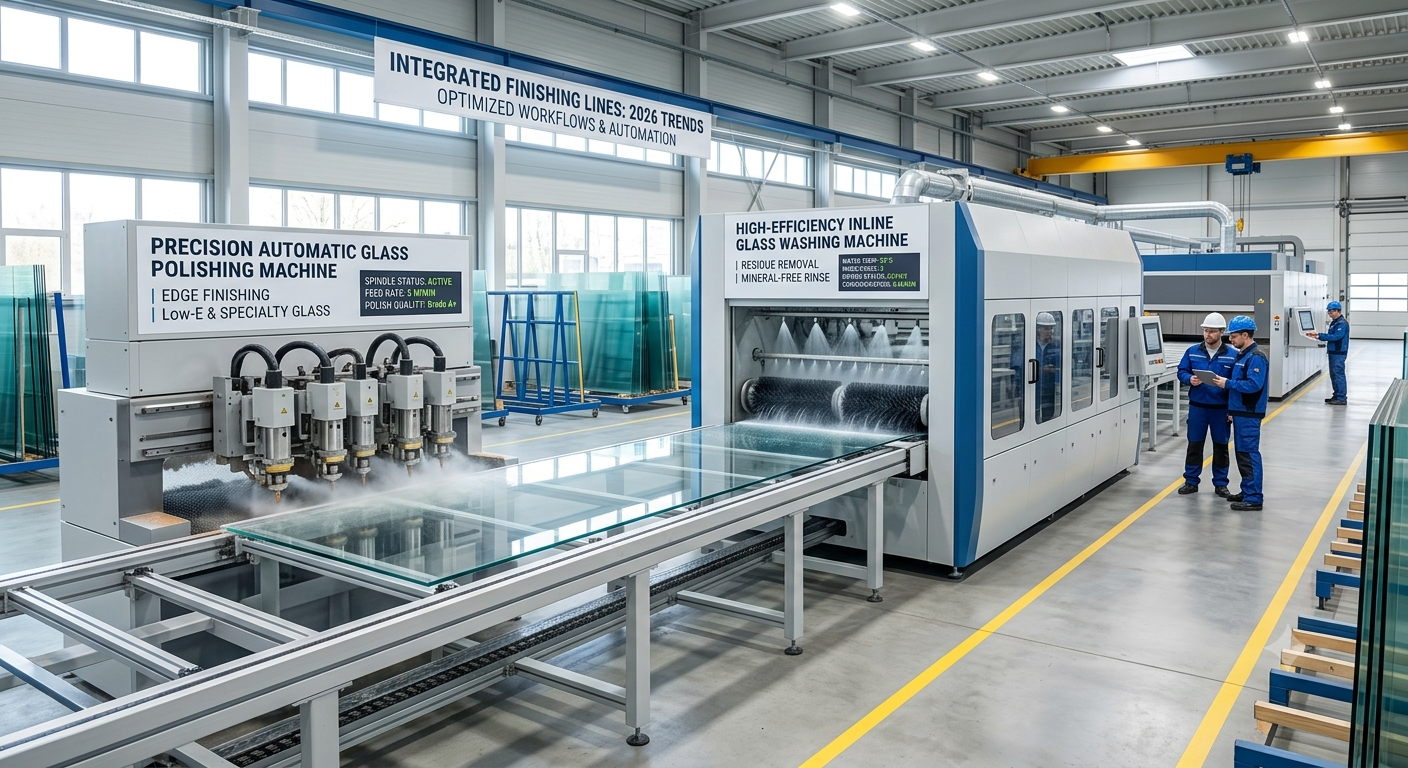
The demand for high-quality glass products has increased rapidly across construction, automotive, furniture, and electronics sectors. To achieve flawless finishing and perfect clarity, industries rely heavily on a glass polishing machine and a glass washing machine.
These two machines are essential in modern glass processing lines, ensuring that glass surfaces are clean, smooth, and free from defects before further processing like tempering, laminating, coating, or installation.
With rising quality standards and automation in manufacturing, both machines have become a backbone of efficient glass production units.
What is a Glass Polishing Machine?
A glass polishing machine is specialized industrial equipment used to remove scratches, rough edges, stains, and surface imperfections from glass. It enhances transparency and restores smoothness, making glass suitable for architectural and decorative applications.
Key Functions of Glass Polishing Machine
- Removes surface scratches and defects
- Improves optical clarity
- Smoothens edges and surfaces
- Enhances final product finish
- Prepares glass for coating or installation
Where It Is Commonly Used
- Architectural glass manufacturing
- Automotive glass production
- Furniture and interior design
- Mirror and decorative glass industries
- Solar panel glass processing
Types of Glass Polishing Machine
Different industries use different polishing systems depending on precision and scale requirements.
Common Types
- Manual glass polishing machine
- Semi-automatic polishing machine
- Fully automatic CNC polishing system
- Edge polishing machine
- Flat glass polishing machine
Key Features Across Models
- Adjustable polishing speed
- Diamond or abrasive polishing tools
- Water cooling system
- Precision control panels
- High durability components
What is a Glass Washing Machine?
A glass washing machine is used to clean glass surfaces by removing dust, oil, fingerprints, and chemical residues before processing. Clean glass is essential for achieving strong bonding during laminating, coating, or printing.
Key Functions of Glass Washing Machine
- Removes dust and debris
- Cleans chemical residues
- Prepares glass for coating or lamination
- Ensures streak-free surface finish
- Improves adhesion quality
Types of Glass Washing Machine
Glass washing machines are designed based on production scale and automation level.
Common Types
- Horizontal glass washing machine
- Vertical glass washing machine
- Industrial conveyor-type washing system
- Compact glass cleaning units
- High-pressure glass washing systems
Core Features
- Multi-stage washing system
- Soft brush rollers
- Hot air drying section
- Water recycling system
- Stainless steel construction
Difference Between Glass Polishing Machine and Glass Washing Machine
| Feature | Glass Polishing Machine | Glass Washing Machine |
| Purpose | Smooths and polishes surface | Cleans glass surface |
| Function | Removes scratches and defects | Removes dust and contaminants |
| Output Result | Glossy, refined finish | Clean, residue-free surface |
| Usage Stage | Post-processing or finishing | Pre-processing stage |
| Tools Used | Abrasive pads, diamond wheels | Brushes, water jets, air dryers |
Why Glass Polishing Machine and Glass Washing Machine Are Essential
Modern glass production demands high precision, cleanliness, and durability. These machines ensure that every sheet of glass meets industry standards.
Key Benefits
- Improves product quality and clarity
- Reduces rejection rate in production
- Enhances bonding in laminated glass
- Supports automation in manufacturing lines
- Saves time and labor costs
- Ensures uniform surface quality
Industrial Applications of Glass Processing Machines
Both glass polishing machine and glass washing machine are widely used across multiple industries.
Major Application Areas
- Building and construction glass
- Automotive windshields and windows
- Solar panel manufacturing
- Interior décor and furniture glass
- Electronic display panels
- Commercial glazing systems
How Glass Washing and Polishing Systems Work Together
In modern production lines, both machines operate in sequence to ensure high-quality output.
Processing Workflow
- Cutting and shaping glass
- Washing to remove dust and residues
- Polishing edges and surfaces
- Inspection for defects
- Tempering or coating process
This integrated workflow ensures durability, clarity, and precision.
Key Features to Look for When Buying These Machines
Choosing the right equipment is crucial for production efficiency.
Important Considerations
- Machine capacity and size
- Automation level
- Energy efficiency
- Water consumption system
- Maintenance requirements
- Material compatibility
- Speed and production output
Maintenance Tips for Long-Term Performance
Proper maintenance ensures durability and consistent performance.
Best Practices
- Clean brushes and rollers regularly
- Check water filtration system
- Lubricate moving parts
- Inspect polishing tools for wear
- Avoid overloading machine capacity
- Follow manufacturer maintenance schedule
Latest Trends in Glass Processing Technology
The glass industry is rapidly evolving with advanced automation.
Modern Innovations
- AI-based defect detection systems
- Fully automated production lines
- Eco-friendly water recycling systems
- Energy-efficient motor designs
- Smart control panels with digital monitoring
- High-precision CNC polishing systems
Frequently Asked Questions (FAQs)
1. What is a glass polishing machine used for?
It is used to smooth and polish glass surfaces by removing scratches and defects.
2. What does a glass washing machine do?
It cleans glass surfaces by removing dust, oil, and chemical residues.
3. Can both machines be used together?
Yes, they are often used in sequence in glass processing lines.
4. Which comes first: washing or polishing?
Washing comes first to ensure a clean surface before polishing or further processing.
5. Are these machines used in automotive industries?
Yes, both are widely used in windshield and automotive glass manufacturing.
6. What type of water is used in glass washing machines?
Filtered and treated water is typically used to avoid stains.
7. Do glass polishing machines remove deep scratches?
They can reduce light scratches, but deep damage may require replacement.
8. Are these machines fully automated?
Modern systems can be fully or semi-automated depending on production needs.
9. What industries use glass processing machines the most?
Construction, automotive, solar, and furniture industries.
10. Are these machines energy efficient?
Yes, modern models are designed for low energy and water consumption.